

Reviewed by the S Reid Roofing Ltd team — last reviewed 2026-09-15
Quick answer
Common causes include moss, leaves, blocked downpipes, poor falls, damaged joints or inadequate drainage capacity for the roof area served. Persistent overflow deserves attention because repeated saturation can affect roof edges, fascias and adjacent building materials over time, so the cause is worth establishing rather than guessed at.
At a glance
- Debris blocking the outlet or downpipe is the most common cause.
- Poor falls along the gutter run can cause standing water even when clear.
- Split joints and pulled brackets both produce overflow at a specific point.
- Persistent overflow at the same spot suggests a fixable fault, not undersizing.
Where the blockage or fault usually sits
Most overflow happens at a specific, repeatable point rather than along the whole run, which is a useful clue. Water spilling at a corner or joint often means debris has gathered there or the joint has opened. Water spilling evenly along a length more often points to a fall that has been lost, sometimes because a bracket has moved.
Downpipes that appear clear at the top can still be blocked further down, so a gutter that overflows even when swept out is not necessarily a false alarm — the pipe itself may need checking, including the underground section where it meets a gully or soakaway.
How the roof covering contributes to the problem
Gutters do not exist in isolation from the roof above them. Moss shed from concrete tiles, granules washed off ageing felt, or grit from a worn asphalt surface all settle in the gutter and gradually reduce its carrying capacity. A gutter that copes fine in light rain but overflows in a heavy downpour may simply be silted up rather than damaged, and clearing it can be enough to resolve the issue without any repair work at all.
Valley gutters and parapet gutters on flat or low-pitch roofs behave slightly differently from eaves gutters, because they collect a larger catchment area and rely on internal outlets rather than an open run. A blocked internal outlet on this type of gutter can cause water to back up under the roof covering itself rather than simply overflowing outward, which makes prompt clearance more important than on a straightforward eaves gutter.
When it points to something more than housekeeping
Occasional overflow in exceptionally heavy rain is not unusual even on a well-maintained system. Overflow that recurs in ordinary rainfall, or that has started only recently, is more likely to reflect a genuine fault — a dropped bracket, a split section, or a downpipe that has become disconnected below ground.
A gutter that has always coped in the past but has begun to overflow after recent roof work, scaffolding, or an extension to an adjoining roof may simply be undersized for a change in catchment area, which is a different problem from wear or blockage and needs a different remedy.
Seasonal patterns worth noting
Autumn leaf fall and the aftermath of winter storms are the two periods when overflow complaints rise sharply, and a gutter that only overflows in these seasons is usually a maintenance issue rather than a structural one. Overflow that persists through a dry summer, or reappears within weeks of clearing, points more strongly towards a fall, joint or capacity problem that clearing alone will not fix.
What we would check
During an inspection, areas we would normally look at for this include:
- Gutter contents and outlet condition along the affected run.
- Falls along the gutter, checking for level or reversed sections.
- Joints and brackets for movement, splitting or corrosion.
- Downpipes for blockages beyond the visible top section.
- Whether the roof covering is shedding debris into the gutter.
Repair, replace or monitor?
Repair
Clearing debris, resetting brackets or replacing a failed joint is usually sufficient for a localised fault.
Replace
Where a gutter run has corroded or sagged throughout its length, replacing the run is more durable than repeated local repairs.
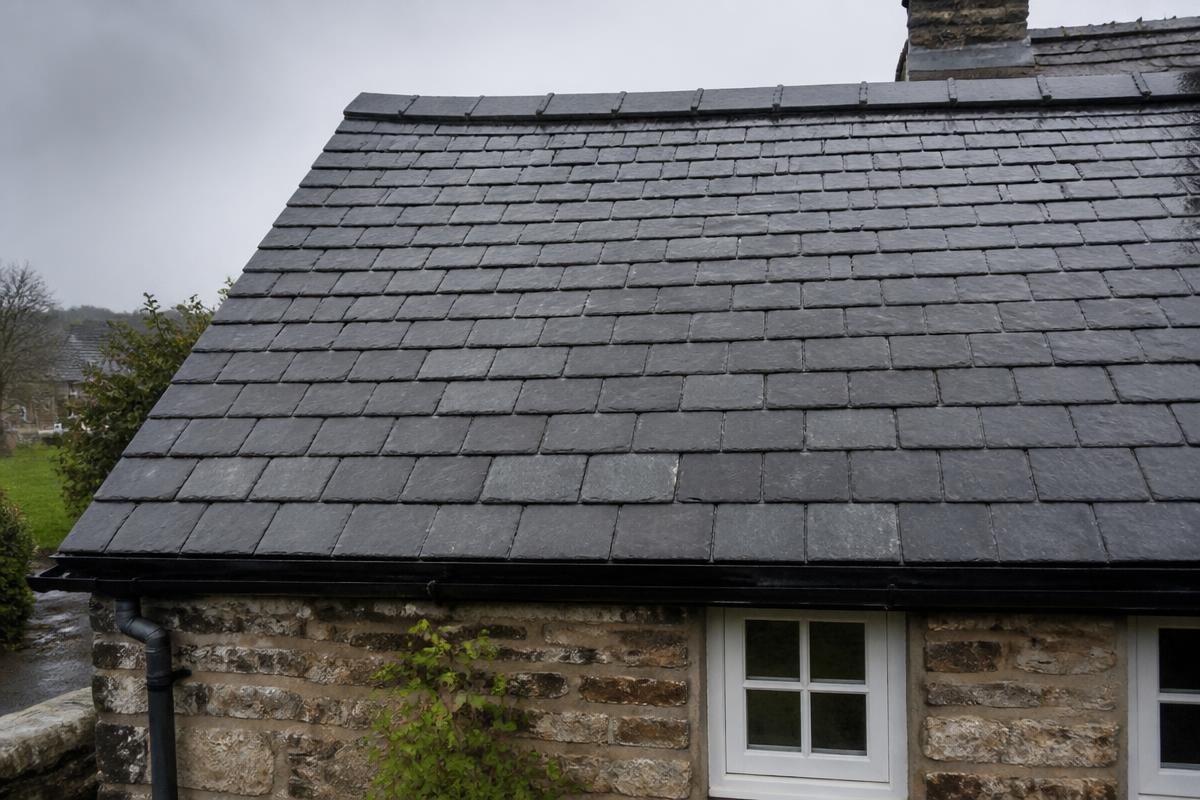
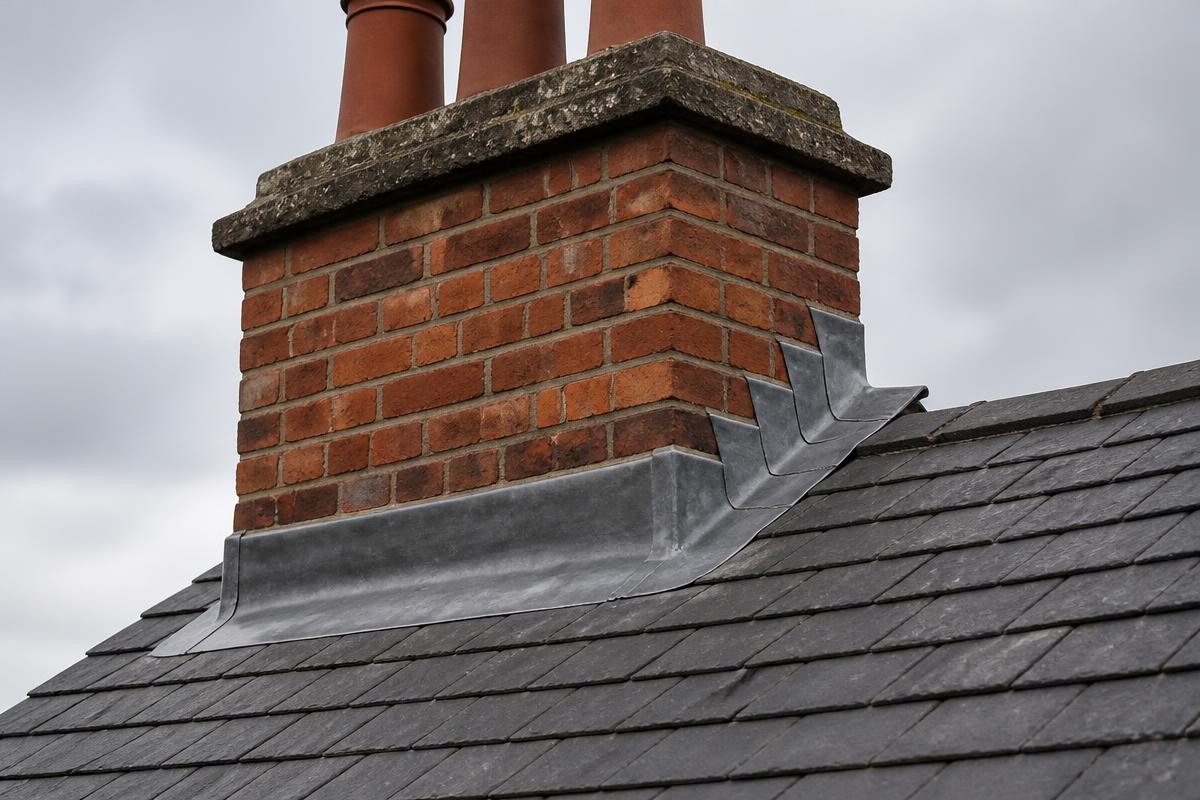
Roof photography
Related questions
Relevant services
Request a roofing quotation
Share what you've noticed and we'll arrange an inspection before recommending works.