

Reviewed by the S Reid Roofing Ltd team — last reviewed 2026-09-15
Quick answer
A straightforward domestic re-roof may take several working days, while complex roofs, traditional slate, structural repairs and poor weather can extend the programme. The contractor should explain the expected sequence and how the property will be protected during the work.
At a glance
- Scaffolding erection and removal add time either side of the roofing work itself.
- Complex roof shapes take longer than simple rectangular ones of the same area.
- Weather can pause work regardless of how well the job is planned.
- Discovering timber decay during strip-off can extend the programme.
What sets the baseline timescale
The main variables are roof area and shape, the covering being installed, and how many junctions — hips, valleys, chimneys, dormers — need individual attention. A simple, single-pitch domestic roof will progress faster than one with multiple roof planes meeting at different angles, even where the total area is similar, because each junction needs its own flashing and dressing rather than a continuous run of covering.
Scaffolding also has to be built into the programme rather than treated as incidental. Erecting and later dismantling a full scaffold, plus any temporary loading platforms for material handling, adds time at each end of the job that is separate from the roofing work itself.
What can extend the programme
Weather is the most obvious factor: wind and rain can stop work on an open roof regardless of how well the job has been planned, and a run of unsettled weather in autumn or winter across Cumbria and South West Scotland can add days that a summer job would not lose. Beyond that, timber repairs discovered once the old covering is off, traditional slate that needs sorting for reuse rather than simply discarding, and matching reclaimed material to an existing roof can all add time that would not apply to a straightforward re-cover.
A contractor should be able to explain the likely sequence in advance and flag the points in the job where the timescale could change, rather than presenting a single fixed date as guaranteed. This includes being clear about what happens if decayed timber is found, since stopping to agree extra work part-way through is normal practice rather than a sign of poor planning.
Working in stages on occupied properties
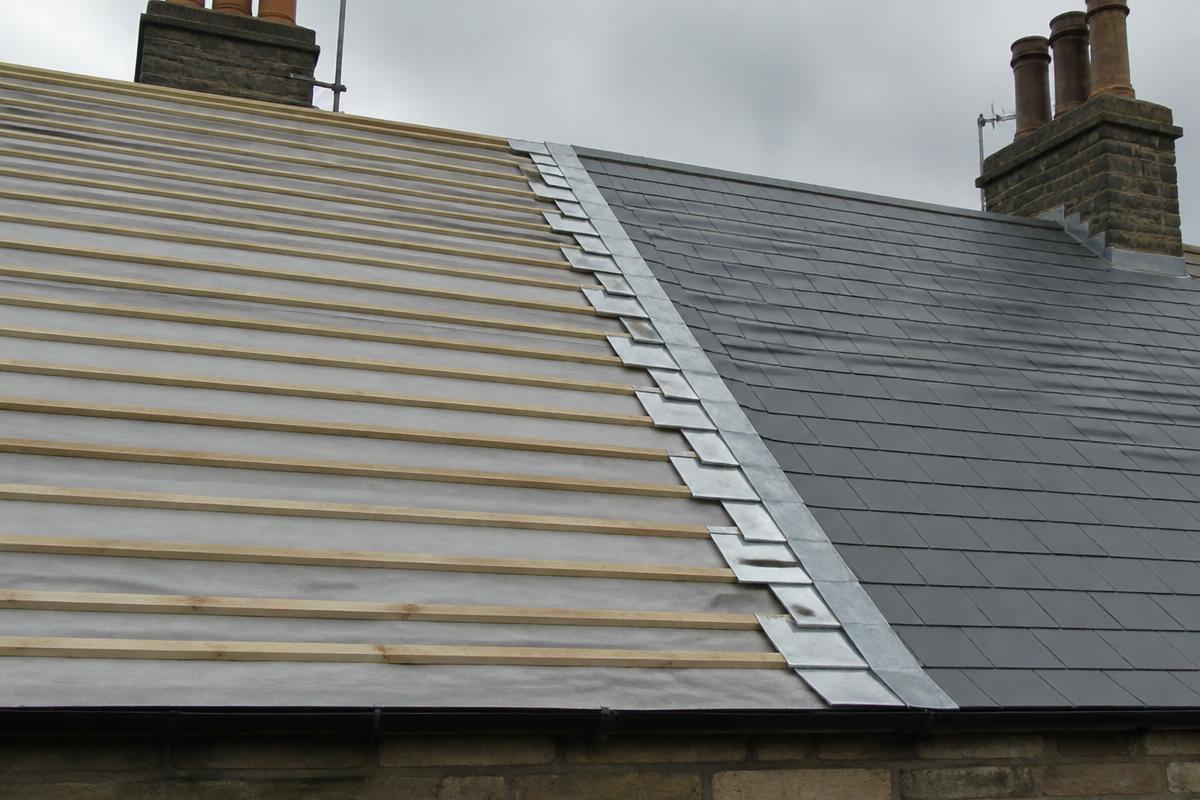
On occupied homes, re-roofing is usually carried out in manageable sections so that no more of the roof is left open overnight than can be reliably protected. This staged approach can add slightly to the overall programme compared with stripping everything at once, but it reduces the risk to the property if the weather turns unexpectedly during the works.
Why an honest programme matters more than a fast one
It can be tempting to favour whichever contractor promises the shortest timescale, but a programme that leaves no room for weather, timber repairs or careful detailing at junctions is more likely to slip or, worse, to be kept to at the expense of quality. A realistic programme, explained clearly at the outset, is a better basis for planning around the works than an optimistic one.
What we would check
During an inspection, areas we would normally look at for this include:
- Roof area, shape and number of junctions to establish a baseline sequence.
- Access arrangements and scaffolding lead time.
- Whether the covering requires sorting, matching or reclaimed material.
- Likely weather exposure for the period the roof will be open.
- Loft and structural condition that might extend the works once uncovered.
Roof photography
Related questions
Relevant services
Request a roofing quotation
Share what you've noticed and we'll arrange an inspection before recommending works.