

Reviewed by the S Reid Roofing Ltd team — last reviewed 2026-09-15
Quick answer
Good natural slate can remain serviceable for many decades and in suitable conditions can last considerably longer than many modern coverings. Older slate roofs often develop problems first with nails, fixings, battens, flashings or previous repairs rather than the slate itself, so assessing the whole system matters more than the slate's age alone.
At a glance
- Quality slate is genuinely long-lived when correctly fixed and detailed.
- Fixings, not the slate, are usually the first part of the system to fail.
- Previous repairs carried out with mismatched materials can shorten life.
- Slate quality varies, which affects how it weathers over time.
In North Cumbria & Cumbria / South West Scotland
Slate roofs on exposed sites in North Cumbria and South West Scotland take more wind-driven rain, which tends to bring fixing and flashing failures forward compared with sheltered locations.
Why slate has a reputation for longevity
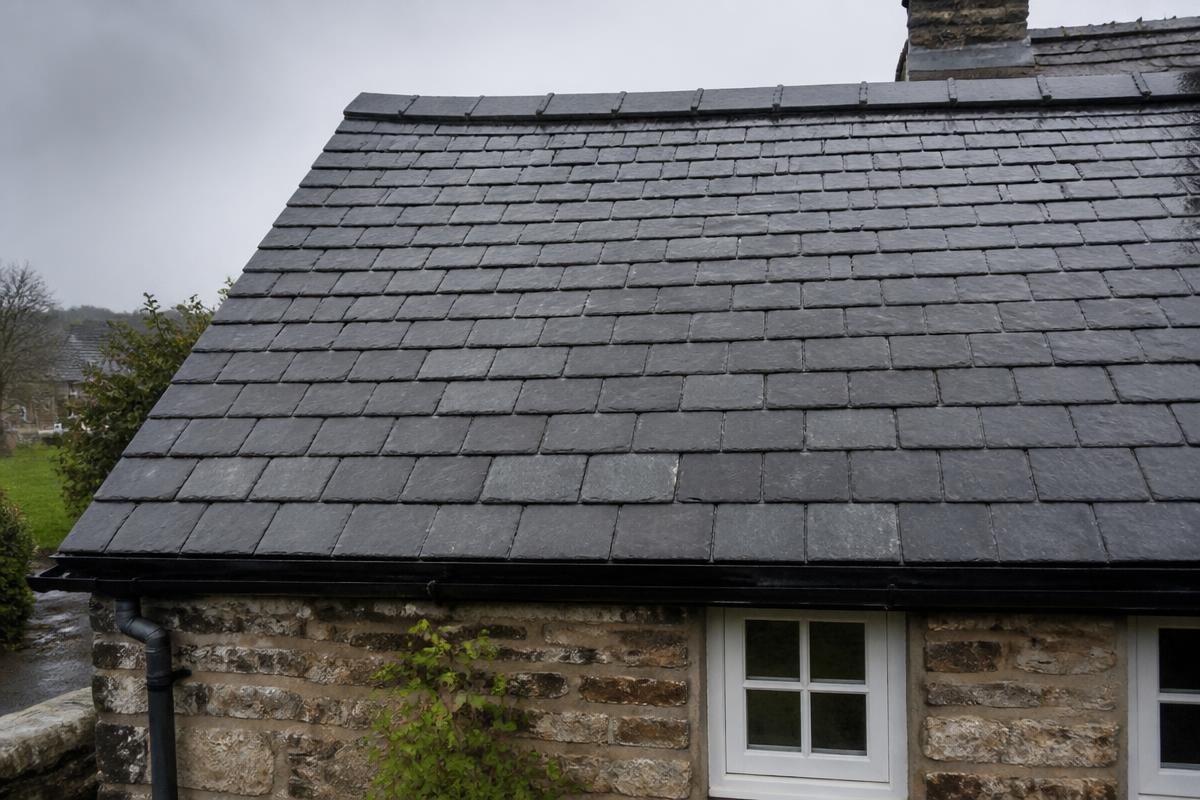
Natural slate is a dense, low-porosity stone that resists weathering well compared with many manufactured coverings, which is why older slate roofs are still common across this region. Where the slate itself is of good quality and has been correctly fixed, it can remain in serviceable condition for a very long time.
That reputation, though, applies to the slate as a material. It does not mean every slate roof will perform equally, since quarry source, thickness and how the slate was originally selected and laid all affect how well it weathers. Thinner or lower-grade slate can delaminate or fret at the surface over time, particularly where it has been exposed to prolonged damp or repeated freeze-thaw cycles.
What actually brings a slate roof to the point of work
On most older slate roofs we inspect, the slate itself is often still sound while the nails have corroded, the battens beneath have decayed, or flashings and mortar detailing at chimneys and valleys have failed. This pattern, sometimes called nail sickness, is one of the most common reasons a slate roof needs attention: the fixing corrodes to the point where slates begin to slip, even though the slates themselves have plenty of life left in them.
Previous repairs are another common factor — where mismatched slate, incorrect fixings or inappropriate flashing materials were used, that repair can fail well before the surrounding original slate does. A repair carried out with the wrong gauge of nail, or with slate of a different thickness to the original, can create a weak point that is easy to miss during a casual visual check from ground level.
Re-fixing versus full re-covering
Where a roof shows early signs of nail sickness across only part of a slope, re-fixing or selectively re-nailing that area, using slate salvaged from elsewhere on the same roof where possible, can extend its life without disturbing sound areas. This is only sensible where the slate itself remains in good condition and the failure is genuinely confined to fixings.
Where nail sickness or batten decay is widespread across multiple slopes, repeated localised repair tends to become uneconomic, and stripping and re-covering, potentially reusing sound slate where it can be matched, becomes the more sensible long-term option. The decision usually comes down to how much of the roof is genuinely affected once it has been properly inspected, rather than the calendar age of the slate alone.
What we would check
During an inspection, areas we would normally look at for this include:
- The slate itself for delamination, cracking or fretting at the surface.
- Nail and fixing condition, including any nail sickness.
- Batten condition where slates have already been lifted or are missing.
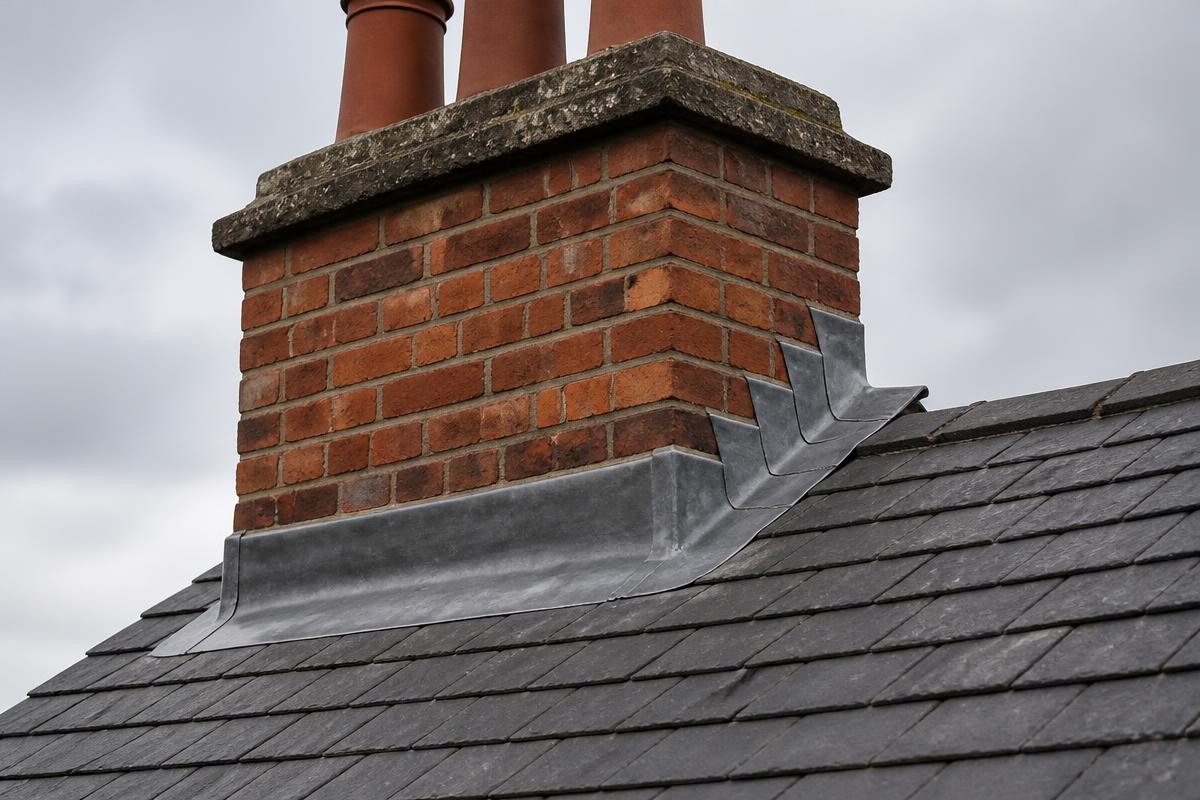
- Flashings, soakers and mortar detailing at chimneys and valleys.
- Evidence and materials used in any previous repairs.
Repair, replace or monitor?
Repair
Where the slate is sound and only fixings or isolated details have failed, re-fixing or re-nailing localised areas is usually appropriate.
Replace
Widespread nail failure or batten decay across multiple slopes can make re-covering more sensible than repeated repair.
Monitor
Sound, stable slate with no active defects can simply be reviewed at intervals.
Roof photography
Related questions
Relevant services
Book a roof inspection or drone survey
Documented findings before any repair is quoted. Suitable for pre-purchase checks, storm-event assessment and inaccessible roofs.