

Reviewed by the S Reid Roofing Ltd team — last reviewed 2026-09-15
Quick answer
No. Manufacturer protection normally relates to a particular product or roofing system, while a workmanship guarantee relates to installation. One does not automatically provide the same protection as the other, and keeping both sets of paperwork makes any future claim considerably easier to resolve.
At a glance
- A product warranty is issued by the manufacturer, not the installer.
- A workmanship guarantee is issued by whoever carried out the work.
- A defect can fall entirely outside one and squarely inside the other.
- Both sets of terms are worth reading before work begins.
Two different promises
A manufacturer's warranty typically covers faults in the product itself — a membrane that fails prematurely, a tile that is defective from manufacture, or a sealant that does not perform as specified. It is issued by the manufacturer and is usually conditional on the product being installed and used in line with their guidance, and sometimes on the installer holding a particular status with that manufacturer.
A workmanship guarantee is a separate promise from the contractor about the standard of installation. If a roof leaks because a detail was fitted incorrectly rather than because the material itself failed, that is a workmanship issue rather than a product one, and the two guarantees do not automatically overlap. A homeowner who assumes a long product warranty also protects them against poor fitting can be caught out if the manufacturer's assessment finds the product performed as intended.
Why the distinction matters in practice
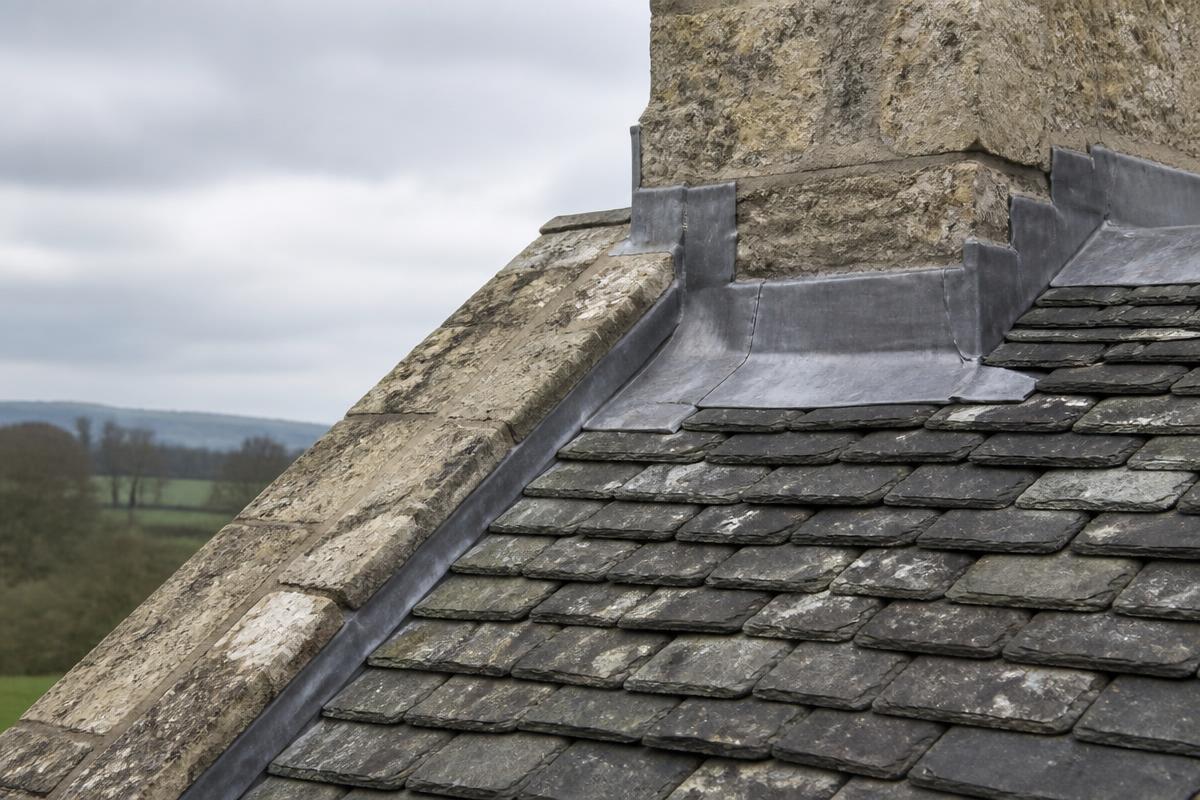
If a defect appears, the cause determines which protection applies, and sometimes it is genuinely unclear which one is responsible until the roof has been opened up and inspected. A leak at a junction, for example, could stem from a manufacturing fault in a flashing component or from the way it was dressed and lapped on site — the two possibilities point to different parties and different paperwork.
Keeping both sets of paperwork, and understanding what each one actually promises, makes any future claim considerably more straightforward. It is worth filing the manufacturer's product data sheet or warranty registration alongside the contractor's guarantee, along with any installation certificate, so that whichever party needs to be approached can be identified quickly rather than under pressure while water is coming through a ceiling.
Registering and validating cover
Some manufacturer warranties need to be registered within a set period after installation, and may require proof that an approved installer carried out the work or that specific fixing and ventilation details were followed. Missing a registration step, even where the installation itself was sound, can weaken a later claim. It is sensible to ask at the point of purchase whether registration is required, who is responsible for completing it, and to keep confirmation that it has been done.
What this means when comparing quotes
When comparing quotes for the same job, it is worth asking each contractor to set out both the manufacturer warranty attached to the specified product and their own workmanship guarantee, rather than accepting a single combined figure. A quote that only mentions one of the two is not necessarily worse, but it leaves a gap in understanding what happens if something goes wrong, and that gap is best closed before work is booked rather than after a defect appears.
It is also reasonable to ask whether the contractor has previously handled a warranty claim with the same manufacturer, since a contractor familiar with the process can usually help a homeowner navigate it more smoothly than one encountering it for the first time.
Roof photography
Related questions
Relevant services
Request a roofing quotation
Share what you've noticed and we'll arrange an inspection before recommending works.