

Reviewed by the S Reid Roofing Ltd team — last reviewed 2026-09-15
Quick answer
Straightforward repair or like-for-like replacement often does not require a planning application, but significant changes, listed-building status, conservation restrictions and property-specific planning conditions can alter the position. Requirements should be checked for the individual project with the local planning authority before a specification is finalised.
At a glance
- Like-for-like replacement is commonly treated differently from alteration.
- Listed buildings and conservation areas usually have extra requirements.
- Some properties carry planning conditions that remove permitted rights.
- The local planning authority decides what applies to a specific project.
What tends to be straightforward
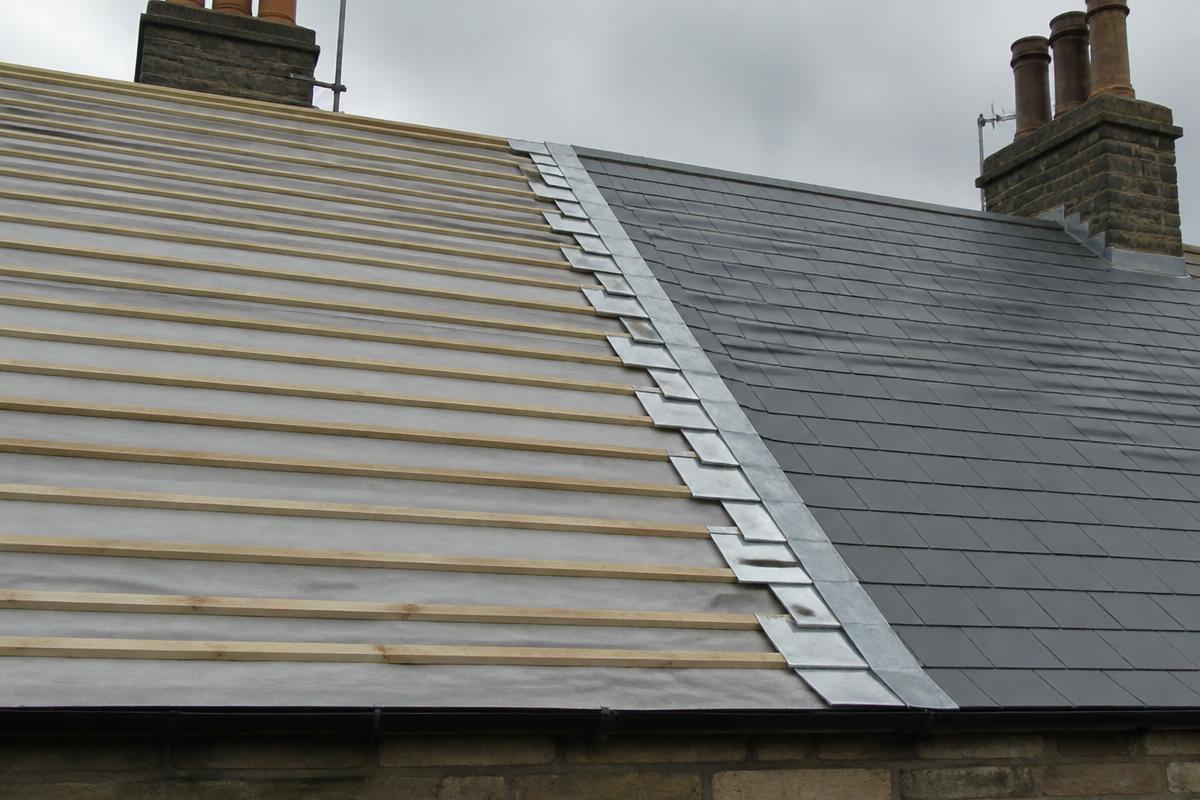
Repairing a roof or replacing a covering with a materially similar product, in a similar colour and profile, on an ordinary residential property, is commonly treated as maintenance rather than development. This is generally the case where the roof shape, height and outline are not being altered, and where the property does not carry any restriction removing that flexibility.
In England and Wales, this kind of routine work often falls within what is generally described as permitted development, which allows many minor alterations without a full planning application. In Scotland a broadly similar concept applies under separate permitted development rules, though the detail differs, so a Scottish property should not be assumed to follow the same thresholds as one in England.
What tends to need checking
Raising a roof, adding dormers, changing the roofline, altering the roof material significantly, or working on a listed building or within a conservation area can change the position considerably. Some properties also have planning conditions attached to a previous consent that restrict what can be done without further permission, regardless of the general rules — this is sometimes called an Article 4 direction in England and Wales, and can remove permitted development rights entirely for a particular area or property.
Because these rules vary by property and by local authority, and because they change over time, the only reliable approach is to confirm the position with the local planning authority before committing to a specification, rather than relying on a general assumption based on a similar property nearby.
How to check before committing to a specification
Most local planning authorities offer a pre-application enquiry service, and many publish guidance on their website about what counts as permitted development locally. The Planning Portal also provides general interactive guidance for England and Wales on common householder projects, which is a useful starting point before a specification is drawn up, though it does not replace a direct check with the authority covering the property in question.
Where there is any doubt — because of a previous extension, an unusual roof form, or the property's location within a conservation area — it is worth obtaining a written response from the planning authority before ordering materials or booking work in, since remedying unauthorised development after the event is considerably more disruptive than confirming the position first.
What we would check
During an inspection, areas we would normally look at for this include:
- Whether the property is listed or within a conservation area.
- Whether any planning conditions apply to the property.
- Whether the proposed work changes the roof's shape, height or outline.
- Whether the replacement material is materially similar to the existing covering.
Roof photography
Related questions
Relevant services
Sources & further guidance
Request a roofing quotation
Share what you've noticed and we'll arrange an inspection before recommending works.