

Reviewed by the S Reid Roofing Ltd team — last reviewed 2026-09-15
Quick answer
Minor maintenance may not require approval, while substantial re-roofing, structural alteration and insulation work can bring Building Regulations requirements into play. The scope of the actual project should be checked rather than assuming all roofing work is treated the same.
At a glance
- Not all roofing work is treated the same way under Building Regulations.
- Structural changes commonly attract more scrutiny than repairs.
- Insulation upgrades carried out alongside re-roofing can be relevant.
- Building control or a suitably qualified adviser can confirm what applies.
Repair versus substantial work
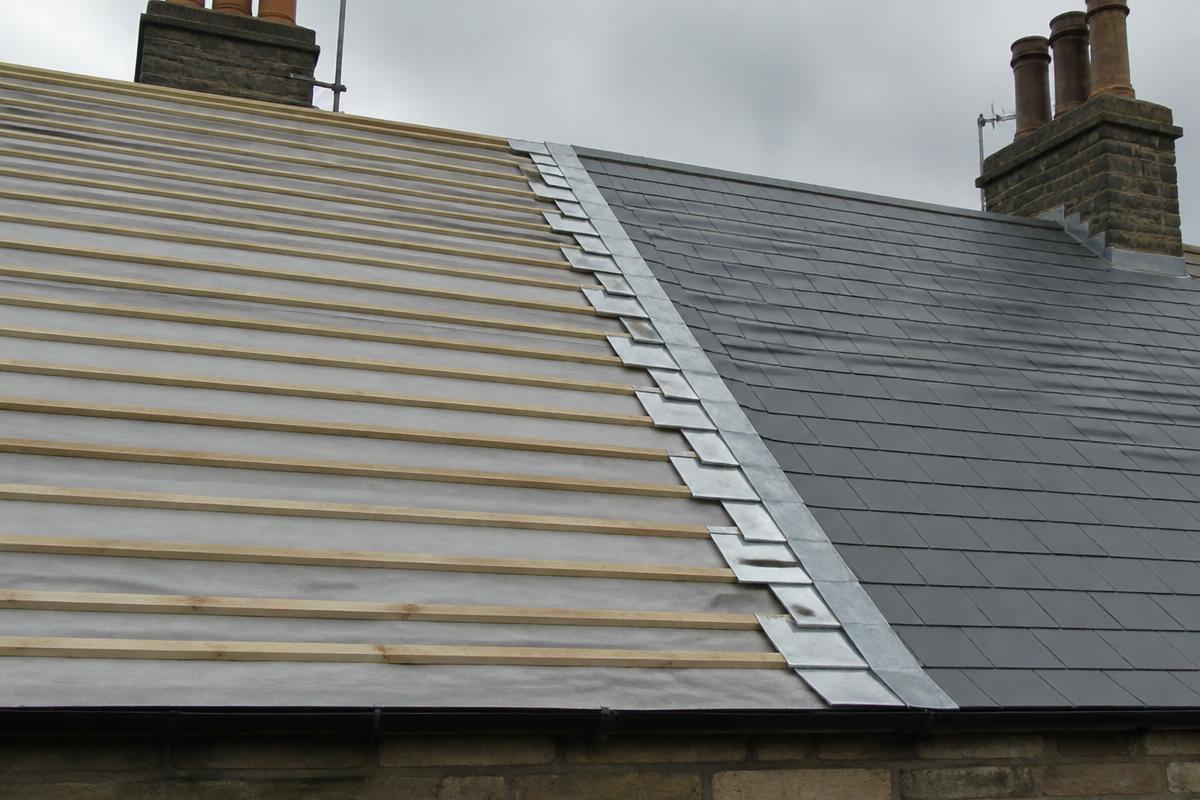
Replacing a small number of tiles or slates, repairing flashing, or clearing and repairing guttering is generally treated as routine maintenance and does not typically require a Building Regulations application. Substantial re-roofing — stripping and re-covering a significant area, altering the roof structure, or introducing rooflights — is more likely to bring Building Regulations considerations into play, including matters such as insulation standards where a roof is being substantially re-covered.
The distinction is not always as clean-cut as it sounds, because 'substantial' is a matter of degree rather than a fixed percentage in every case, and it can depend on how the work is carried out as well as how much of the roof is affected.
Why the scope of the project decides this
The rules depend on what is actually being done, not on the fact that it is a roof. A structural alteration, a change to a room used for habitation, or work that affects fire safety or thermal performance are the kinds of factors that tend to bring formal requirements into scope. Where a loft is being converted into habitable space at the same time as re-roofing, for example, requirements relating to structure, means of escape, and thermal and sound insulation are all likely to be relevant, not just the roof covering itself.
Confirming the position with building control before work starts avoids uncertainty later, particularly where the project is more than routine like-for-like repair. In England and Wales this can be done through a full plans or building notice application to the local authority building control team, or through a registered competent person scheme for certain work; in Scotland the equivalent route is a building warrant through the local authority, and the thresholds for when one is required are not identical to those south of the border.
What happens if approval is needed but skipped
Carrying out work that should have had Building Regulations approval without obtaining it can create practical problems later, including difficulty at the point of selling the property, and in some cases a local authority can require unauthorised work to be altered or removed. Where there is doubt about whether a specific job needs approval, it is far simpler to ask building control in advance than to resolve the position retrospectively.
Evidence worth keeping either way
Even where a job is treated as routine maintenance and does not need formal approval, it is worth keeping a record of what was done, when, and by whom, since this can help at the point of sale or when arranging insurance. Where approval is obtained, a completion certificate should be issued at the end of the work — for a building notice or full plans application this is issued by the local authority, and for work carried out under a competent person scheme it is usually issued by the scheme itself. This certificate is a document worth keeping permanently with the property's paperwork, alongside any guarantee, as a buyer's solicitor will often ask for it during a future sale.
Roof photography
Related questions
Relevant services
Sources & further guidance
Request a roofing quotation
Share what you've noticed and we'll arrange an inspection before recommending works.