

Reviewed by the S Reid Roofing Ltd team — last reviewed 2026-09-15
Quick answer
Yes. Repeated water ingress can wet insulation, ceilings and timbers even when the visible stain remains small. The affected area inside a roof can be larger than the mark seen from the room below, making early diagnosis preferable to waiting for the symptom to worsen.
At a glance
- A small ceiling mark can sit above a much larger wet patch of insulation.
- Wet insulation loses much of its effectiveness while it stays damp.
- Timber that stays damp for long periods is more vulnerable to decay.
- A leak that comes and goes is still an active defect between visits.
Why small and slow is not the same as harmless
A leak that only shows itself as a coin-sized mark after heavy rain is easy to dismiss, especially if it dries out between events. What it usually means is that water is finding the same route in repeatedly, wetting insulation and timber each time, then drying slowly before the next spell of rain arrives. The stain is the one part of the process that happens to be visible; the wetted area of loft insulation, felt or underlay around it is often considerably larger and simply is not seen unless someone goes up to look.
Insulation that has been wetted and dried repeatedly loses some of its performance even after it looks dry again, because fibres compress and mat together once they have been saturated. Timber that is damp for extended periods becomes more hospitable to decay than timber that is briefly wetted and dries quickly, particularly where ventilation in that part of the loft is already limited.
How a small leak can develop over time
Left unaddressed, a small recurring leak tends to follow a fairly predictable path: the timber around the entry point stays damp for longer after each event, decay begins at the surface of the timber before spreading inward, and the area affected by the original defect gradually widens as water spreads further under the covering. None of this happens overnight, which is part of the reason such leaks are often left for a season or two before anyone investigates properly.
Why early diagnosis is worth doing
Because the concealed area is usually larger than the visible symptom, the more useful moment to investigate is when the mark first appears, not once it has grown or a ceiling has started to sag. An inspection at this stage can usually establish the source with far less disruption than one carried out after months of repeated wetting, when timber replacement or more extensive works may be needed rather than a simple repair to the covering.
What we would check
During an inspection, areas we would normally look at for this include:
- The extent of wet insulation around the visible stain, not just the mark itself.
- Timber condition in the affected area for early signs of decay.
- Whether the leak pattern is isolated or recurring after each rain event.
- The source defect on the roof covering above.
Repair, replace or monitor?
Repair
An identified, isolated source with limited wetting is normally a straightforward repair.
Monitor
Not appropriate here — a recurring small leak should be traced rather than left to repeat.
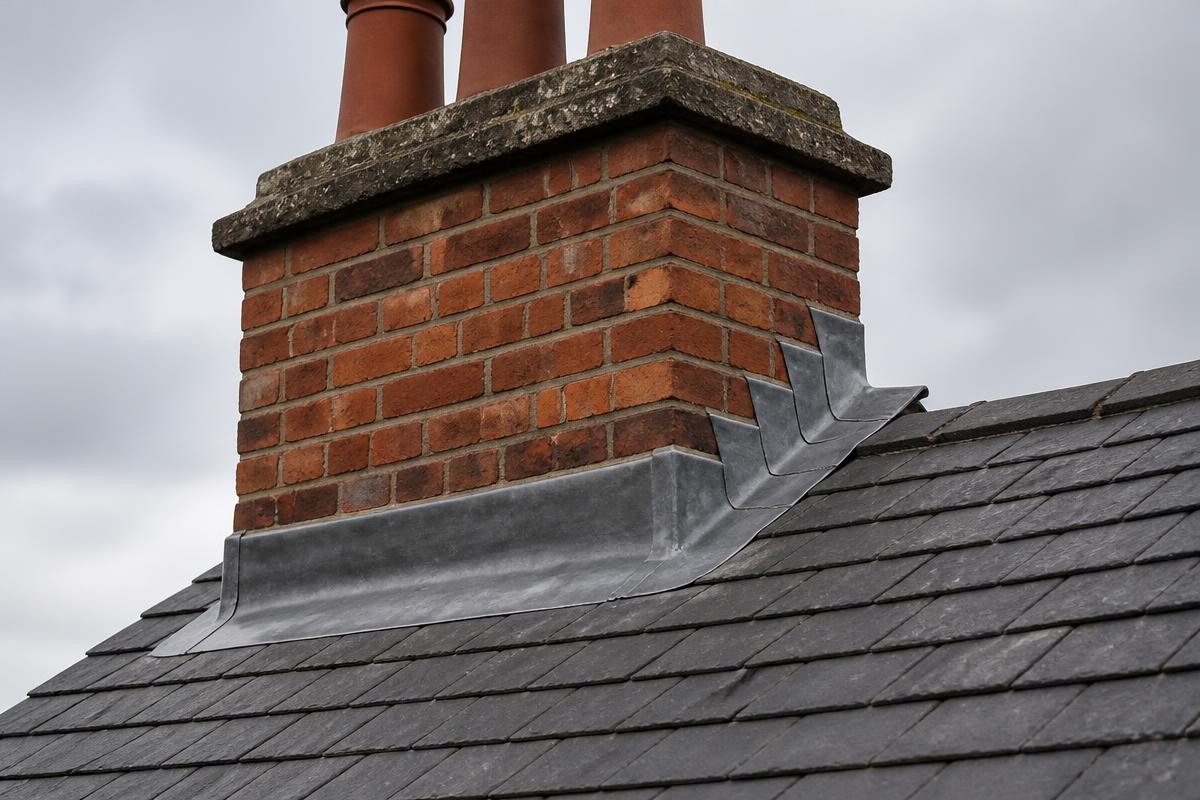
Roof photography

Related questions
Relevant services
Book a roof inspection or drone survey
Documented findings before any repair is quoted. Suitable for pre-purchase checks, storm-event assessment and inaccessible roofs.