

Reviewed by the S Reid Roofing Ltd team — last reviewed 2026-09-15
Quick answer
Common causes include displaced coverings, failed flashing, damaged valleys, chimney defects, rooflight details, flat-roof failures and storm damage. Water can travel inside the roof before appearing on a ceiling, so the visible damp patch is not always directly beneath the defect.
At a glance
- Water often travels sideways along timbers before it drips.
- A leak can have more than one contributing defect.
- The visible mark is a starting point, not the diagnosis.
- Weather conditions at the time the leak appears are useful evidence.
Why the stain and the defect are often in different places
Water entering a roof rarely falls in a straight line to the ceiling below. It tends to run along the top of a rafter, follow the underlay, or track along a batten until it meets something that stops it — a nail, a joint, a dip in the felt — and only then does it drip. The result is a ceiling stain that can sit a surprising distance from where the water actually got in, sometimes a metre or more from the true entry point once the roof pitch and structural layout are taken into account.
This is the main reason a leak investigation needs to start in the loft rather than on the roof slope nearest the stain. Following the moisture path upward, against gravity's apparent direction, is what actually locates the defect. On roofs with a loft conversion or with rooms built into the roof space, this task is harder still, because the timbers and undersides that would normally be visible are boxed in behind plasterboard, and the moisture path can only be inferred from staining pattern and the position of any access hatches.
The usual suspects, roughly in order of frequency
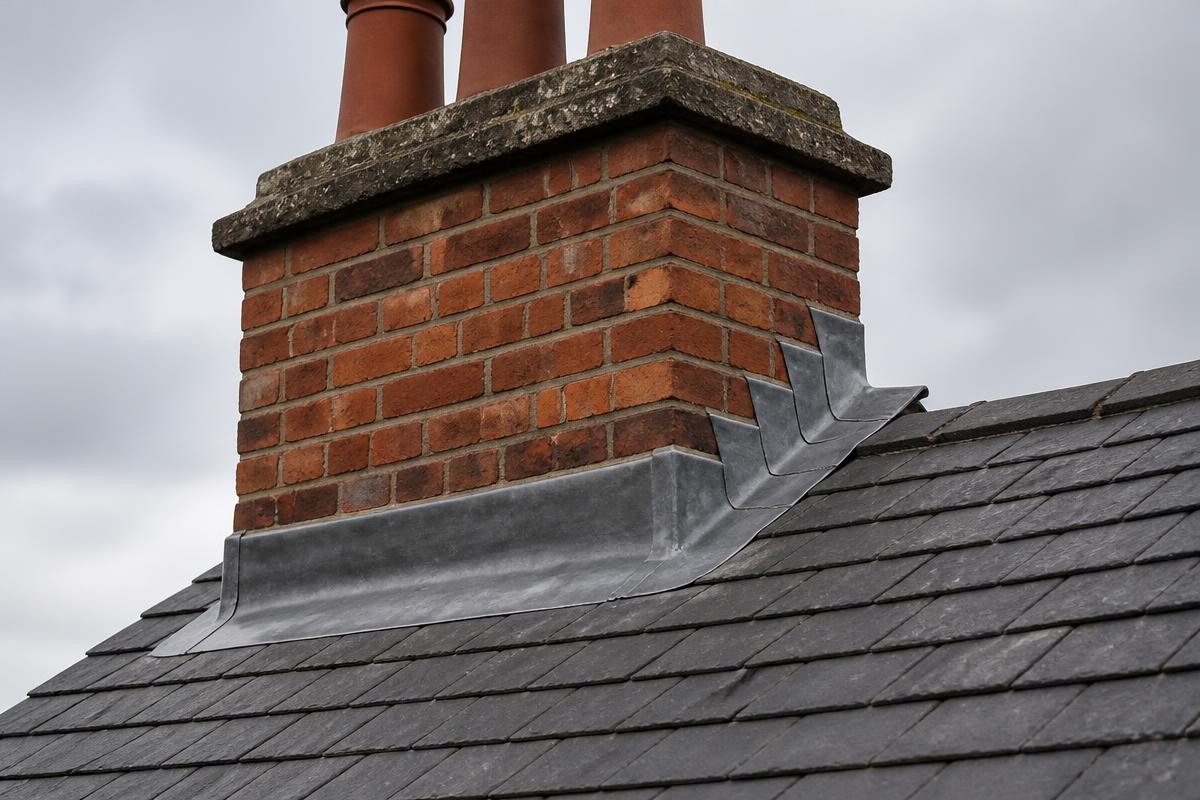
Most leaks trace back to a small number of recurring weak points: displaced or cracked tiles and slates, flashings that have lifted or cracked at chimneys and abutments, valleys where debris has built up or the lining has failed, rooflight seals that have perished, and flat-roof coverings that have split or lost their laps. Storm damage can produce any of these suddenly rather than gradually, which is why a leak that appears immediately after a period of high wind is treated differently from one that has developed slowly over several seasons.
Age and material also play a part. Older cement fillets and torching around chimneys and verges are a common source once they begin to crack, as are nail fixings that have corroded on slate roofs of a certain age, allowing individual slates to slip without any obvious damage being visible from the ground.
- Displaced, cracked or missing tiles and slates.
- Lifted, cracked or poorly dressed lead or flashing at abutments and chimneys.
- Valley debris or a failed valley lining.
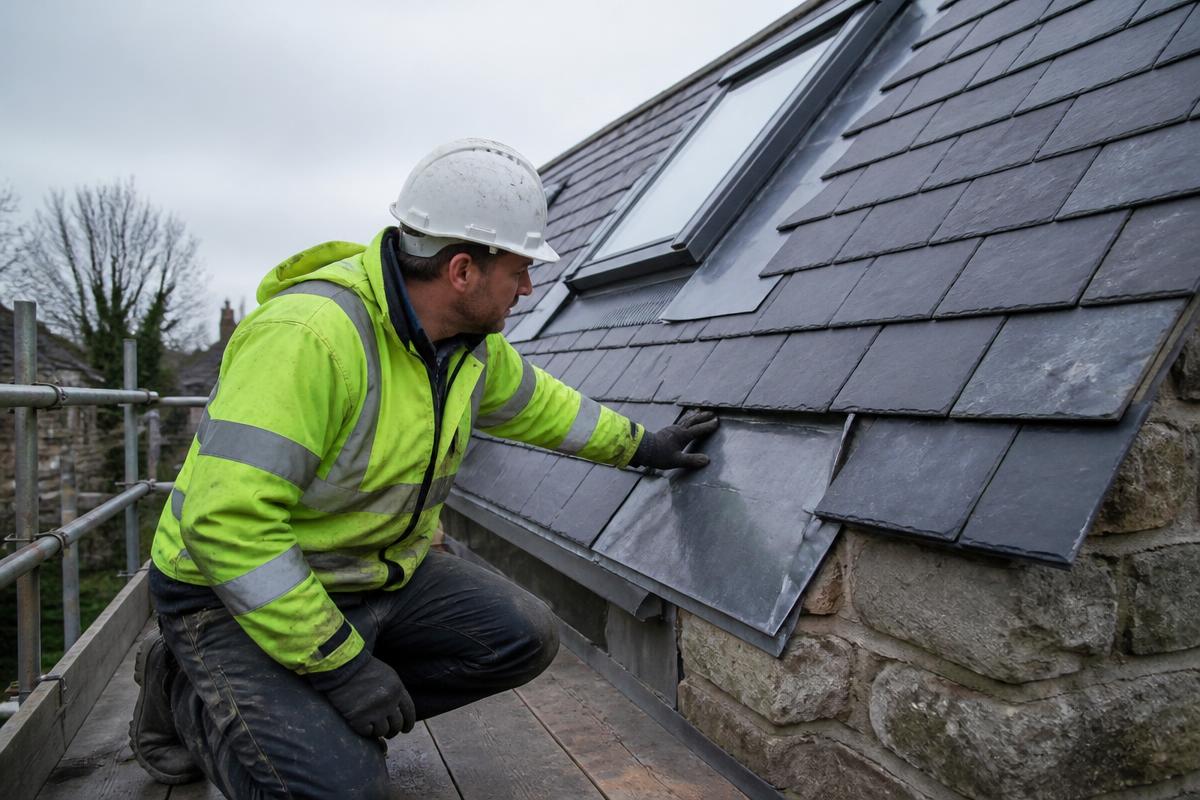
- Perished rooflight seals or cracked rooflight units.
- Split, blistered or delaminating flat-roof coverings.
Why more than one defect can be involved
It is not unusual for an inspection to find two or three contributing issues rather than a single clean cause, particularly on an older roof that has had several small repairs over the years. A cracked flashing might be the main route for water, but a partially blocked gutter nearby can make the same defect worse by allowing water to back up and sit against it for longer than it would otherwise. Treating only the most obvious defect in these cases can leave the leak only partially resolved.
What we would check
During an inspection, areas we would normally look at for this include:
- The loft: staining pattern, timber condition and where moisture actually sits.
- The roof slope directly above and upslope of the stained area.
- Chimneys, valleys, abutments and any rooflight details nearby.
- Gutters and downpipes for overflow that could mimic a roof leak.
- Weather conditions reported at the time the leak was noticed.
Repair, replace or monitor?
Repair
A single, clearly identified defect with sound surrounding materials is usually a repair.
Replace
Where the covering, underlay or flashings are failing in more than one place, repeated repairs stop being the sensible option.
Monitor
Nothing found and no ongoing evidence of water: worth a further check after the next heavy rain.
Roof photography
Related questions
Relevant services
Book a roof inspection or drone survey
Documented findings before any repair is quoted. Suitable for pre-purchase checks, storm-event assessment and inaccessible roofs.