

Reviewed by the S Reid Roofing Ltd team — last reviewed 2026-09-15
Quick answer
Drone imagery can reveal visible defects that may explain a leak, such as moved coverings, failed flashing or damaged roof junctions. It cannot see every concealed defect, and because water can travel internally it may need to be combined with loft or physical investigation.
At a glance
- Visible defects at flashings, junctions and coverings are the drone's strongest use case.
- Water often enters at one point and shows up somewhere else entirely.
- A drone cannot see inside the roof structure or trace an internal path.
- Loft inspection is usually the natural companion to a drone pass on a leak.
A drone survey documents what is visible: covering condition, flashings, chimneys, gutters and rainwater goods. It cannot see concealed timber decay, hidden membrane or fixing failure, every source of water ingress, or confirm structural adequacy — where those are suspected, a hands-on inspection is recommended alongside the imagery.
What drone imagery is good at revealing
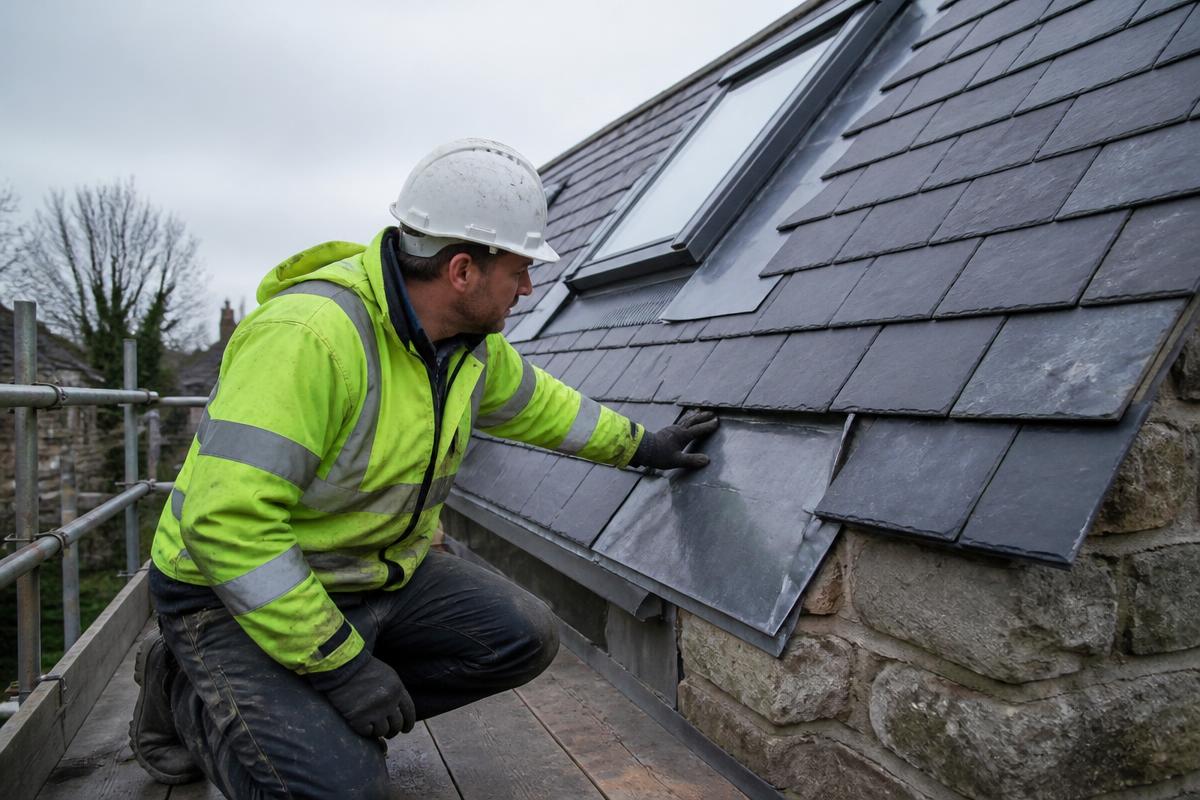
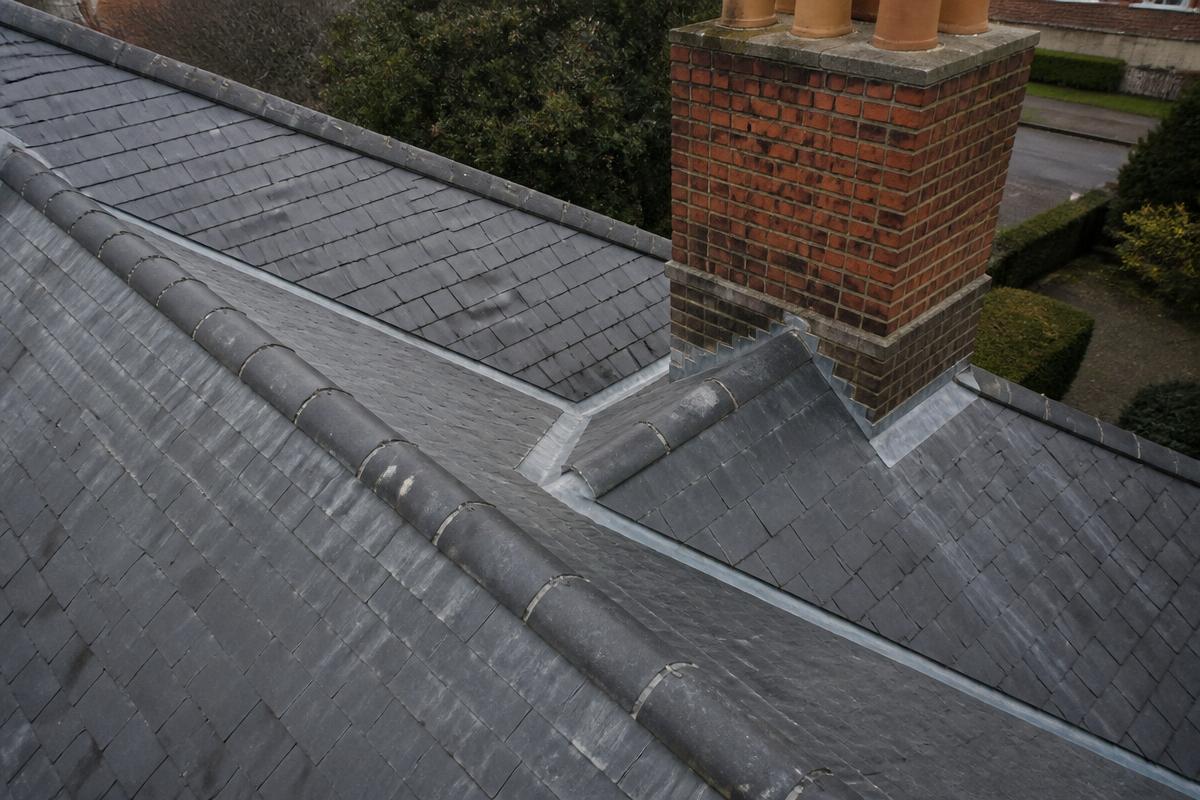
Many leaks trace back to something visible from outside: a slipped tile, a cracked flashing, an open mortar joint at a chimney, a split membrane on a flat roof or debris blocking a valley. A drone can capture these clearly, often more clearly than a ground-level view, and can check the whole roof rather than only the area assumed to be the source.
Why it is not the whole answer
Water rarely enters and stains in the same place. It can travel along a rafter, a batten or the top of a ceiling before showing itself, which means the point of entry and the point of evidence can be metres apart. A drone photographs the roof surface; it cannot follow that path inside the structure.
For that reason, a leak investigation often combines drone imagery of the covering with a loft inspection, and sometimes physical access, so that the visible external evidence can be matched against what is happening inside.
A structured approach to leak diagnosis
A methodical leak investigation typically starts wide — checking the whole roof, not just the assumed source — before narrowing down. Drone imagery is well suited to that first, wide pass, since it can cover every slope, chimney and junction quickly and consistently.
The narrowing-down stage, matching visible evidence to internal staining and testing specific details, is where loft access and sometimes controlled water testing come in, and these steps often confirm or rule out what the drone imagery suggested rather than replacing it.
When to expect more than one visit
Persistent or intermittent leaks, in particular, can be difficult to pin down in a single visit regardless of method, because the conditions that cause the leak (wind direction, rainfall intensity, ice) may not be present on the day of inspection.
Where this is the case, it is more honest to say so and propose a monitoring or follow-up approach than to claim a definitive cause has been found when the evidence does not fully support it.
Being clear about what has and has not been ruled out
A responsible leak report will state plainly which possible causes have been checked and excluded, and which remain open questions requiring further access. This avoids a homeowner assuming a leak has been fully diagnosed when, in reality, only the more visible possibilities have so far been examined.
What we would check
During an inspection, areas we would normally look at for this include:
- Coverings, flashings and junctions across the suspect slope and beyond it.
- Valleys and gutters for blockage or displaced material.
- The loft for staining, damp timber and the direction water appears to have travelled.
- Whether the external evidence and internal evidence point to the same location.
Roof photography
Related questions
Relevant services
Book a Drone Inspection
High-resolution imagery of the covering, flashings, chimneys and rainwater goods, with documented findings before any work is recommended.