

Reviewed by the S Reid Roofing Ltd team — last reviewed 2026-09-15
Quick answer
Depending on the property and flight position, drone imagery can show roof coverings, ridges, valleys, chimneys, flashings, gutters, rooflights and visible surface damage from several angles that are difficult to obtain from ground level. Weather, light and roof complexity all affect how much detail is captured on any given day.
At a glance
- Multiple flight positions can build up a fuller picture than one ground view.
- Detail resolution depends on how close and stable the imagery is.
- Weather and light affect what can be captured on a given day.
- It shows surface condition, not what lies beneath it.
A drone survey documents what is visible: covering condition, flashings, chimneys, gutters and rainwater goods. It cannot see concealed timber decay, hidden membrane or fixing failure, every source of water ingress, or confirm structural adequacy — where those are suspected, a hands-on inspection is recommended alongside the imagery.
What tends to be clearly visible
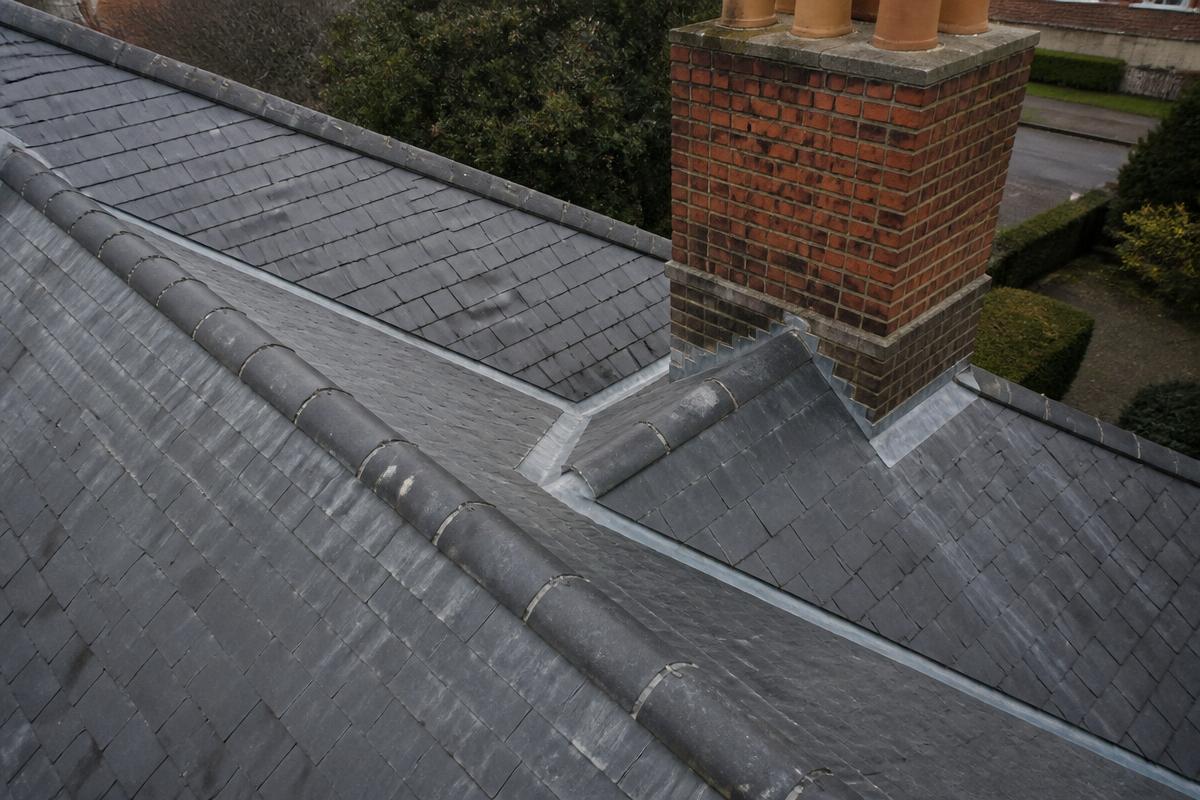
A drone can typically capture the condition of tiles, slates or other coverings across each slope, the state of ridge and hip lines, ponding or debris in valleys, the condition of chimney stacks, pots and flashings, the state of gutters and downpipe hoppers, and rooflights or other roof penetrations.
- Coverings: cracked, slipped, missing or moss-affected tiles or slates.
- Ridges and hips: loose, cracked or displaced ridge tiles and mortar.
- Valleys and gutters: debris, ponding, displaced material and visible blockage.
- Chimneys: pointing, flaunching, pots and flashing condition.
- Flat roof surfaces: visible ponding, surface cracking and damaged trims.
What affects the quality of what is seen
Light, weather and wind conditions on the day all affect image clarity and how close the drone can safely be flown. Complex roofscapes with multiple levels, overhangs or nearby obstructions can also limit certain viewpoints, which is why some areas may still need a ground or loft check to complete the picture.
Why the same roof can look different on different visits
Two drone passes on the same roof, weeks apart, will not necessarily produce identical results. Wet coverings can hide surface cracking that shows clearly when dry; low winter sun can create shadows that obscure detail visible under flatter light; recent wind can have shifted debris in a valley since the last check.
This variability is a normal feature of any external visual inspection, not something specific to drones, but it is worth homeowners understanding so that a single set of images is read as a snapshot rather than an unchanging record.
Using imagery over time
Where a defect is being monitored rather than repaired immediately, repeating a drone pass at a later date and comparing the two sets of images is often more informative than either set on its own, since it shows whether something has worsened, stayed the same, or been resolved by other work.
Interpreting imagery with the reported problem in mind
The same set of drone images can be read differently depending on the question being asked. A general condition check will look broadly across every slope for anything of note, while a leak investigation will focus more narrowly on junctions and penetrations near the reported symptom, even though the raw imagery captured may be similar in both cases.
What we would check
During an inspection, areas we would normally look at for this include:
- Every visible slope, not only the one initially reported as a concern.
- Ridge, hip, valley and verge lines from more than one angle.
- Chimney faces, including those not visible from ground level.
- Gutters, downpipe hoppers and rooflight surrounds.
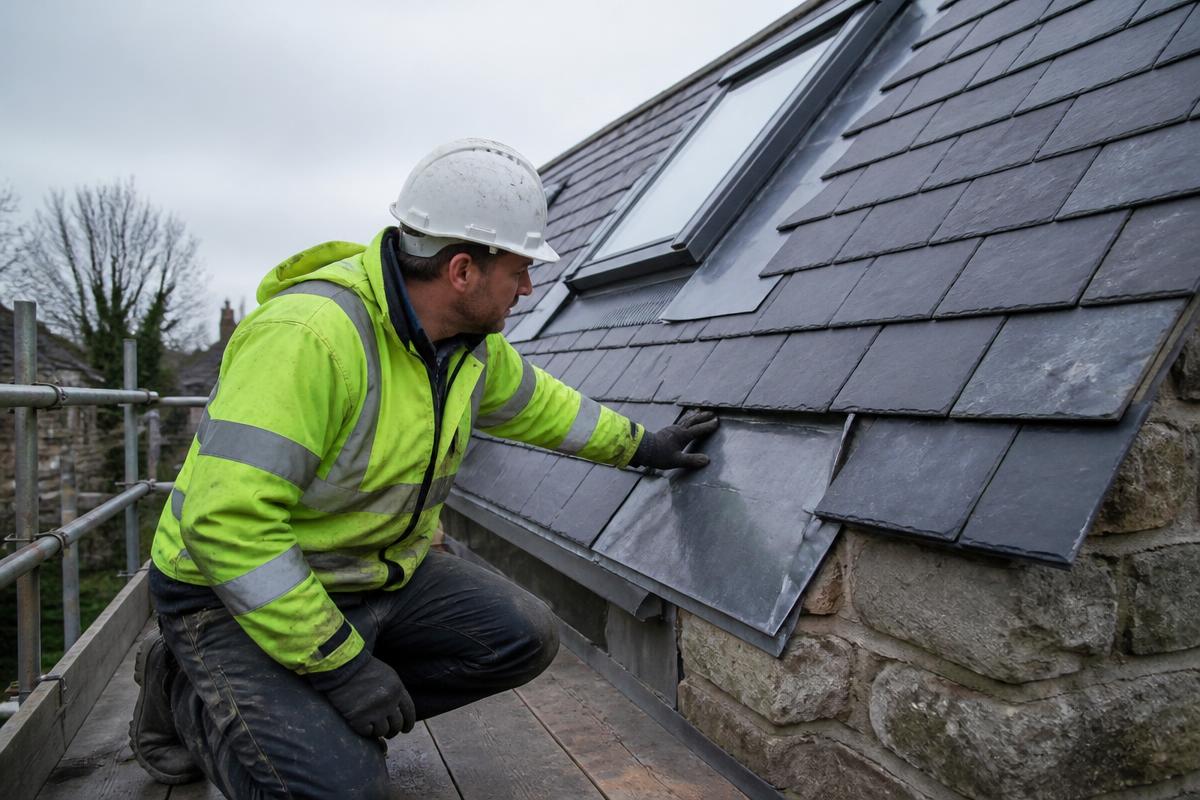
Roof photography
Related questions
Relevant services
Book a Drone Inspection
High-resolution imagery of the covering, flashings, chimneys and rainwater goods, with documented findings before any work is recommended.