

Reviewed by the S Reid Roofing Ltd team — last reviewed 2026-09-15
Quick answer
Drone imagery cannot reliably assess concealed timber decay, hidden underlay, fixings beneath the covering or every source of water ingress. It is a powerful visual inspection method, not a substitute for every hands-on, internal or invasive investigation, and stating these limits plainly is part of giving an honest assessment rather than overselling what a camera can show.
At a glance
- A camera can only record what is visible on the surface.
- Structural adequacy cannot be confirmed from external imagery.
- Some leaks have no clearly visible external cause at all.
- Stating these limits honestly is part of a trustworthy inspection, not a weakness.
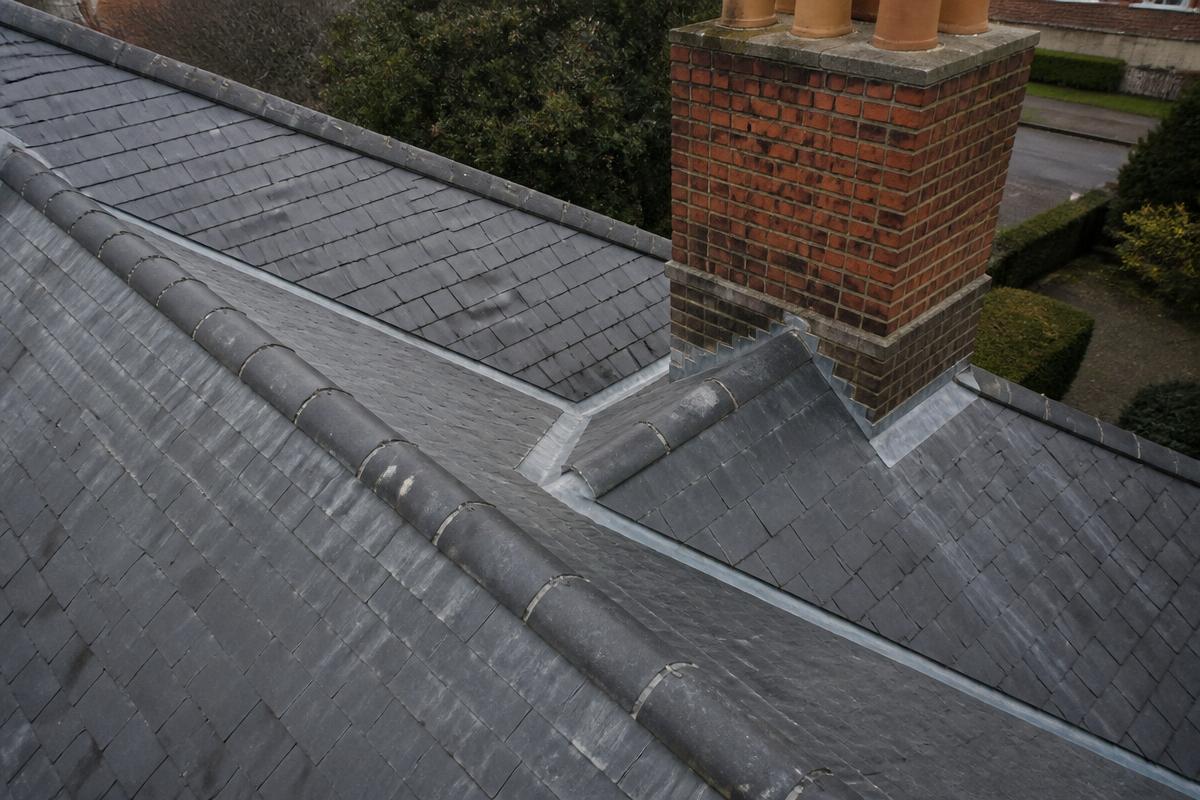
A drone survey documents what is visible: covering condition, flashings, chimneys, gutters and rainwater goods. It cannot see concealed timber decay, hidden membrane or fixing failure, every source of water ingress, or confirm structural adequacy — where those are suspected, a hands-on inspection is recommended alongside the imagery.
The line between visible and concealed
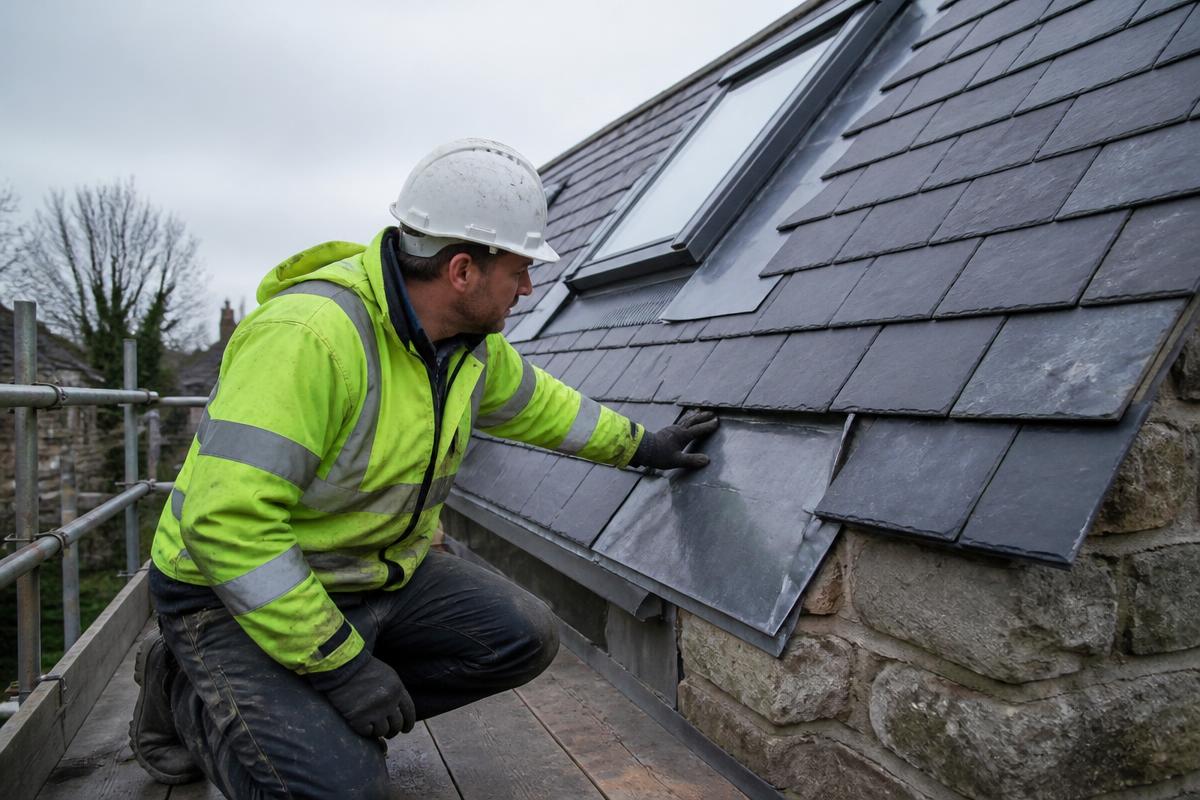
A drone photographs the outer surface of the roof — the covering, the flashings, the ridge and valley lines, the gutters. It cannot see the condition of the timber battens or rafters beneath that surface, the state of the underlay or membrane, whether fixings have corroded, or whether a repair carried out years ago was done properly. Those things can only be confirmed by lifting a covering, opening up a section, or checking from inside the loft.
Why this matters for a diagnosis
Some leaks and defects genuinely have no clear external sign — water may be tracking along a hidden path with no visible break in the covering above it. Structural questions, such as whether a roof's movement is stable or ongoing, also sit outside what a camera can confirm and may need a structural engineer's input rather than any visual inspection, drone or otherwise.
None of this makes drone imagery less useful; it simply means it answers a particular set of questions well, and other questions need a different method.
Examples worth stating plainly
A drone cannot confirm whether roofing felt or membrane beneath the visible tiles has perished, whether nails or clips fixing the covering have corroded, whether timber battens or rafters have begun to decay, or whether insulation and ventilation within the roof void are adequate. Each of these needs a different method to check properly — usually loft access, or lifting a section of covering.
What an honest report looks like
A trustworthy inspection report will separate what has actually been confirmed visually from what is inferred or suspected, and will recommend the specific next step needed to close that gap, rather than stretching a visual observation into a conclusion it cannot support. That distinction matters most when a homeowner is deciding how urgently, and how extensively, to act.
Being upfront about what a report will not contain
A homeowner commissioning a drone inspection should be told in advance, not after the event, which aspects of roof condition the method will not be able to confirm. Setting that expectation early avoids any impression later that the inspection was incomplete or misleading.
What we would check
During an inspection, areas we would normally look at for this include:
- Whether the visible evidence is sufficient to explain the reported problem.
- Whether loft access can confirm or rule out what the imagery suggests.
- Whether physical, invasive investigation is needed where concealment is suspected.
- Whether a structural opinion is required rather than a further visual check.
Roof photography
Related questions
Relevant services
Book a Drone Inspection
High-resolution imagery of the covering, flashings, chimneys and rainwater goods, with documented findings before any work is recommended.