

Reviewed by the S Reid Roofing Ltd team — last reviewed 2026-09-15
Quick answer
A drone can reduce the need to walk onto a high, fragile or uncertain roof merely to obtain an initial visual assessment. Physical inspection may still be necessary where materials, fixings or concealed details need to be touched, lifted or tested.
At a glance
- Walking a roof purely to see it carries access risk that a drone can avoid.
- Fragile or brittle coverings are particularly suited to an initial drone pass.
- Drone imagery cannot substitute for touching, lifting or testing a detail.
- The decision to walk a roof afterwards should be based on what the drone found.
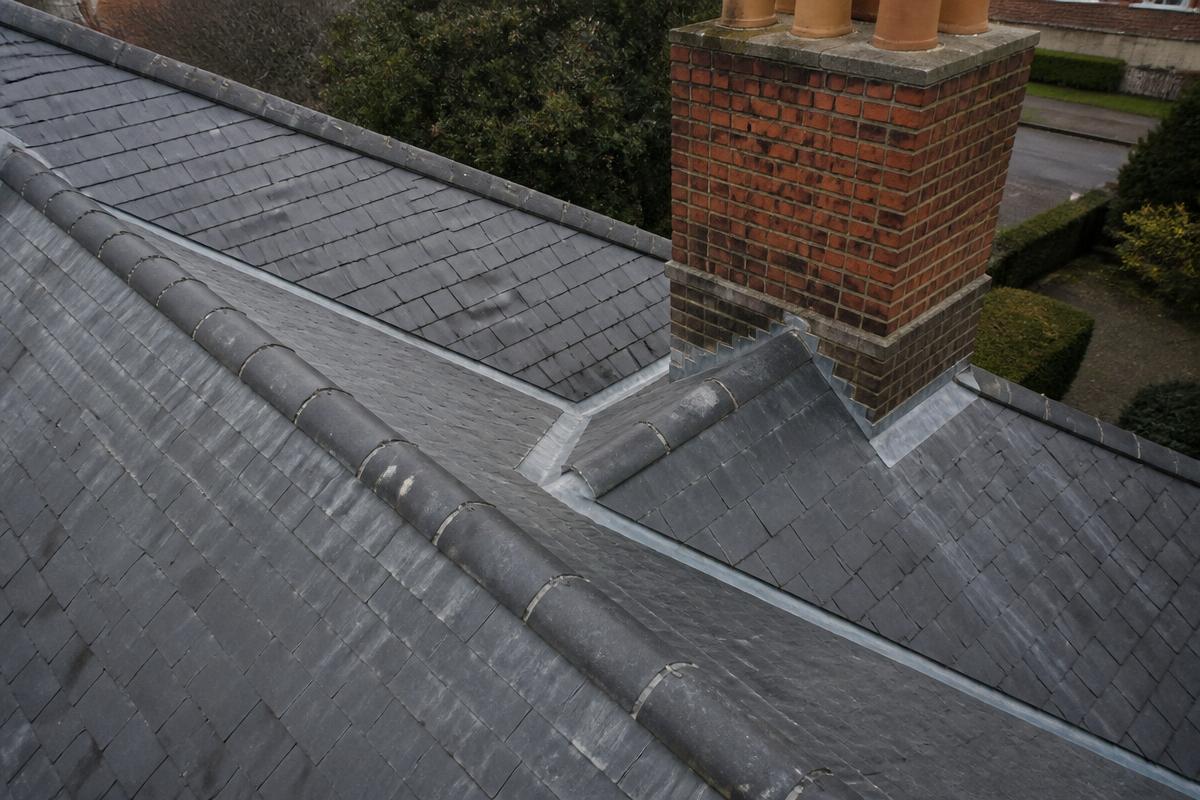
A drone survey documents what is visible: covering condition, flashings, chimneys, gutters and rainwater goods. It cannot see concealed timber decay, hidden membrane or fixing failure, every source of water ingress, or confirm structural adequacy — where those are suspected, a hands-on inspection is recommended alongside the imagery.
Reducing unnecessary access
Older or fragile coverings, steep pitches and roofs with limited safe access points all carry more risk when someone needs to walk them simply to see what is there. A drone pass can establish, before anyone sets foot on the roof, whether there is anything visible that justifies that access, and roughly where.
This is especially useful where the roof turns out to be in reasonable condition and no further access is needed at all.
Where physical access is still required
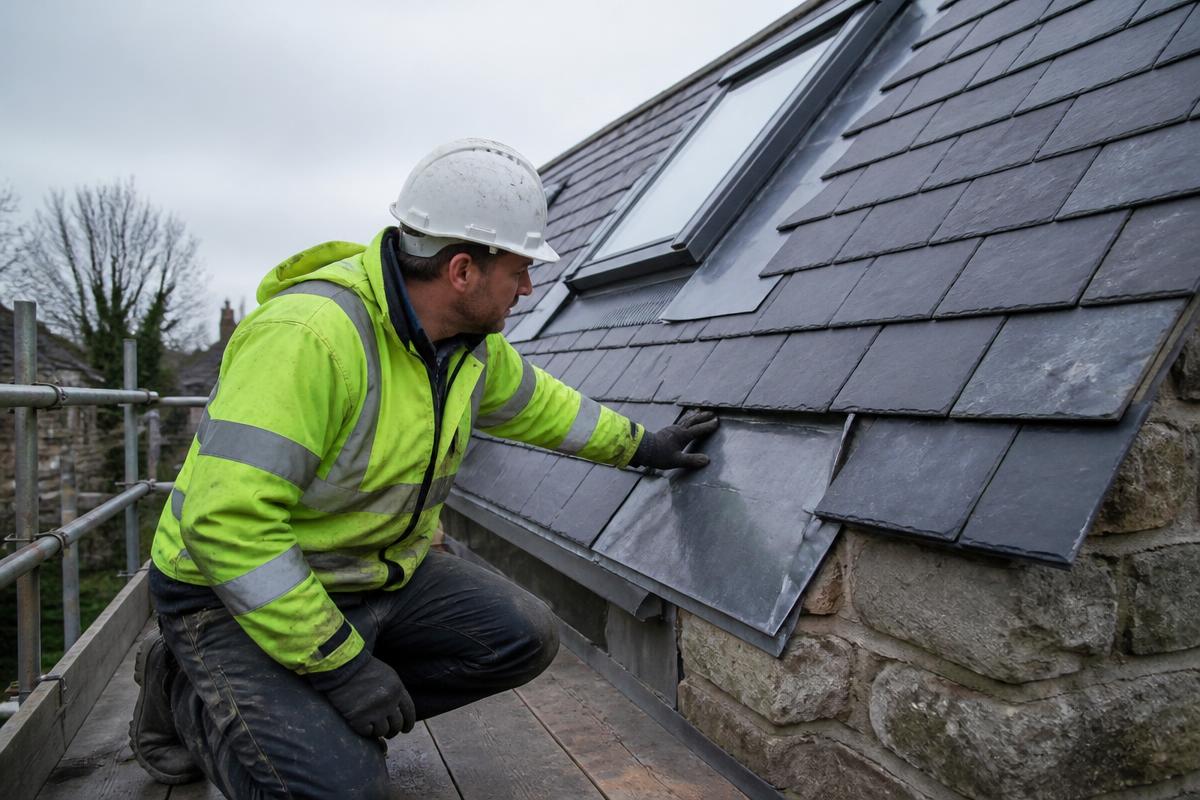
Some findings can only be confirmed by touch: whether a tile is actually loose rather than just appearing displaced, whether a batten has decayed, whether a flashing lifts under gentle pressure, or whether a membrane is still adhered. A drone can point strongly towards these questions but cannot answer them, so hands-on investigation remains necessary once a defect needs testing or repair.
How the decision is actually made
The choice between a drone-only pass and a walked inspection should follow from what the drone finds, not be fixed in advance. If nothing visible warrants a closer look, there may be no need to walk the roof at all. If the drone reveals something ambiguous, that specific area — not necessarily the whole roof — is where physical access is then justified.
This staged approach avoids the two extremes of walking every roof out of habit, or relying on aerial images alone when something genuinely needs to be touched.
Fragile and older coverings deserve particular caution
Some older coverings, including certain concrete and clay tiles, natural slate that has become brittle, and some fibre-cement products, can be damaged simply by someone walking across them, regardless of the roofer's care. On these roofs, a drone pass to establish general condition before deciding whether walked access is even appropriate is a sensible precaution rather than an unnecessary extra step.
Deciding on a case-by-case basis
There is no fixed rule that a drone should always precede physical access, or that physical access is always unnecessary once a drone has flown. The right sequence depends on the roof's condition, height, covering type and what the homeowner actually needs to know, and a competent inspector should be able to explain that reasoning for the specific property in question.
What we would check
During an inspection, areas we would normally look at for this include:
- Whether visible imagery is sufficient to answer the original question.
- Areas where displacement or damage is suspected but not conclusively visible.
- Whether the covering type or pitch makes walked access higher risk than usual.
- What, if anything, still needs to be touched, lifted or tested.
Roof photography
Related questions
Relevant services
Book a Drone Inspection
High-resolution imagery of the covering, flashings, chimneys and rainwater goods, with documented findings before any work is recommended.