

Reviewed by the S Reid Roofing Ltd team — last reviewed 2026-09-15
Quick answer
Sometimes a drone can avoid scaffolding that would otherwise be needed purely to view the roof during initial diagnosis. If a repair requires hands-on access, scaffolding or another suitable access system may still be necessary. The two decisions are separate, and it is worth establishing the likely scope of work before assuming either way.
At a glance
- Scaffolding for looking and scaffolding for working are separate decisions.
- A drone can often replace the first without affecting the second.
- Repair method, not diagnosis method, usually determines whether scaffolding is required.
- Some defects can be fixed from a ladder or roof edge without full scaffolding at all.
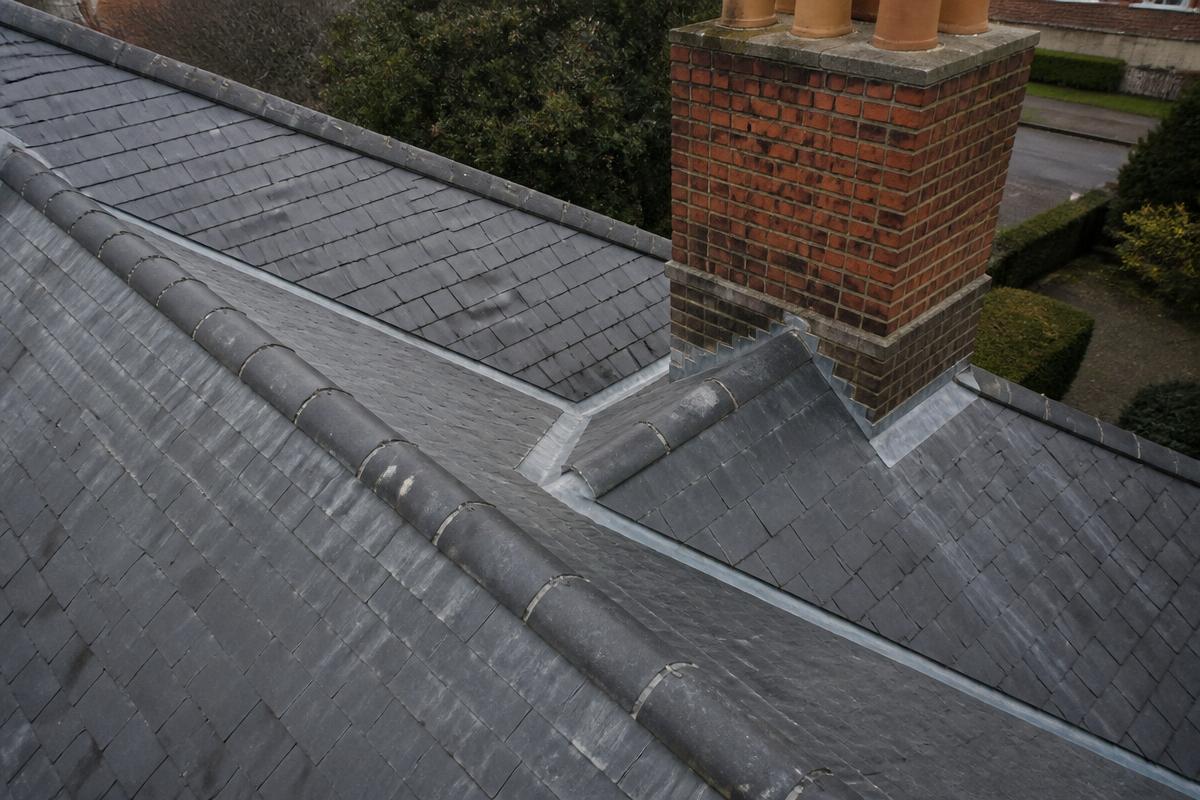
A drone survey documents what is visible: covering condition, flashings, chimneys, gutters and rainwater goods. It cannot see concealed timber decay, hidden membrane or fixing failure, every source of water ingress, or confirm structural adequacy — where those are suspected, a hands-on inspection is recommended alongside the imagery.
Two different reasons for scaffolding
Scaffolding is sometimes erected purely so that someone can see a roof properly before deciding what, if anything, is wrong. A drone can frequently do this job instead, at lower cost and without the same lead time, particularly where the outcome may be that no work is required.
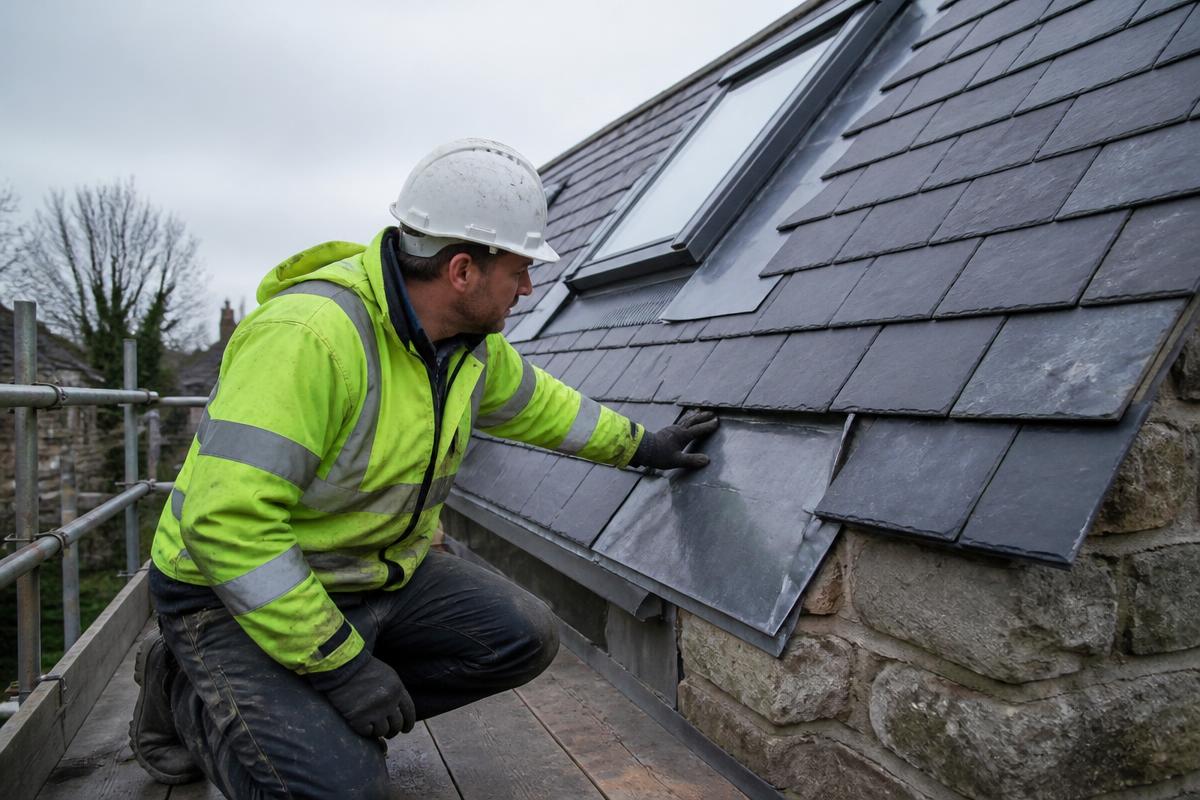
Scaffolding is also erected to allow safe, sustained physical work — carrying materials, working at height for an extended period, or protecting the roofer and anyone below. That need does not disappear because a drone was used to diagnose the problem.
Working out which applies
The honest approach is to establish, from drone or ground-level evidence, roughly what work is likely to be needed, and then decide the appropriate access method for that specific job. A small, easily reached repair may need only a ladder; a larger area of re-covering will usually need scaffolding regardless of how it was first identified.
Questions worth asking before assuming either way
Before ruling scaffolding in or out, it helps to ask how large the affected area is likely to be, whether the roof pitch and height allow safe short-duration access by ladder, and whether the work involves handling heavy materials that are impractical without a working platform.
The answers to these questions, not the method used to first spot the problem, are what should genuinely determine the access decision for any repair.
Independent access equipment as a middle ground
Between a simple ladder and full scaffolding, there are other access options — such as tower scaffolding or mobile platforms — that may suit certain repairs without the time and cost of a full scaffold structure. Which of these is appropriate again depends on the specific job, not on how the defect was originally diagnosed.
Being clear with a homeowner from the outset
A trustworthy roofer will explain, before any work begins, whether the scaffolding decision for a repair is separate from how the defect was originally diagnosed. This avoids any impression that a drone inspection was used to justify unnecessary access equipment, or conversely that it was used to avoid access that the work genuinely requires.
What we would check
During an inspection, areas we would normally look at for this include:
- Whether the current need is to look, or to actually carry out work.
- The likely scale and location of any repair once documented.
- Whether the repair area can be safely and properly reached without full scaffolding.
Roof photography
Related questions
Relevant services
Book a Drone Inspection
High-resolution imagery of the covering, flashings, chimneys and rainwater goods, with documented findings before any work is recommended.