

Reviewed by the S Reid Roofing Ltd team — last reviewed 2026-09-15
Quick answer
A useful leak investigation combines the position and pattern of internal moisture with inspection of the external covering, flashings, valleys, chimneys, rooflights and drainage. Loft observations, dated photographs and drone imagery may provide additional evidence where roof areas are difficult to view.
At a glance
- Internal evidence and external evidence are cross-checked against each other.
- The loft is usually the most informative single vantage point.
- Drone imagery helps view difficult areas but does not replace a hands-on check.
- A dated photographic record makes it easier to track whether a repair has worked.
A drone survey documents what is visible: covering condition, flashings, chimneys, gutters and rainwater goods. It cannot see concealed timber decay, hidden membrane or fixing failure, every source of water ingress, or confirm structural adequacy — where those are suspected, a hands-on inspection is recommended alongside the imagery.
Starting from the inside
A methodical investigation usually begins with the internal evidence: where the staining is, its shape, whether it is growing, and whether it correlates with particular weather. In the loft, following the moisture path along rafters, battens and underlay toward its highest point is often the single most useful step, since it points toward the general area of the roof to examine from outside. Where the loft is boarded, insulated to a high standard, or converted into living space, this step is harder, and more reliance has to be placed on the pattern of the internal stain itself.
Checking the external details in that area
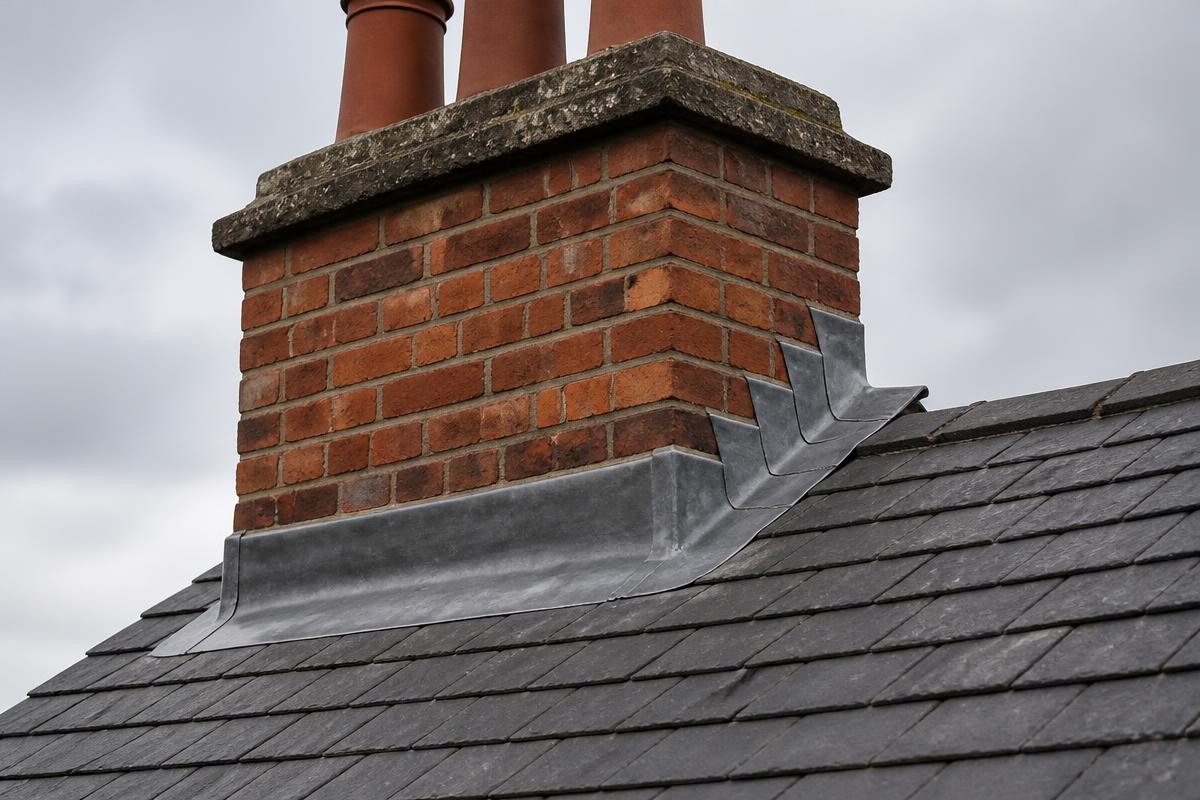
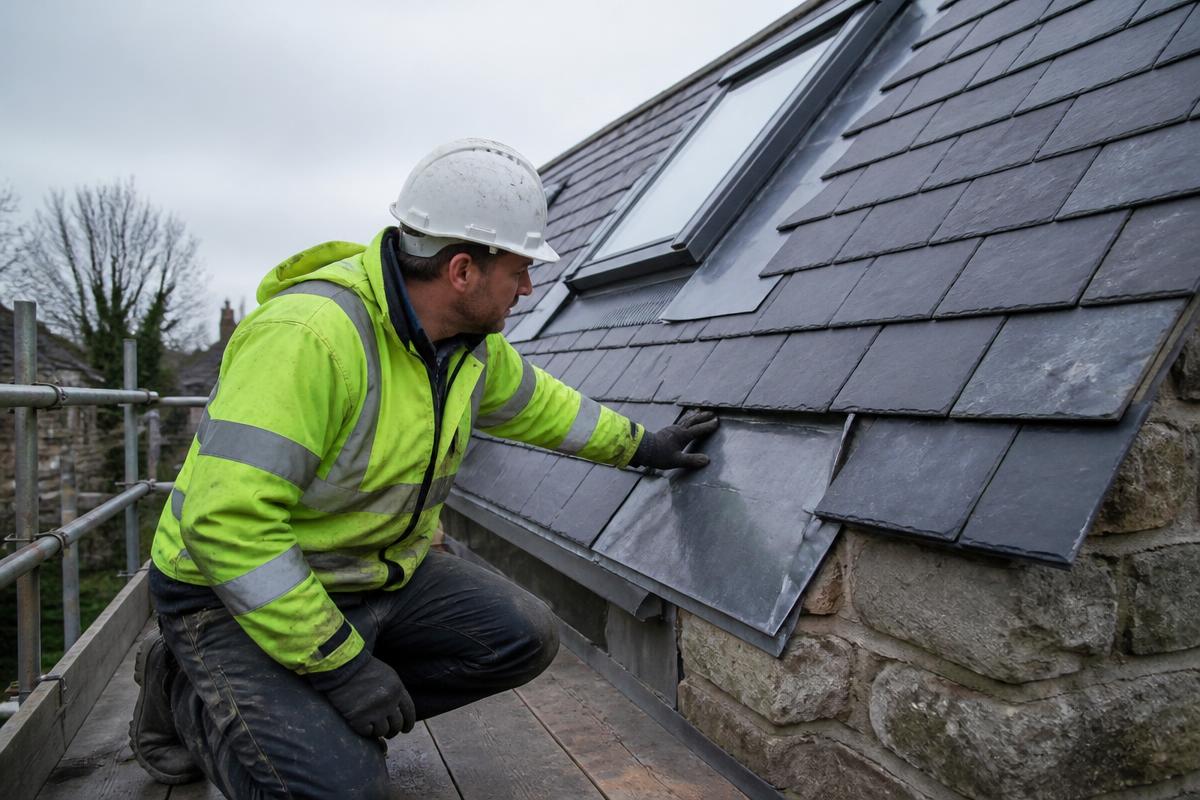
With the general area identified, attention turns to the coverings, flashings, valleys, chimneys, rooflights and drainage in that part of the roof, looking for the kind of defects that produce this pattern of ingress — lifted laps, cracked flashing, blocked valleys, perished seals or damaged gutters causing water to back up under the covering. This stage often involves close-up access, whether from a ladder, scaffold tower or safe roof access, because many of the relevant defects are not visible from ground level.
Where drone imagery adds value
Drone imagery is genuinely useful for viewing large, steep or awkward areas of roof safely and from multiple angles, helping to spot visible surface defects that would otherwise require extensive access equipment to see. It shows what the covering looks like from outside; it cannot show what has happened underneath the covering, such as decayed battens, a failed membrane or a fixing that has corroded out of sight. Confirming those requires a hands-on inspection at the relevant point.
In practice, drone photographs work best as a way of narrowing down which area of a large or complex roof deserves closer, hands-on attention, rather than as a substitute for that closer inspection.
When a repeat visit is needed
Not every leak reveals itself on the first visit, particularly one that only occurs in specific weather. Where no source can be confirmed with confidence, the honest approach is to say so and arrange a return visit during or shortly after the triggering conditions, rather than guessing and carrying out a repair that may not address the actual cause.
What we would check
During an inspection, areas we would normally look at for this include:
- Internal staining pattern, extent and correlation with weather.
- Loft timbers, underlay and insulation along the likely moisture path.
- External coverings, flashings, valleys, chimneys and rooflights in the identified area.
- Guttering and drainage for overflow that could be mistaken for a roof leak.
- Whether drone imagery of difficult elevations adds useful visual evidence.
Repair, replace or monitor?
Repair
Once the source is confirmed, most single-defect leaks are resolved with a targeted repair.
Monitor
Where no source can be confirmed on a dry day, a return visit during or after the triggering weather may be needed.
Roof photography
Related questions
Relevant services
Book a roof inspection or drone survey
Documented findings before any repair is quoted. Suitable for pre-purchase checks, storm-event assessment and inaccessible roofs.