

Reviewed by the S Reid Roofing Ltd team — last reviewed 2026-09-15
Quick answer
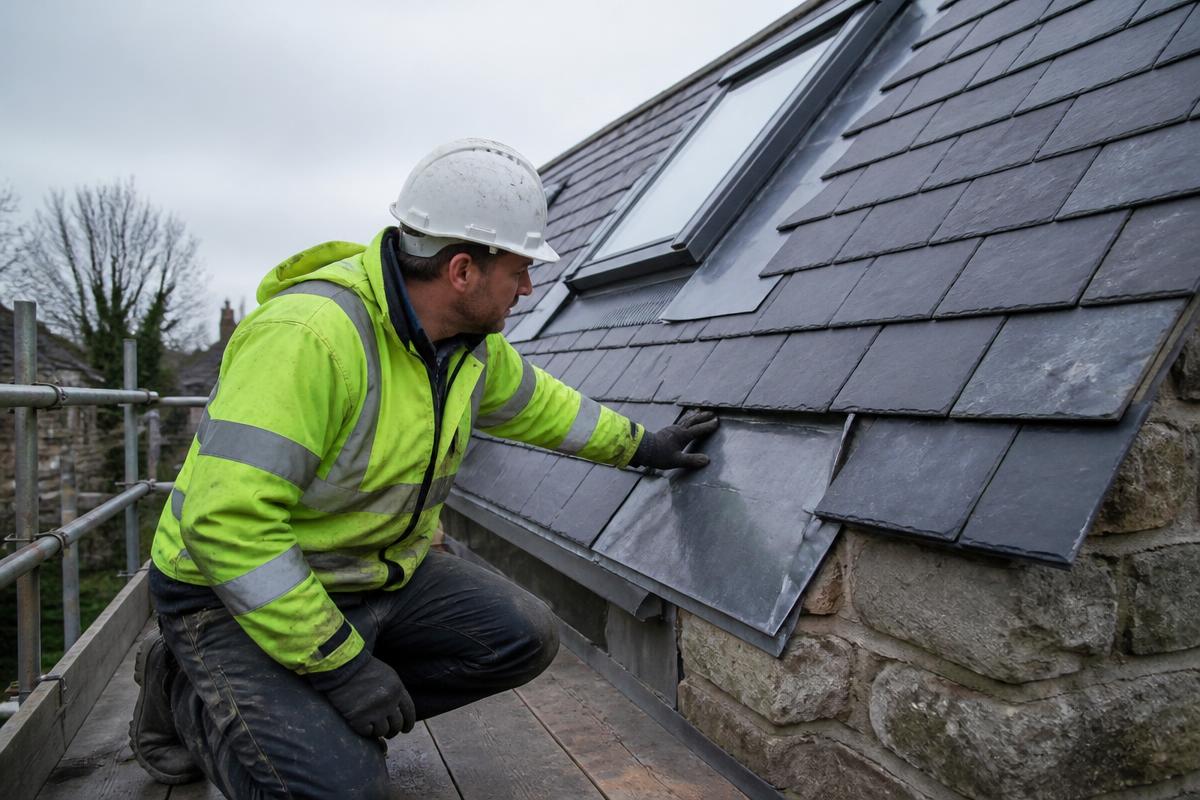
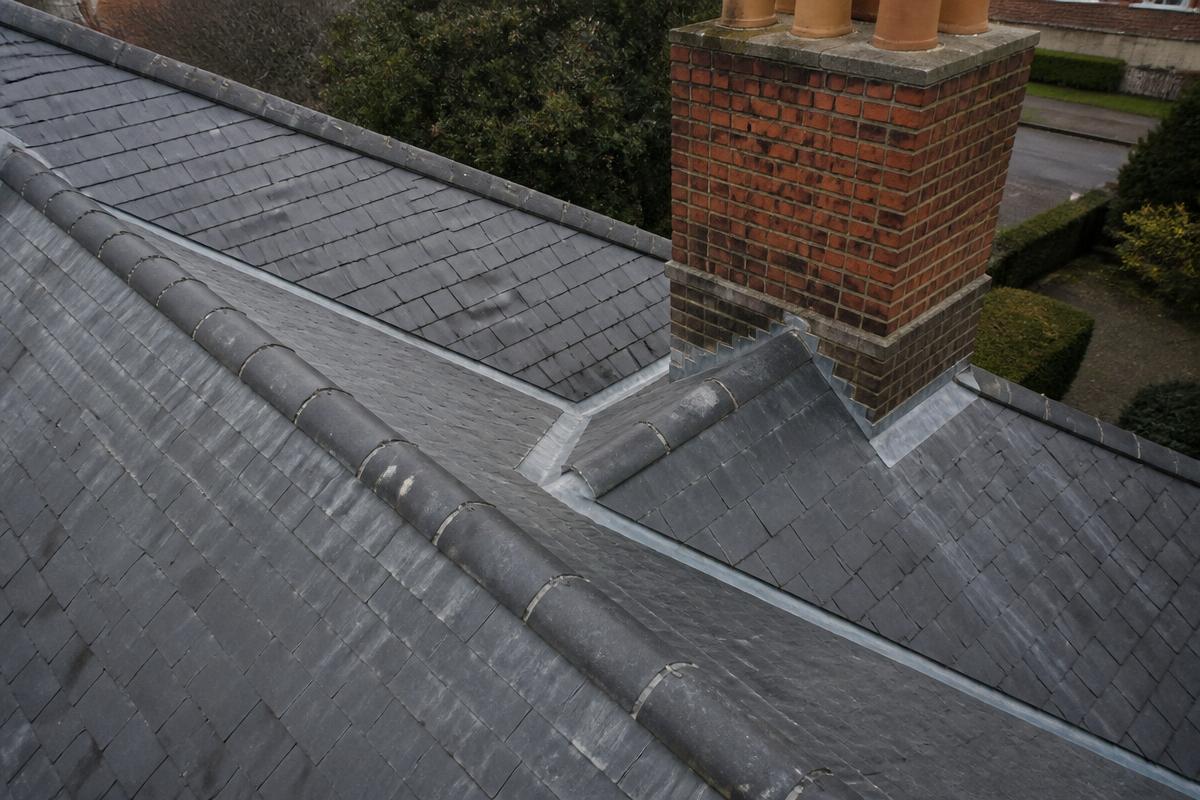
A roof inspection assesses visible coverings and vulnerable details such as ridges, valleys, flashings, chimneys, roofline and drainage. Depending on access and the problem, observations may also be made from the loft, from physical roof access or using drone imagery.
At a glance
- An inspection looks at the whole roof, not only the reported defect.
- The method used (ground, loft, physical access or drone) depends on the roof and the question being asked.
- Findings should be documented, not just described verbally.
- Urgency and cause are established before any repair is recommended.
What is looked at, and why
An inspection normally begins with the reported problem, but does not stop there. The covering across each slope, ridge and verge details, valleys, chimney flashings and the roofline are all vulnerable points where water first finds a way in, so they are checked even if they are not where the symptom appeared.
Where access allows, the loft is also checked. Staining, daylight, damp timber and insulation condition inside the roof space often tell a more complete story than what can be seen from outside, particularly where a leak has been travelling before it shows on a ceiling.
Choosing the right method for the roof
Not every roof needs to be walked to be assessed. Ground-level observation, loft inspection, physical roof access and drone imagery each have a role, and which is used depends on the height, pitch, fragility and complexity of the roof, along with what the homeowner needs to know.
The output should always be a set of documented findings — what was seen, where, and what it means — rather than a verbal impression. That record is what any recommendation is then built on.
Recording urgency, not just description
Once findings are gathered, each one needs to be placed into some kind of priority order rather than left as a flat list. A cracked ridge tile losing mortar in an exposed location is not the same priority as a hairline crack in a well-sheltered valley, even though both might appear on the same roof on the same day.
This classification step is what turns a set of observations into something a homeowner can actually act on — knowing what needs attention this month, what can be scheduled for the next maintenance visit, and what is simply worth keeping an eye on.
Where an inspection stops and further investigation begins
A visual inspection, whether from the ground, the loft or the roof itself, can only report what is actually visible on the day. Where staining suggests a problem but its full extent cannot be confirmed without lifting a covering or opening up a section, that limitation should be stated honestly rather than guessed at.
In those cases, the inspection's job is to narrow down where further, more invasive investigation should be focused, rather than to pretend a definitive answer has already been reached.
How urgency classification is actually applied
Findings are typically grouped into bands such as immediate (active water ingress or a safety risk), near-term (defects likely to cause a problem within a season) and monitor (cosmetic or early-stage issues not yet causing damage). This banding gives a homeowner a clear sense of sequence rather than an undifferentiated list of concerns.
Where a defect sits close to the boundary between bands, the report should say so and explain the reasoning, rather than forcing every finding into a tidy category it does not quite fit.
What we would check
During an inspection, areas we would normally look at for this include:
- The covering across every slope, not only the reported area.
- Ridges, valleys, verges and chimney flashings.
- The roofline, fascias, soffits and drainage.
- The loft for staining, daylight, damp timber and ventilation.
- Whether physical access or drone imagery is the more appropriate method.
Roof photography
Related questions
Relevant services
Book a roof inspection or drone survey
Documented findings before any repair is quoted. Suitable for pre-purchase checks, storm-event assessment and inaccessible roofs.