

Reviewed by the S Reid Roofing Ltd team — last reviewed 2026-09-15
Quick answer
A specialist roof inspection can be valuable where the covering is older, difficult to view or has already raised concerns. It can provide more focused information about visible roofing defects and help a buyer understand possible future repair requirements. It works alongside the buyer's own survey rather than replacing it, adding evidence rather than a second, competing opinion.
At a glance
- A specialist inspection complements a buyer's survey rather than replacing it.
- Older coverings and complex roofs benefit most from a closer look.
- Findings should describe what is visible now, not predict a fixed lifespan.
- Timing matters — before exchange is more useful than after completion.
When it is worth arranging
Most house purchases include a general survey that considers the roof, but the level of roofing detail can vary with the survey type and what could be seen on the day. Where the roof is older, has an unusual covering, or the survey has flagged a concern without fully explaining it, a specialist inspection can add useful, focused evidence.
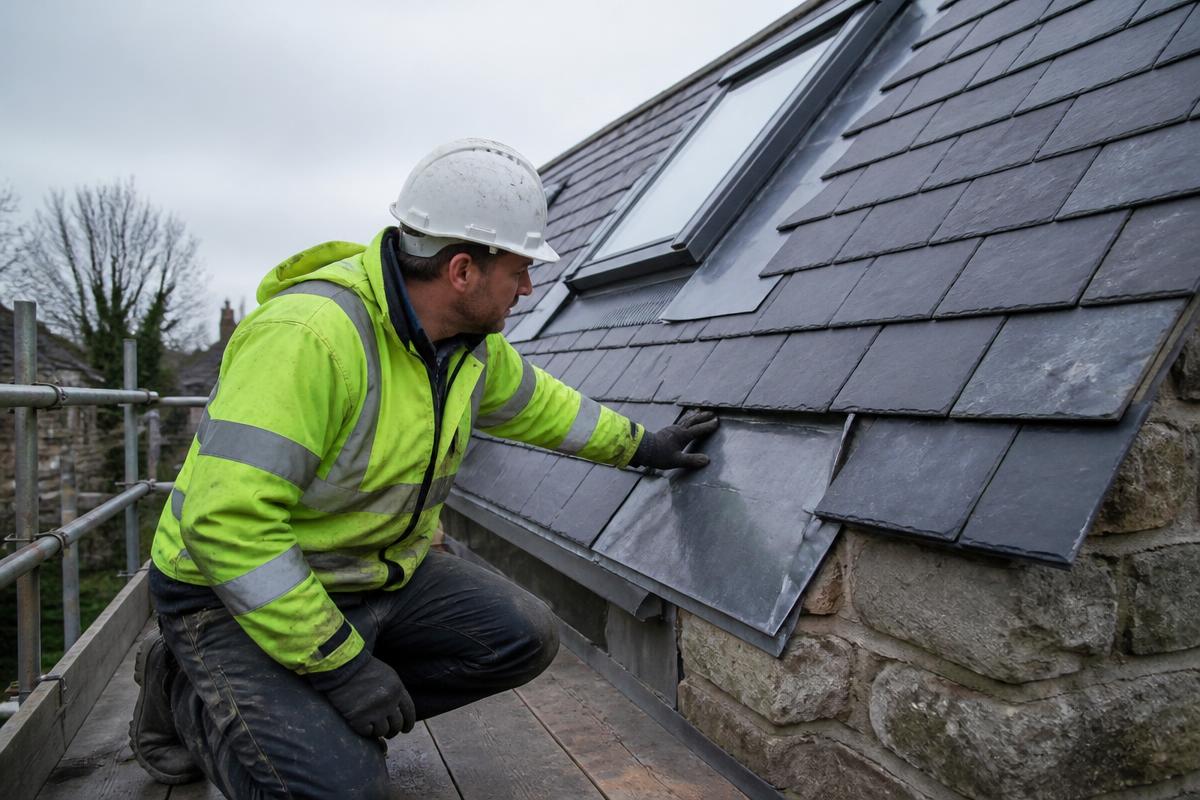
This is particularly relevant on roofs that are high, steeply pitched or otherwise difficult to view properly from ground level, where a general surveyor's observations may reasonably be limited.
What it can realistically tell a buyer
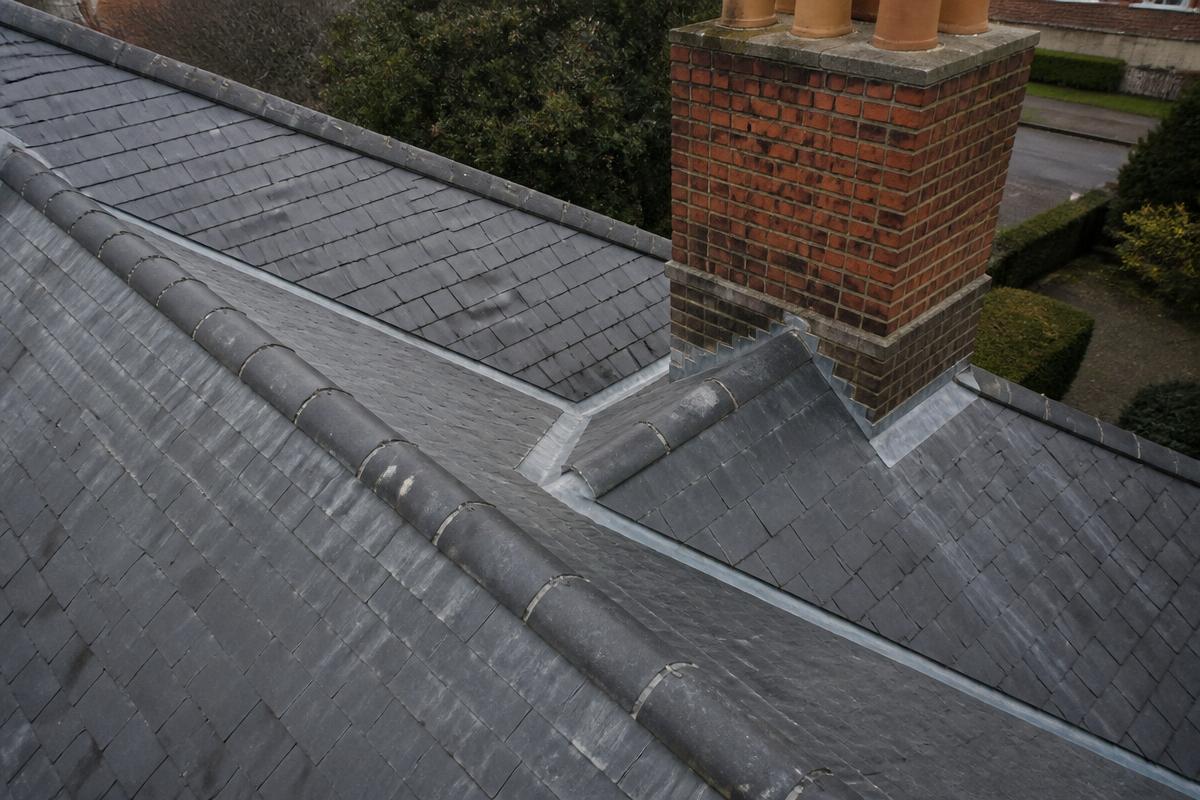
A pre-purchase roof inspection can document the visible condition of the covering, flashings, chimneys and drainage, and set out what appears to need attention and roughly how urgently. It should not be used to promise a fixed number of years of remaining life, since that depends on maintenance and weather as well as current condition.
Where concealed elements such as decking or fixings cannot be checked without more invasive access, that limitation should be stated rather than glossed over.
How it fits around a conveyancing timetable
Arranging a roof inspection early, ideally once an offer has been accepted but before exchange of contracts, gives the buyer time to actually use the findings — whether that means requesting further information, adjusting the offer, or simply going in with clear expectations about future maintenance.
Leaving it until after completion removes any leverage the findings might otherwise have provided, and turns what could have been useful pre-purchase evidence into a to-do list for a property already owned.
What a good pre-purchase report should include
A useful report will describe the covering material and its apparent age, note any areas of visible repair or patching and how well they appear to have been carried out, and record roofline and drainage condition alongside the main covering.
It should distinguish clearly between defects that need attention soon and those that are simply worth monitoring, and it should avoid vague, unsupported statements about how many years the roof might have left, since that figure cannot honestly be given from a visual check alone.
Reading the report alongside other paperwork
A specialist roof inspection report is at its most useful when read alongside the buyer's own survey and any information provided by the seller, such as guarantees for previous roof work. Cross-referencing these documents can highlight where accounts agree or where one flags something the other does not mention at all.
Any discrepancy between what a seller has stated about the roof and what the inspection actually finds is worth raising through the buyer's solicitor before proceeding further.
What we would check
During an inspection, areas we would normally look at for this include:
- The covering across all visible slopes and its apparent age and condition.
- Chimneys, flashings, valleys and ridge details.
- Roofline, guttering and evidence of past repairs.
- The loft, where access is available, for staining or damp timber.
Roof photography
Related questions
Relevant services
Book a roof inspection or drone survey
Documented findings before any repair is quoted. Suitable for pre-purchase checks, storm-event assessment and inaccessible roofs.