

Reviewed by the S Reid Roofing Ltd team — last reviewed 2026-09-15
Quick answer
It can be useful where roof areas are difficult to inspect from ground level or a survey has raised concerns. Detailed imagery can help document visible defects before a purchaser decides whether more investigation or repair-cost information is needed, and is best arranged before exchange while there is still time to act on what it shows.
At a glance
- It is most useful where a survey flagged something without fully explaining it.
- Difficult roofs — tall, complex or multi-level — benefit most.
- It supports the buyer's decision-making, not a guarantee about future repair needs.
- Timing before exchange gives the most useful negotiating and planning information.
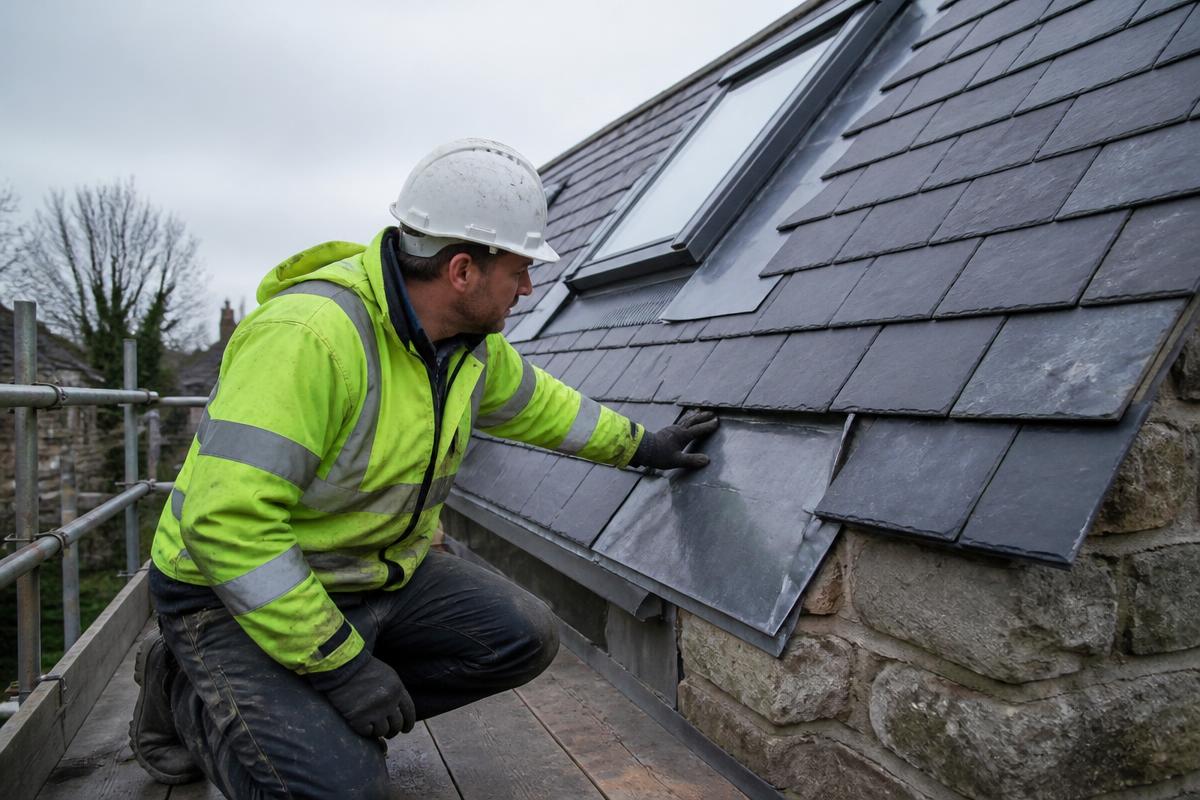
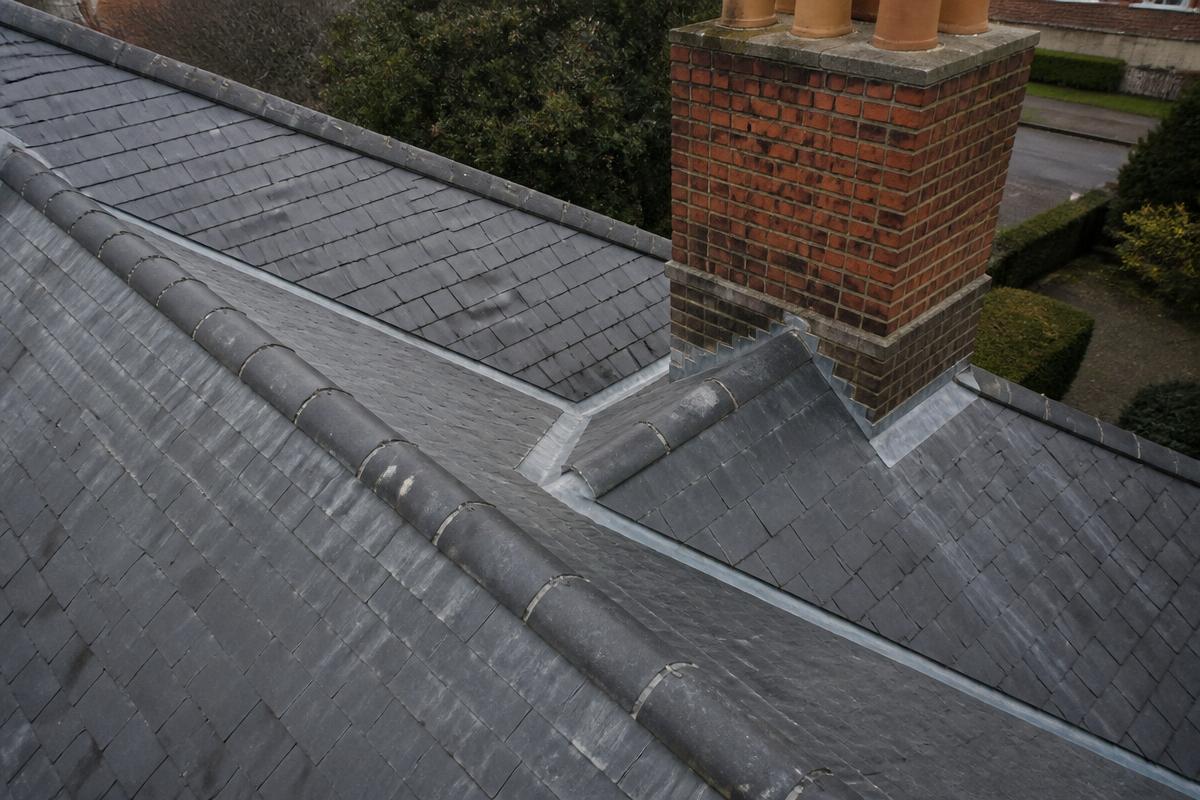
A drone survey documents what is visible: covering condition, flashings, chimneys, gutters and rainwater goods. It cannot see concealed timber decay, hidden membrane or fixing failure, every source of water ingress, or confirm structural adequacy — where those are suspected, a hands-on inspection is recommended alongside the imagery.
When it adds real value in a purchase
General surveys can only see what is visible from ground level, windows or a loft hatch on the day, so features on a tall or complex roof can be under-described. Where a survey mentions the roof only in general terms, or a buyer has a specific concern such as an older covering or a previous repair, a drone inspection can gather closer visual evidence to inform the decision.
What it can and cannot settle
The imagery can show visible defects and their approximate extent, which helps a buyer understand what work might realistically follow purchase and roughly how urgent it may be. It cannot confirm the condition of anything concealed, and it does not replace the buyer's own survey — it adds evidence to sit alongside it.
Working alongside the buyer's other professionals
Findings from a drone inspection are most useful when shared with the buyer's surveyor, conveyancer or mortgage lender as supporting evidence, rather than being treated as a stand-alone assessment that overrides the wider survey. Each professional is looking at a different part of the picture, and the roof evidence should sit alongside, not instead of, that broader view.
Setting realistic expectations for the outcome
A pre-purchase drone inspection will not usually produce a single clear verdict of 'buy' or 'do not buy'. More often it produces a list of visible defects, roughly classified by urgency, which the buyer can then weigh against price, their own plans for the property, and any other findings from the wider survey.
Considering the cost of the inspection against the purchase price
For most property purchases, the cost of a targeted drone inspection is small relative to the price being paid and the cost of any roof work that might follow, which makes it a proportionate step wherever a genuine concern exists rather than an unnecessary extra expense.
What a pre-purchase drone survey cannot tell a buyer
A drone pass over a property being purchased can only record what is visible on the outer covering on the day it is flown. It cannot say whether roof timbers behind an old repair are sound, whether insulation in the loft is wet, or whether a flat roof membrane that looks intact from above has already failed at a joint underneath. Buyers relying on a purely aerial assessment should understand that structural adequacy and concealed decay are questions a drone image cannot answer.
Where the imagery raises a specific concern, such as a patched area or an unusual roofline detail, that is normally the point at which a buyer should ask for internal access — loft inspection, or lifting a section of covering — rather than treating the photograph itself as the final word on that part of the roof.
What we would check
During an inspection, areas we would normally look at for this include:
- Every visible slope, especially ones the general survey could not fully see.
- Chimneys, valleys and flashings.
- Signs of past repair work and its apparent quality.
- Whether the findings suggest further, more invasive investigation before exchange.
Roof photography
Related questions
Relevant services
Book a Drone Inspection
High-resolution imagery of the covering, flashings, chimneys and rainwater goods, with documented findings before any work is recommended.