

Reviewed by the S Reid Roofing Ltd team — last reviewed 2026-09-15
Quick answer
Wind-driven or heavy rain can force water into small weaknesses that remain dry in normal rainfall, including flashings, valleys, roof edges and moved coverings. Knowing the weather direction and conditions when the leak appears can therefore help narrow down the likely source.
At a glance
- A leak that appears only in wind usually points to a driven-rain route, not a simple gap.
- Direction matters: a leak in a north-westerly gale may not appear in calm rain from another direction.
- Valleys and abutments concentrate more water than open slopes.
- A dry spell is often the wrong time to try to find this kind of leak.
In North Cumbria & Cumbria / South West Scotland
Exposed sites in North Cumbria and South West Scotland see prevailing weather from a fairly consistent direction, which often makes the affected elevation easier to predict than on a sheltered property.
Why weather-dependent leaks behave differently
Ordinary vertical rain and wind-driven rain do not test a roof in the same way. A small gap under a lap, a slightly lifted flashing edge, or a loose piece that has settled back into place may shed vertical rain perfectly well while still allowing rain that is being pushed sideways to find its way underneath. That is why some leaks only ever appear in a particular kind of weather, and why a roof can be inspected on a dry, calm day and appear entirely sound.
Wind pressure can also lift the leading edge of tiles or slates slightly, opening a gap that closes again once the wind drops, so a visual check made after the weather has passed may show nothing obviously wrong even though water clearly got in during the event.
Using the pattern to narrow the search
Noting the wind direction, whether the rain was heavy or prolonged, and which elevation faces that weather can genuinely shorten an investigation. A leak that only occurs with a westerly gale points the search toward west-facing details — verges, abutments, chimney flashings on that side — rather than the whole roof. Keeping a simple note each time the leak occurs, including the approximate wind direction and whether it was a short squall or a sustained storm, builds up a useful picture over a few occurrences.
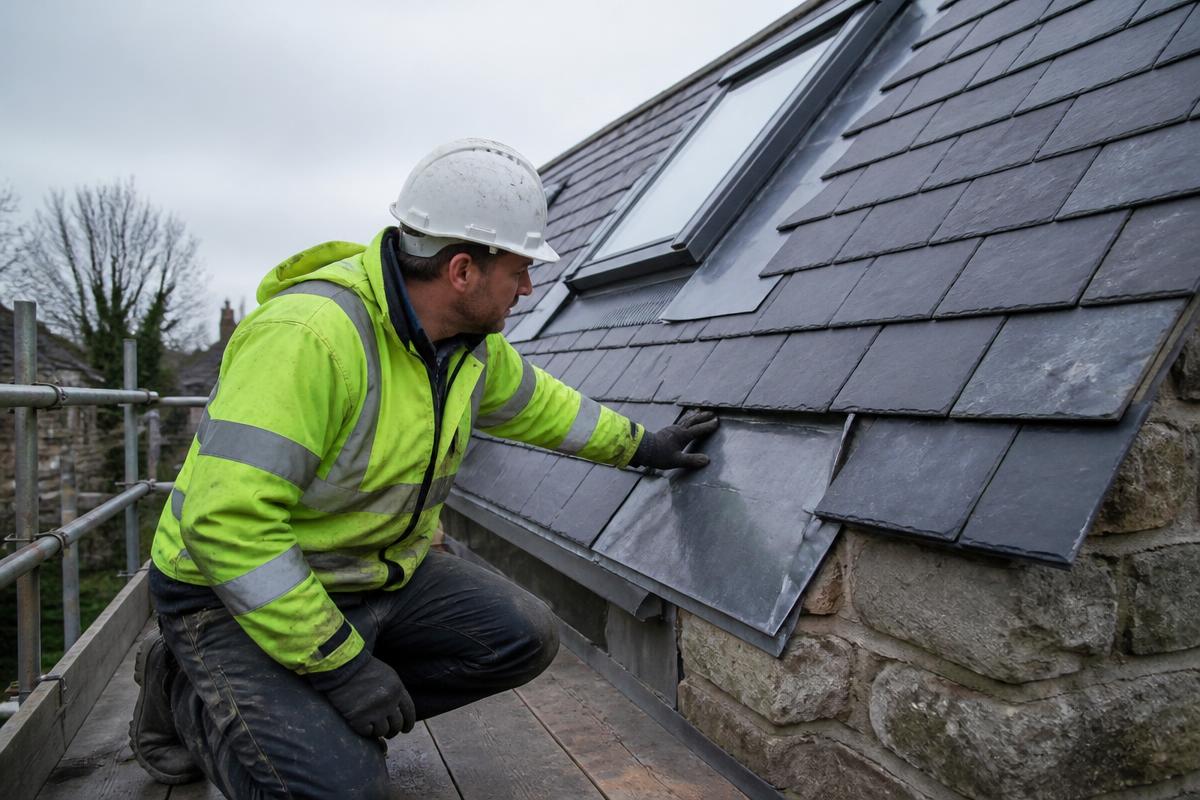
Because these leaks are often not reproducible on a dry day, an inspection may need to combine what is visible with a careful look at fixings, laps and flashing details that would only fail under load from driven rain. In some cases, a return visit during or shortly after the next spell of similar weather is the only reliable way to see the defect in the condition that actually causes it to leak.
What we would check
During an inspection, areas we would normally look at for this include:
- Which elevation faces the wind direction reported at the time of the leak.
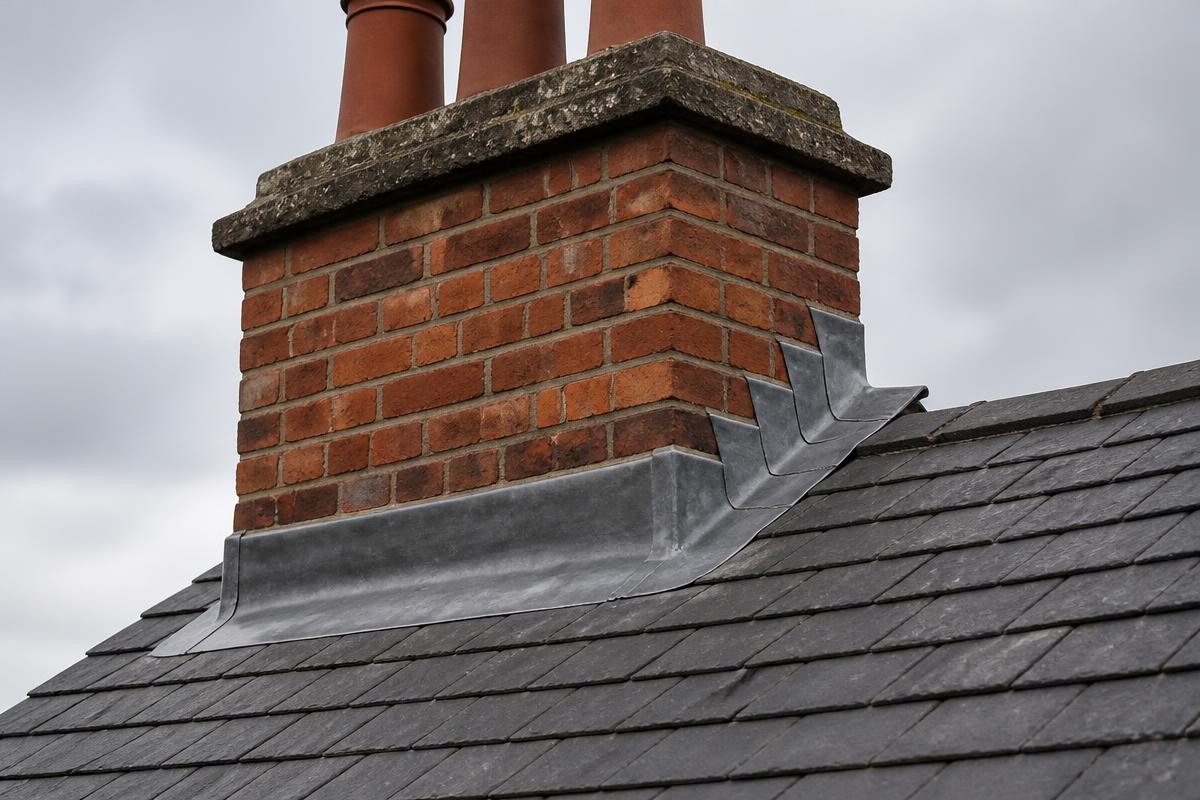
- Flashings, valleys and verge details on that elevation for lift or displacement.
- Lap alignment across the affected slope.
- Whether the covering has moved without falling off.
Repair, replace or monitor?
Repair
Refixing or re-dressing the specific lifted or displaced detail once identified.
Monitor
If the pattern cannot yet be reproduced, record conditions each time it recurs before further work.
Roof photography
Related questions
Relevant services
Book a roof inspection or drone survey
Documented findings before any repair is quoted. Suitable for pre-purchase checks, storm-event assessment and inaccessible roofs.