

Reviewed by the S Reid Roofing Ltd team — last reviewed 2026-09-15
Quick answer
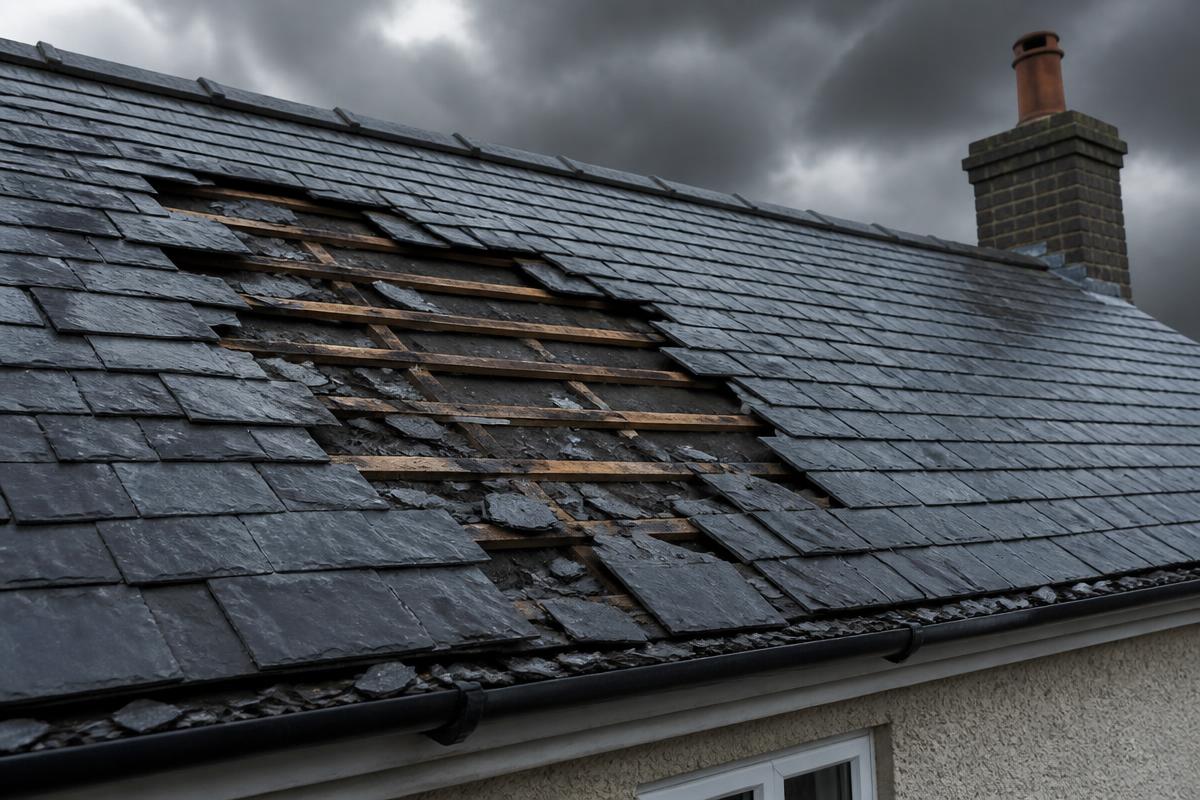
Yes. Coverings, ridge details and fixings can move without falling to the ground. Small changes may only become obvious when wind-driven rain later enters, which is why an exposed roof may warrant inspection after unusually severe weather. Checking eaves, verges and ridge lines for loosened fixings is often more revealing than a general look across the roof.
At a glance
- Wind uplift works on the underside of a covering, not just its visible face.
- A piece can lift, shift and settle back looking undisturbed.
- The resulting leak often only appears in specific wind-driven conditions.
- An intact-looking roof after a storm is not the same as an undamaged one.
In North Cumbria & Cumbria / South West Scotland
Properties on open, exposed ground in Cumbria and South West Scotland regularly see gusts strong enough to work fixings loose without stripping a roof outright, which is why a post-storm check earns its place on exposed sites.
How wind causes movement without loss
Strong wind passing over a roof creates suction that lifts tiles, slates and ridge details rather than simply pressing on them. A piece can be lifted just enough to strain or loosen its fixing before dropping back into a position that looks correct from the ground, especially at eaves, verges and ridges where airflow is most disturbed.
The fixing is now weaker than it was, and the lap between adjacent pieces may no longer close as tightly as it should, even though nothing appears to be missing.
Why the evidence appears later, not immediately
A slightly displaced lap does not usually admit ordinary vertical rain. It becomes a problem when rain is driven sideways in a later storm, which is why homeowners sometimes describe a leak that appears only in particular wind directions and cannot be found in dry or calm weather.
Following unusually severe weather, a check of the covering, ridge and flashing details is a reasonable precaution on an exposed roof, even where nothing has visibly fallen and no leak has yet appeared.
Details most likely to loosen without falling
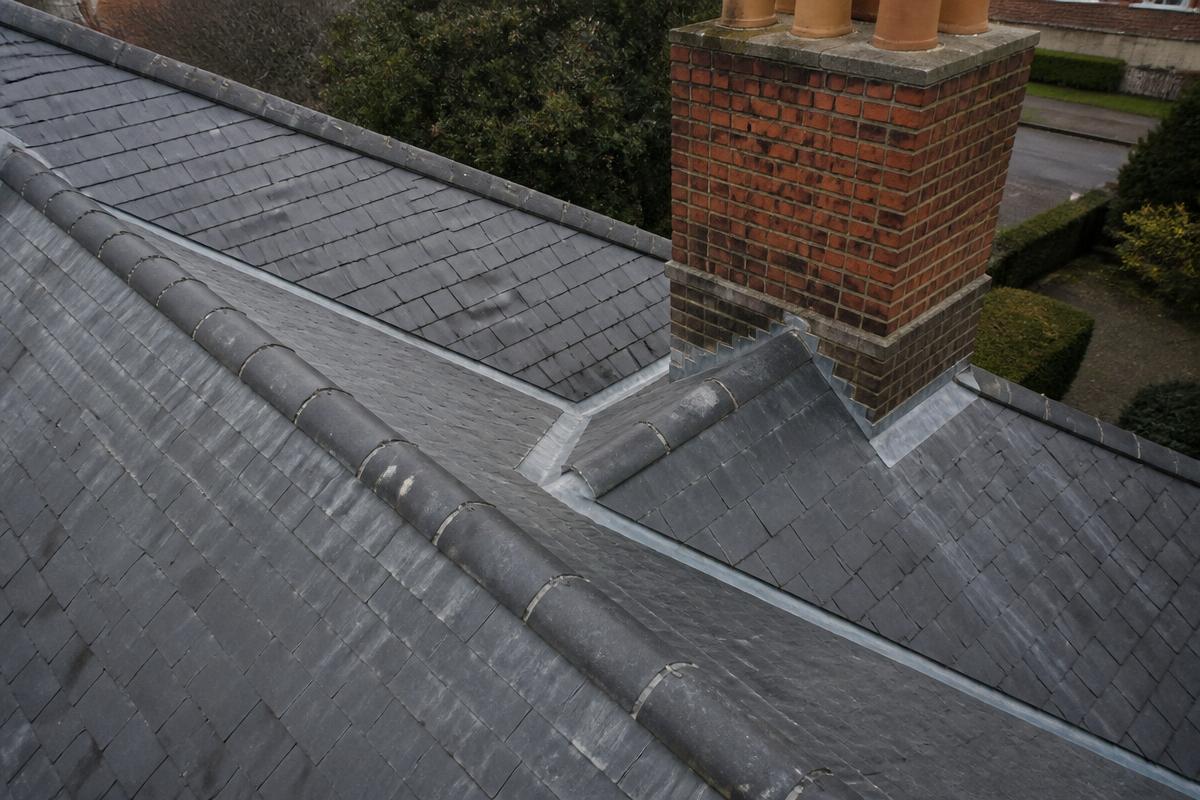
Ridge and hip tiles bedded on mortar are a common weak point, since repeated flexing during strong gusts can crack the bedding without dislodging the tile itself, leaving a hairline gap that only shows up as a leak in wind-driven rain from a particular direction. Similarly, dry-fixed ridge systems can have their mechanical clips strained without the covering appearing to move at all.
Flashings around chimneys and abutments can also be worked loose by wind vibration over time, with mortar fillets or sealant beginning to crack at the edges even though the lead or flashing itself has not shifted enough to be obvious from the ground.
Why this matters for insurance as well as diagnosis
Where a leak develops some weeks after a named storm, it can be harder to link the two events without a documented inspection close to the time. If an exposed roof is checked after unusually severe weather and nothing untoward is found, that record itself has value, since it establishes a baseline against which any later problem can be compared.
This is a different situation from a claim for immediate, visible loss, and it is worth bearing in mind that insurers will generally still want to understand the cause and timing of any damage before considering a claim, in the same way as for damage that was obvious straight away.
A sensible approach on exposed sites
For roofs on open, elevated or otherwise exposed ground, building a habit of checking the visible details after any unusually severe spell of weather is more useful than waiting for a leak to appear. This does not need to mean climbing onto the roof — a look from ground level with binoculars, or a request for a brief professional check, is normally enough to catch obvious movement early.
Where nothing is found, that itself is a useful outcome. It confirms the roof withstood the event without disturbance, and gives a dated point of reference to compare against if a problem does emerge later in the year.
What we would check
During an inspection, areas we would normally look at for this include:
- Eaves, verges, ridges and hips, where uplift forces are highest.
- Whether coverings feel loose or move under light hand pressure.
- Lap alignment across slopes exposed to the prevailing wind.
- Flashings and mortar detailing for fresh cracking or movement.
- The loft for any new staining following the weather event.
Repair, replace or monitor?
Repair
Localised refixing of lifted coverings and re-bedding of loosened ridge or flashing details.
Monitor
Where inspection finds no movement and no water ingress, photograph the exposed elevations and compare after the next severe spell.
Roof photography
Related questions
Relevant services
Book a roof inspection or drone survey
Documented findings before any repair is quoted. Suitable for pre-purchase checks, storm-event assessment and inaccessible roofs.