

Reviewed by the S Reid Roofing Ltd team — last reviewed 2026-09-15
Quick answer
A drone inspection can be particularly useful after severe weather where roof areas are high, difficult to see or potentially unsafe to access. Images can document visible movement or damage before repair decisions are made, and a dated record shortly after the event is more useful than a description based on memory later.
At a glance
- Storm damage often affects several elevations at once.
- Debris and standing water can make walked access less safe straight after a storm.
- Dated imagery is useful evidence of condition shortly after the event.
- Not every storm requires a drone — ground-level checks are enough for some properties.
A drone survey documents what is visible: covering condition, flashings, chimneys, gutters and rainwater goods. It cannot see concealed timber decay, hidden membrane or fixing failure, every source of water ingress, or confirm structural adequacy — where those are suspected, a hands-on inspection is recommended alongside the imagery.
Why timing matters after severe weather
Wind and driven rain can lift coverings, dislodge ridge tiles and shift flashings across more than one slope, and the aftermath can also leave gutters full of debris and standing water on flat sections. A drone can survey the whole roof quickly and safely, capturing the condition shortly after the event rather than relying on memory or a ground-level guess.
What the imagery is useful for
Post-storm drone images give a dated record of visible condition, which is useful both for deciding what needs urgent attention and, separately, for supporting any insurance conversation about the event. They do not replace a closer look where something clearly needs repair, but they are a sensible, low-risk first step before deciding what access is actually needed.
Sequencing checks safely after severe weather
Immediately after a storm, ground conditions and roof access can both be more hazardous than usual — wet surfaces, debris underfoot, and coverings that may already be loose but not yet visibly displaced. A drone pass avoids putting anyone onto the roof while those conditions persist.
Once the images are reviewed, a decision can be made about whether any area needs walked access straight away, or whether it is safe to wait for conditions to settle before arranging that follow-up.
What to do with the findings afterwards
Findings from a post-storm drone inspection should be dated and kept, whether or not repair work follows immediately. If further damage becomes apparent later, or a claim needs to be discussed, having a clear record of condition shortly after the event is more useful than trying to reconstruct it from memory weeks or months on.
Knowing when a full drone survey is not necessary
Not every storm warrants a drone inspection. A property with a low, simple roof and no visible signs of disturbance from the ground may not need anything more than a straightforward visual check, and suggesting otherwise would be an unnecessary cost for no real benefit.
What the drone cannot confirm after a storm
Aerial photographs taken after a storm show the visible surface of the coverings and detailing, but they cannot confirm whether wind-driven rain has already found its way past a slipped tile or lifted flashing into the roof timbers or insulation below. Wetting of felt, battens or ceiling boards is not something a drone can detect, so a property owner with a leak reported internally after a storm should not treat clear-looking aerial images as ruling out ingress.
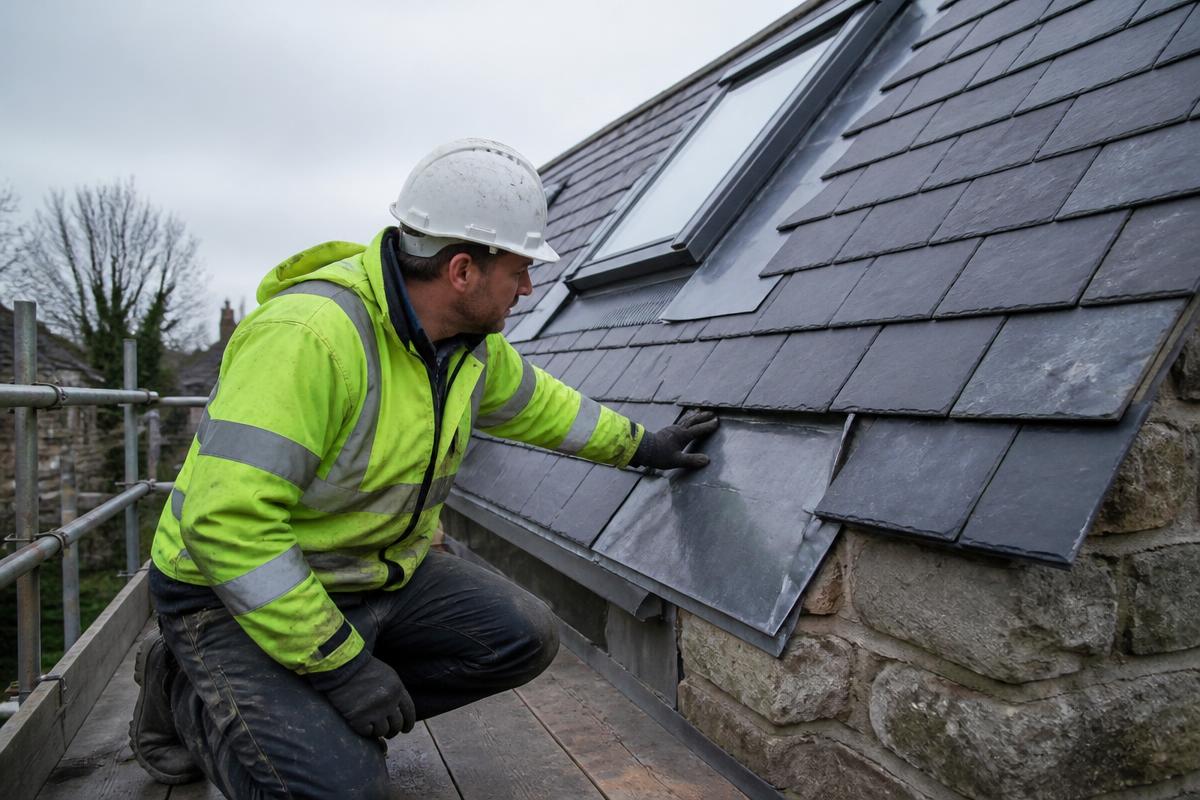
Where imagery shows an area that looks disturbed but not obviously broken, that is often exactly the situation where someone needs to get up close, because the drone can flag the location but cannot say whether the underlying fixing has failed or the felt beneath has torn.
What we would check
During an inspection, areas we would normally look at for this include:
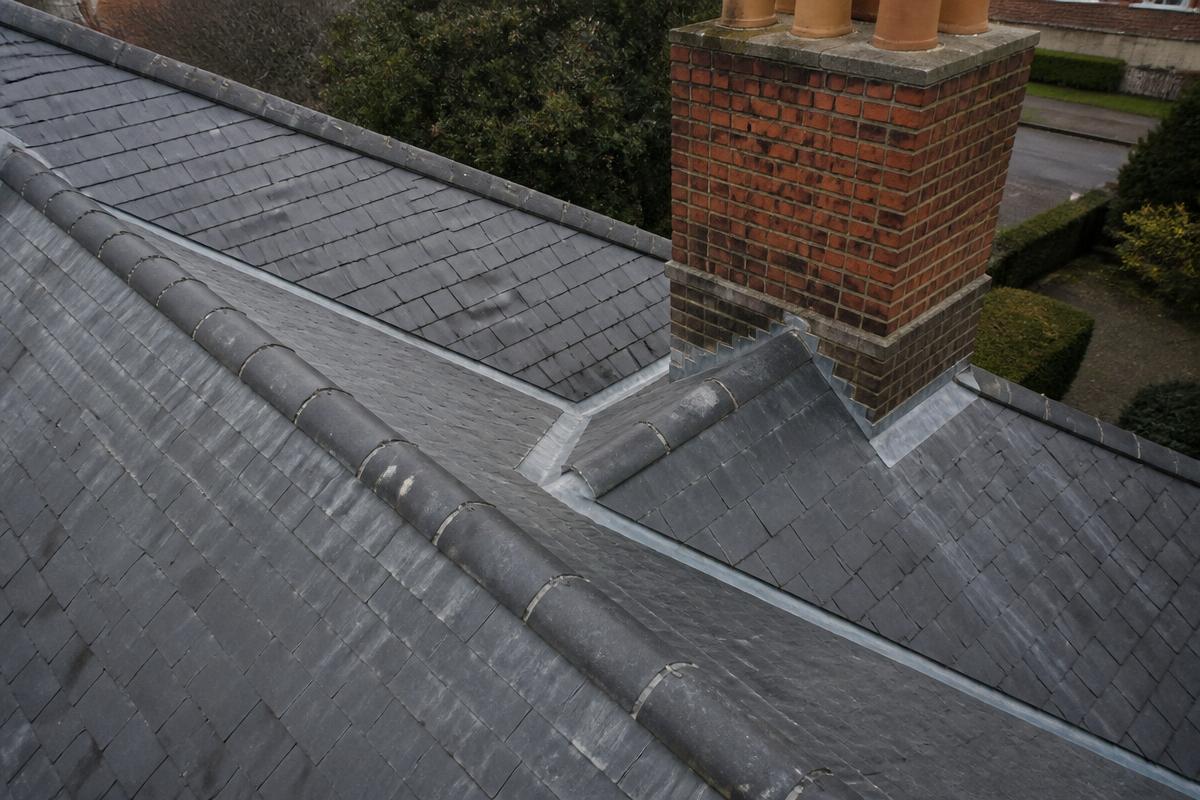
- Every slope for displaced or missing coverings following the wind direction.
- Ridge and hip lines for movement.
- Flashings and chimney details for fresh cracking or lifting.
- Gutters and flat areas for debris or standing water.
Roof photography
Related questions
Relevant services
Book a Drone Inspection
High-resolution imagery of the covering, flashings, chimneys and rainwater goods, with documented findings before any work is recommended.