

Reviewed by the S Reid Roofing Ltd team — last reviewed 2026-09-15
Quick answer
Yes. Wind uplift can disturb tiles or slates and their fixings without completely removing them. From ground level the roof may still look intact, while small gaps or movement become vulnerable to wind-driven rain during later weather. Checking the covering, ridge and flashing details after a severe spell is a sensible precaution, particularly on exposed elevations that have taken the worst of the wind.
At a glance
- Uplift acts on the underside of a covering, not just on its face.
- A lifted piece can drop back into position and still be loose.
- The consequence often shows up weeks later, as a leak in driven rain.
- Nothing on the ground does not mean nothing has moved.
In North Cumbria & Cumbria / South West Scotland
Properties on open ground in Cumbria and South West Scotland regularly see winter gusts strong enough to work fixings loose without stripping a roof.
How wind lifts a covering
Wind passing over a roof creates suction rather than simply pushing down on it, in the same way air moving over an aircraft wing creates lift. That suction acts on the underside of tiles and slates, particularly at eaves, verges, ridges and around any change in the roof shape — a dormer, a chimney, a valley — where the airflow separates and becomes turbulent rather than passing smoothly.
A piece can lift under that suction, flex its fixing beyond its normal working range, and then settle back down looking undisturbed once the gust passes. The nail or clip holding it is now working with less grip than it had, either because the nail hole in the slate has enlarged slightly or because the nail itself has been worked loose in the batten. The lap that keeps water running down and off the roof, rather than sideways and under the course above, may also no longer be sitting exactly where it should.
This is a normal part of how pitched roofs behave in wind, and a well-fixed covering is designed to tolerate a certain amount of it. The concern arises when fixings are already older, already slightly corroded, or were only ever adequate rather than generous, because repeated cycles of lift and settle progressively reduce the margin that was originally built in.
Why the leak appears later, and only in some weather
A small displacement does not usually let vertical rain in, because gravity still carries most rainfall down the face of the slope and off at the eaves. It lets in rain that is being driven sideways or even slightly upwards under the covering, which is why homeowners often report a leak that only appears in a particular wind direction and cannot be found, or even suspected, in a dry spell or in calm rain.
This intermittent pattern is one of the more frustrating things to diagnose from inside a property, because tracing water back to its entry point along the underside of sarking or underlay, where it may travel some distance before dripping, is not always straightforward. It is usually more productive to check the roof itself after the weather that caused the symptom than to keep watching the ceiling for the next occurrence.
What to do after a severe spell
After unusually severe weather on an exposed property, a check of the covering, ridge and flashings is a sensible precaution even when nothing has fallen and no leak has yet appeared. Documented findings — dated photographs of the roof slopes and any loose or displaced pieces — are also useful if a storm-related insurance claim is made, since insurers generally want to see when damage was identified and what condition the roof was in beforehand.
What we would check
During an inspection, areas we would normally look at for this include:
- Eaves, verges, ridge and hip details, where uplift is highest.
- Whether coverings feel loose or move under light hand pressure.
- Lap alignment across the affected slope.
- Flashings and any mortar detailing for fresh cracking.
- The loft for new staining after the weather event.
Repair, replace or monitor?
Repair
Localised refixing of lifted coverings and re-bedding of loosened details.
Monitor
Where nothing has moved and no water has entered, photograph the exposed elevations and compare after the next storm.
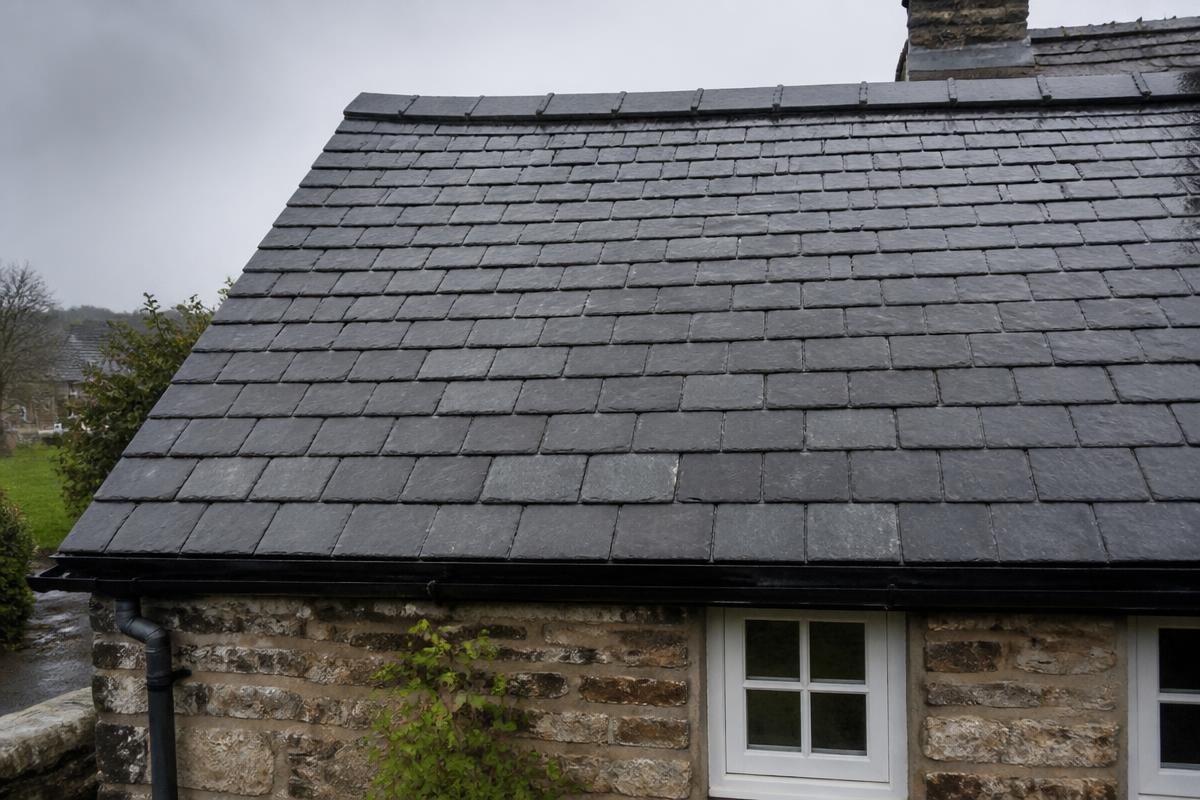
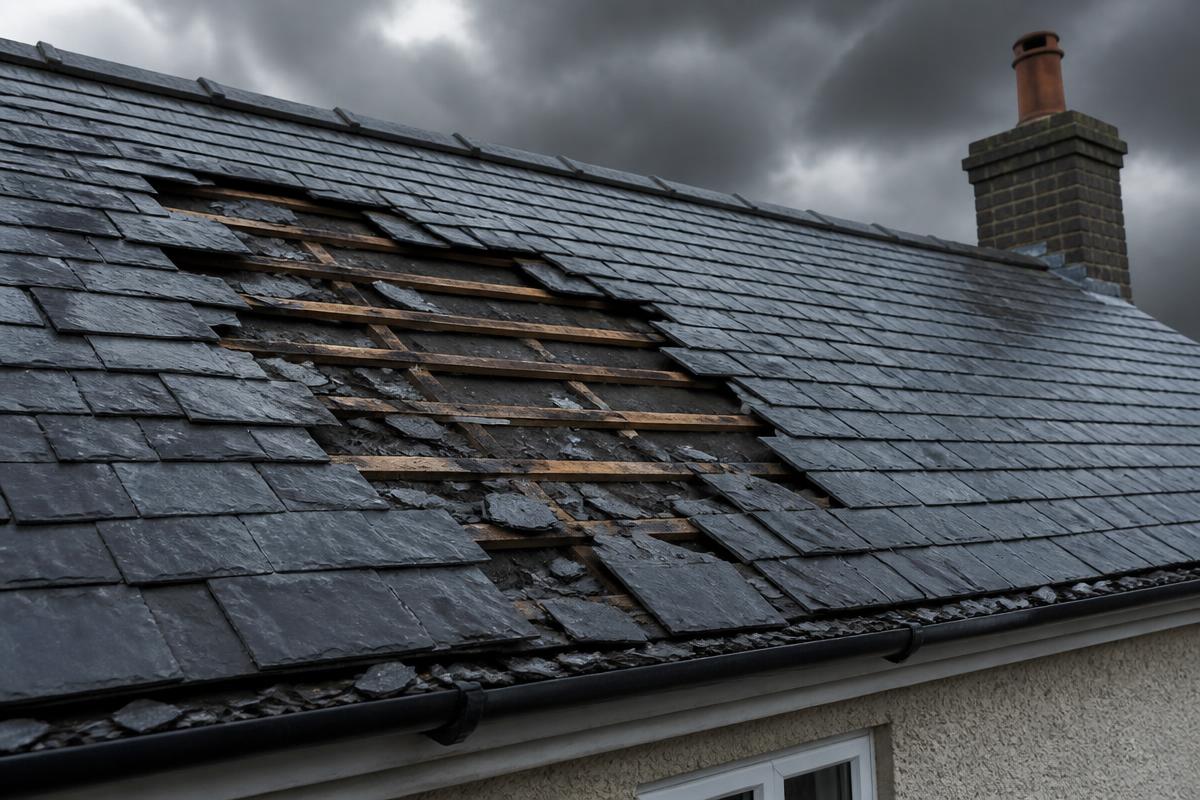
Roof photography
Related questions
Relevant services
Book a roof inspection or drone survey
Documented findings before any repair is quoted. Suitable for pre-purchase checks, storm-event assessment and inaccessible roofs.