

Skip to content

Active leak, storm damage or unsafe chimney? See emergency guidance.

07340 587487
S Reid Roofing Ltd — covering your home, built to last
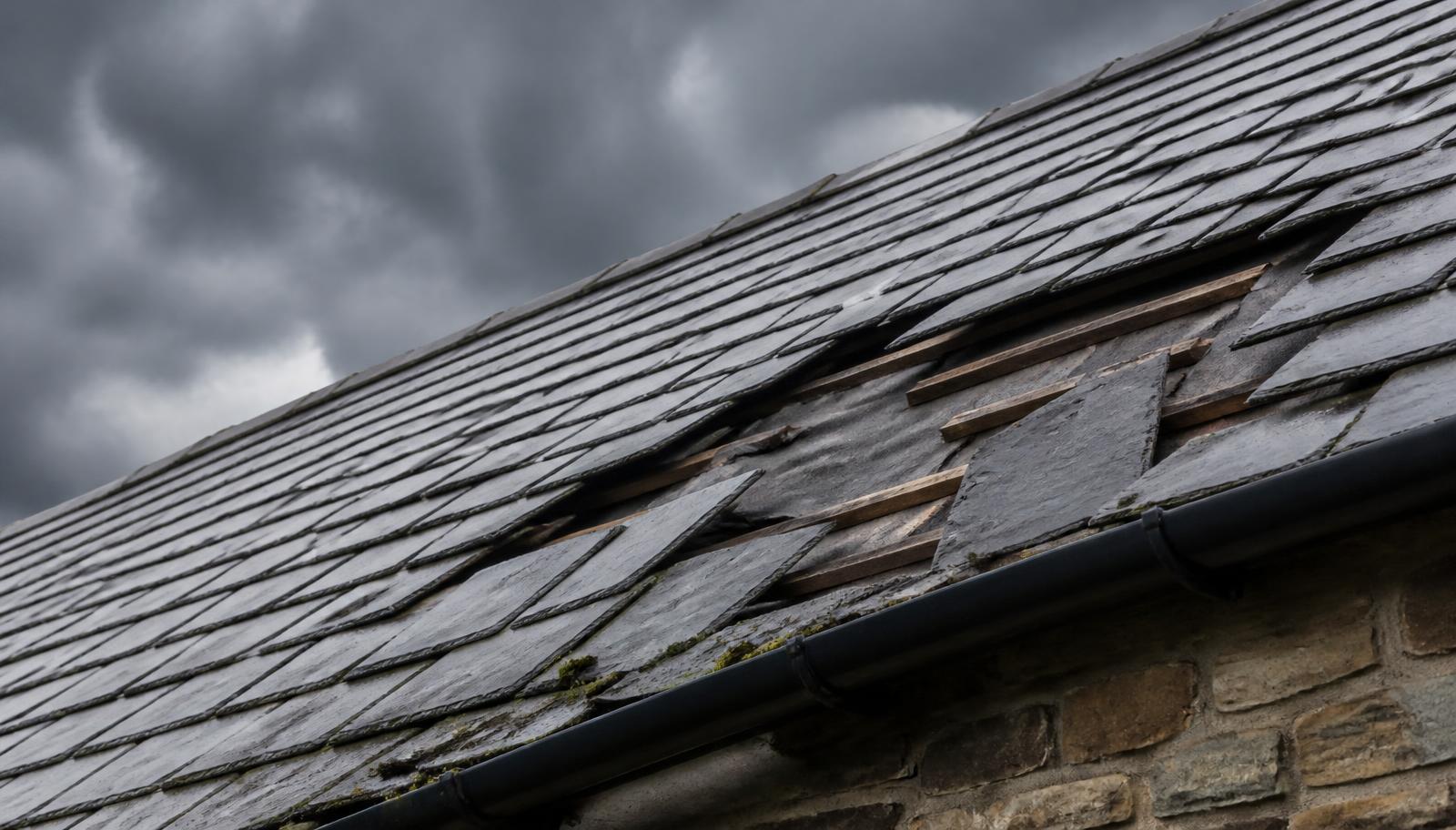
Storm-damaged British slate roof with slipped slates and exposed timber battens under a dark, stormy grey sky.

Roofing advice

Roof problems — what the symptoms usually mean

What slipped slates, cracked mortar, damp patches, sagging lines and moss growth usually indicate, and which of them need attention now rather than later.

Quick answer

Most roof problems announce themselves in a small way first: one slipped slate, a damp shadow on a ceiling, mortar dust in a gutter. The useful question is not what you can see but why it happened, because that determines whether a single repair will hold or the same defect will reappear elsewhere.

This section works through the defects homeowners actually notice, from the ground and from the loft, and explains what each one normally points to. The aim is to help you judge urgency before anyone quotes you for work.

Where a symptom can have more than one cause, we say so. Guessing at a roof from a photograph is how unnecessary work gets sold.

Guides in this topic

Questions people ask about this

Why do roof tiles or slates slip?

Coverings can slip because of failed or corroded fixings, deteriorated battens, cracking, previous installation problems or wind movement. Replacing the visible tile or slate is only part of the job if the surrounding components show the same failure, so the fixings and battens around it are worth looking at first.

Why can I see daylight through my roof?

Daylight may indicate displaced roofing material or gaps, although some roof constructions contain legitimate ventilation openings at eaves and ridge. If the light is accompanied by staining, draughts or moisture, the surrounding area should be inspected rather than assumed to be by design.

Why are pieces of slate or tile appearing in my gutter?

Fragments in gutters can come from cracked or weathered roofing materials, ridge details or earlier repairs. A single fragment does not prove widespread failure, but recurring debris is a useful reason to look at the covering more closely, because it means material is steadily leaving the roof.

Should moss be pressure washed off a roof?

Pressure washing is not suitable for every roof covering and can damage surfaces or disturb materials if used aggressively. The appropriate cleaning method depends on the roof type, its condition and why the moss is being removed — on older slate in particular, gentler methods are usually the right choice.

Relevant services

Book a roof inspection or drone survey

Documented findings before any repair is quoted. Suitable for pre-purchase checks, storm-event assessment and inaccessible roofs.

Back to all roofing advice