

Reviewed by the S Reid Roofing Ltd team — last reviewed 2026-09-15
Quick answer
Early signs can include a newly moved slate or tile, small ceiling marks, pieces of roofing material in gutters, deteriorating chimney or flashing details, persistent moss around drainage routes and changes following high winds. The useful question is whether the change is isolated or part of wider deterioration.
At a glance
- Change is the signal — a roof that looks different is worth a closer look.
- Fragments in gutters usually appear before anything falls off the roof.
- Faint ceiling marks are often older than they look.
- High winds are a good prompt for a routine check.
Warning signs in the order they usually appear
Roof deterioration is gradual, and the earliest evidence is often indoors or in the gutters rather than on the roof itself. Grit, sand or slate fragments in a gutter mean material is coming off the covering, usually as the surface of a slate or the granules on a tile weather away over years of frost, rain and ultraviolet exposure. A faint brown mark on a ceiling means water has been present long enough to carry dust and tannins from timber with it, and by the time that mark is visible from below, the leak behind it has usually been running for some time.
Outside, look for a tile or slate that sits differently from its neighbours, mortar that has opened up at the ridge or verge, and flashings that have lifted at the edges. Any of these can be a small job caught early or an expensive one left late. On roofs with valleys or parapet abutments, watch for streaking below the joint, which is a sign that a lead detail is no longer shedding water cleanly.
Moss growth deserves its own mention. A light covering on a north-facing slope in a damp part of Cumbria is common and not necessarily a problem, but moss that has built up around a drainage path, in a valley gutter, or under a ridge tile can hold moisture against the covering for long periods and accelerate the very weathering that produces the fragments described above.
Isolated change or wider deterioration?
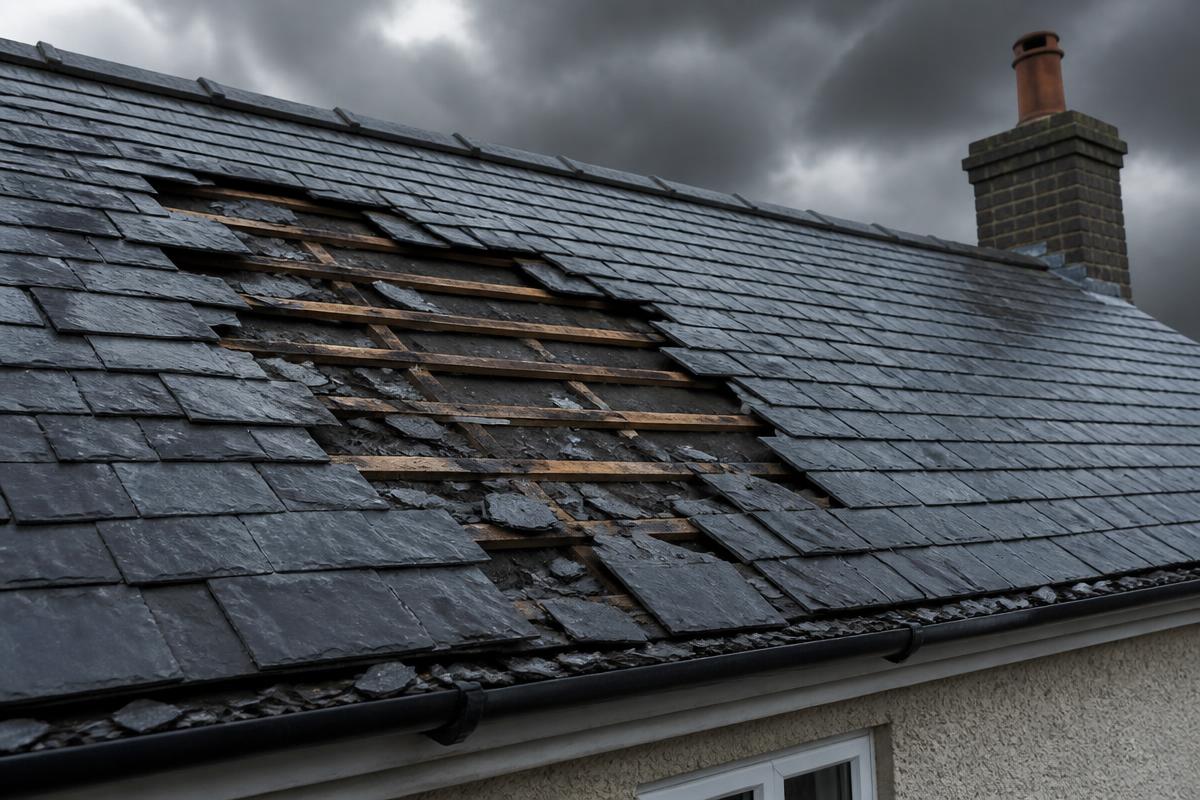
This is the question worth answering before anything is priced. One slate that slipped in a gale on an otherwise sound roof is a repair. Three slates that have slipped in three different places usually means the fixings across that slope are reaching the end of their life, and patching each one in turn becomes false economy, because the labour of access is repeated every time while the underlying cause is never addressed.
The only reliable way to tell the two apart is to look at the whole roof rather than the spot where the symptom appeared, and to record what is found so the position can be compared again later. A roof that is inspected once and then left for years gives no basis for comparison; a short written record with photographs, even a simple one, means the next inspection can say whether a defect is new, unchanged or spreading.
Age of the covering is also part of the picture. A slate roof laid with good quality Welsh or Westmorland slate can perform well for many decades, but the nails holding it typically have a shorter working life than the slate itself. When several fixings from the same original nailing run fail within a short period, that clustering is itself diagnostic, because it points to fixing life rather than material failure as the root cause.
Timing and exposure
Following a period of strong wind, heavy or prolonged rain, or a sharp overnight frost after a wet spell, it is worth a quick look at gutters and, where safely visible, the roof slopes, because these are the conditions under which existing weaknesses tend to show themselves. Properties on exposed sites in north Cumbria and South West Scotland see more of this kind of weather than sheltered, low-lying ones, so a slightly more frequent check is a reasonable precaution rather than an overreaction.
What we would check
During an inspection, areas we would normally look at for this include:
- Whether the same defect appears more than once on the same slope.
- Fixing and batten condition where a covering has already moved.
- Chimney flashings, pointing and flaunching.
- Gutter contents — grit and fragments indicate the covering is weathering.
- The loft for staining that may be older than the current symptom.
Repair, replace or monitor?
Repair
A single, explainable defect on an otherwise sound slope.
Monitor
Cosmetic weathering with no water ingress: photograph it, and compare after the next spell of severe weather.
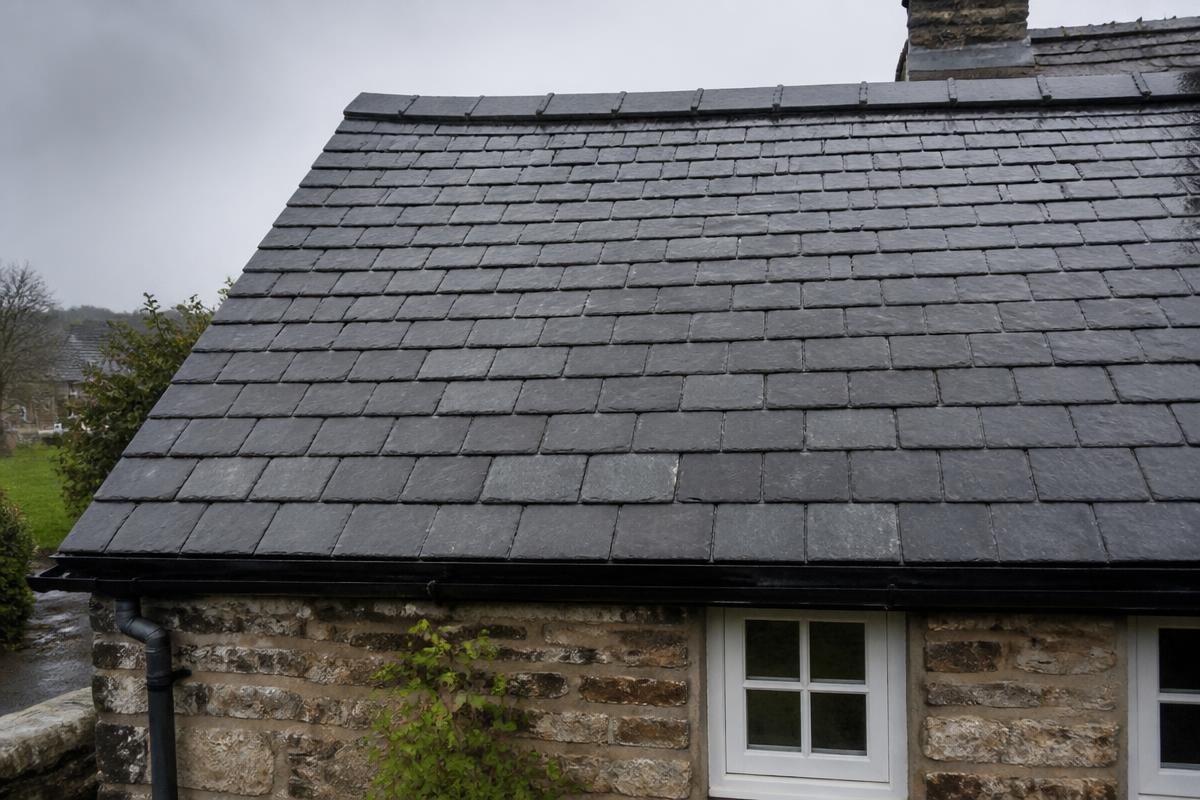
Roof photography
Related questions
Relevant services
Book a roof inspection or drone survey
Documented findings before any repair is quoted. Suitable for pre-purchase checks, storm-event assessment and inaccessible roofs.