

Reviewed by the S Reid Roofing Ltd team — last reviewed 2026-09-15
Quick answer
Water near a chimney can originate from lead flashings, pointing, render, pots, caps or the surrounding roof covering. Because chimneys interrupt the normal roof surface, several details may need checking rather than assuming the nearest visible crack is the cause.
At a glance
- A chimney has multiple separate details, any of which can let water in.
- Water inside a flue can travel down and appear well below the roofline.
- Cracked pointing and failed flashing often coexist and can both contribute.
- An open or damaged pot or cap allows rain straight into the flue.
Why chimneys are more complicated than a single crack
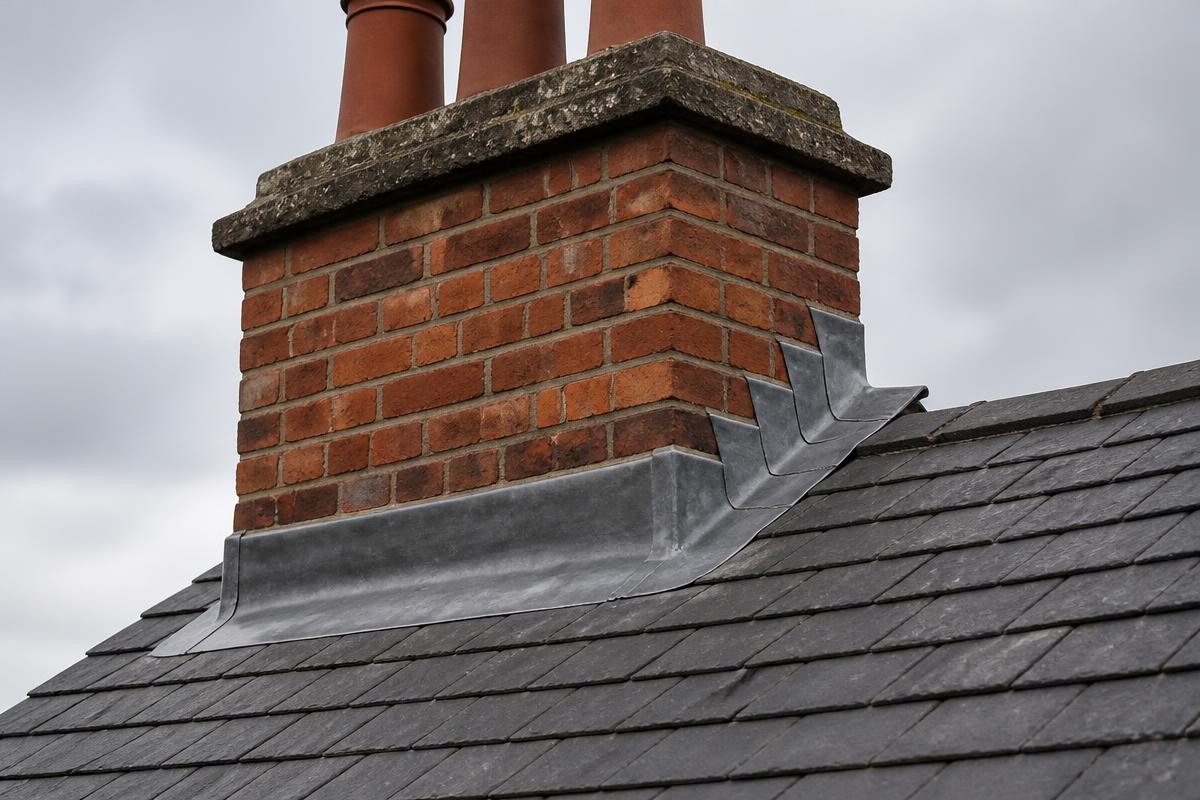
A chimney passes through the roof covering, which means it needs lead flashings at its base and sides, sound brickwork or stonework, pointing that keeps water out of the joints, flaunching or a capping to shed water from the top, and often a pot or cover to keep rain out of the flue itself. Each of these is a separate detail with its own way of failing, and more than one can be involved at once, particularly on an older stack that has had piecemeal repairs over the years.
How water can travel a long way from where it enters
Water entering at a cracked pot or an open flue can run down the inside of the chimney and show up on a breast well below roof level, which is why the stain appears on a wall a storey or more down and not near the roofline. Similarly, water entering through eroded pointing can travel inside the masonry before appearing indoors, sometimes emerging on an internal wall some distance from the point where it actually got in.
Because of this, a proper diagnosis looks at the chimney as a whole — flashings, pointing, flaunching, pot and cap — rather than treating the nearest visible defect as the confirmed cause. Where the flue is disused, a capped or open pot with no proper cover is a particularly easy route for rain to enter directly and travel down the inside of the stack.
Why the surrounding roof covering is checked too
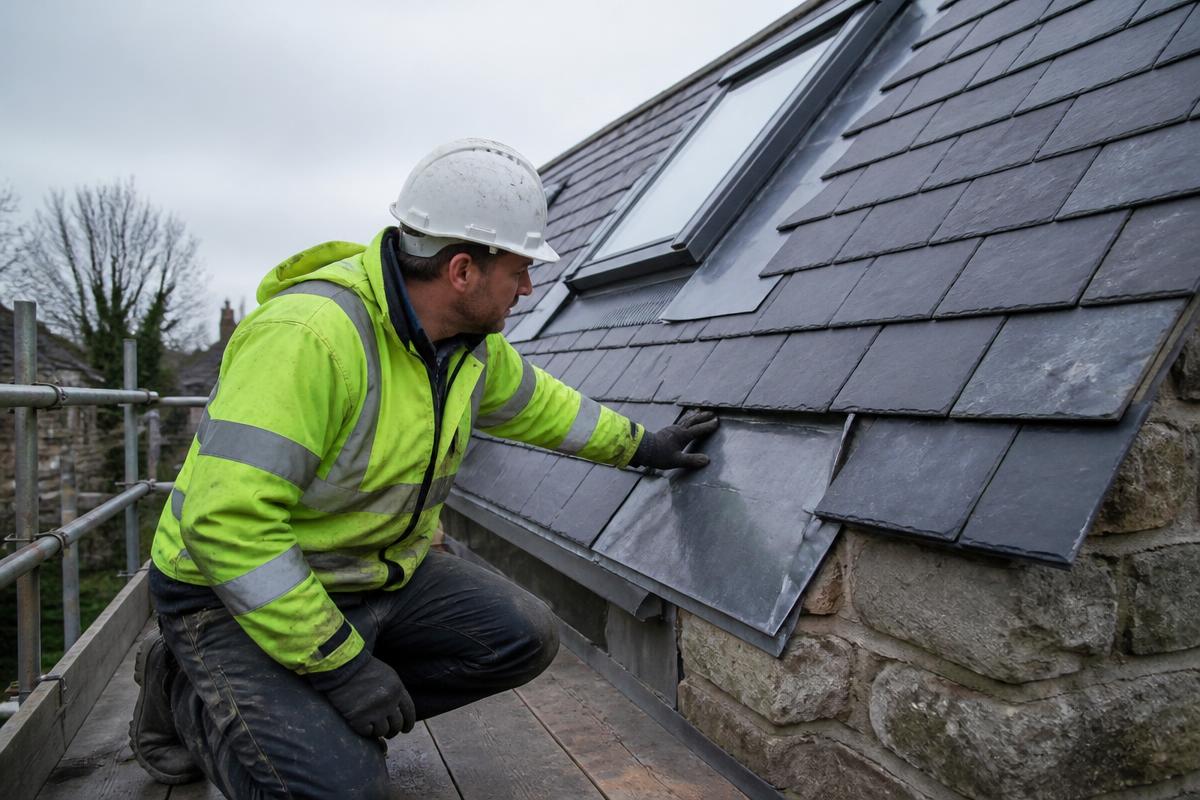
The tiles or slates immediately around a chimney are often more heavily cut and worked than elsewhere on the roof, and the soakers that tie the covering into the flashing at the sides can be a weak point of their own. An investigation into chimney breast damp therefore also looks a short distance beyond the chimney itself, since a defect just outside the immediate junction can produce a very similar internal symptom.
What we would check
During an inspection, areas we would normally look at for this include:
- Lead flashings and soakers at the chimney base and sides.
- Pointing and render condition on all exposed faces.
- Flaunching, capping, pots and any chimney cover for damage or gaps.
- Whether the flue is in use, and whether the cap is appropriate for it.
- Internal moisture path to confirm where the breast staining actually originates.
Repair, replace or monitor?
Repair
Localised flashing or pointing defects with sound surrounding masonry are normally a repair.
Replace
Where flaunching has failed extensively or masonry is significantly eroded, more substantial chimney work may be needed.
Monitor
A dry chimney with only cosmetic weathering can be reviewed at the next scheduled inspection.
Roof photography
Related questions
Relevant services
Book a roof inspection or drone survey
Documented findings before any repair is quoted. Suitable for pre-purchase checks, storm-event assessment and inaccessible roofs.