

Reviewed by the S Reid Roofing Ltd team — last reviewed 2026-09-15
Quick answer
Major active water ingress, unsafe loose materials, obvious structural movement, storm-created openings and water threatening electrical installations are examples of urgent problems. A defect can still require prompt repair without necessarily requiring an emergency callout, and distinguishing the two helps avoid unnecessary out-of-hours costs while still getting the roof made safe.
At a glance
- Danger to people takes priority over speed of repair.
- Active water ingress and loose material at height are genuine emergencies.
- Not every visible defect needs an emergency response — many need prompt, planned attention instead.
- Water near electrical fittings should always be treated as urgent.
What genuinely counts as an emergency
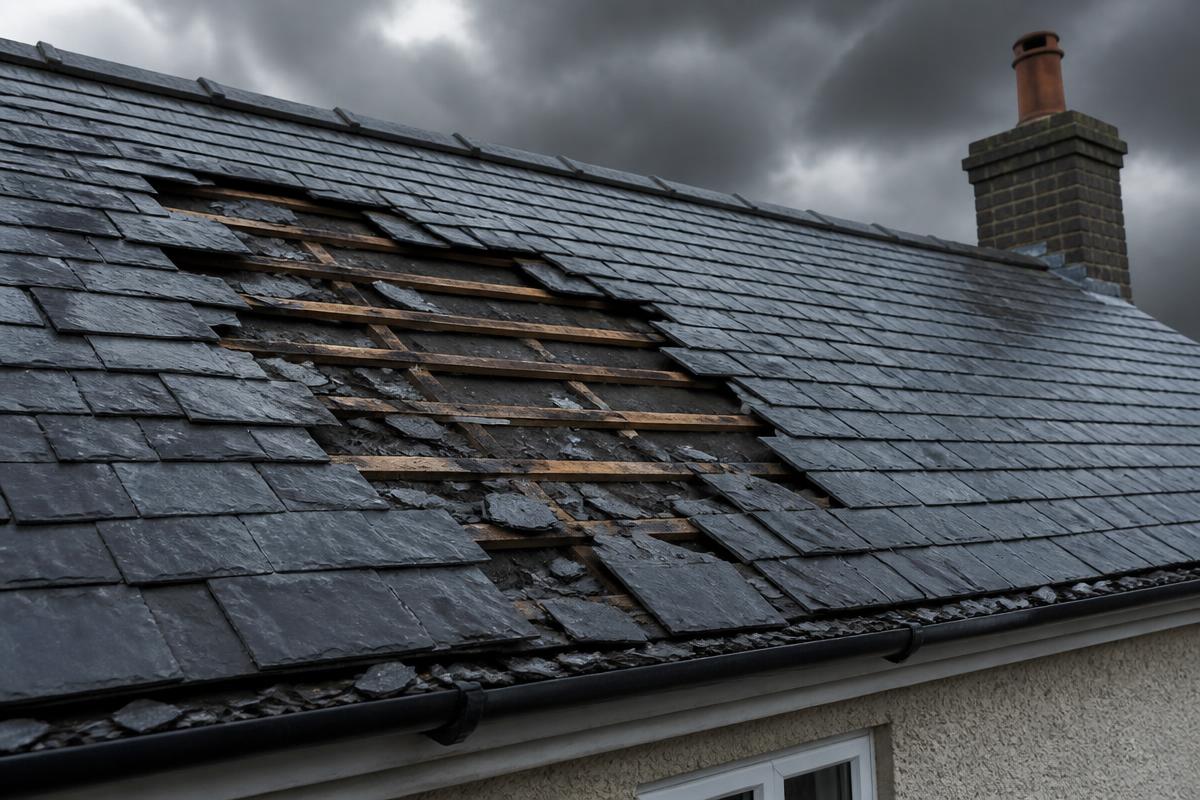
An emergency is a situation where there is danger to people, active and significant water ingress, or a real risk of the problem worsening rapidly if left overnight. Loose material at height that could fall, a storm-created opening letting rain directly into the property, obvious structural movement, and water tracking towards electrical fittings all fall into this category.
These situations call for making the property safe first, and a permanent repair second, because the priority in the moment is removing the immediate risk rather than completing the finished job.
- Loose or partially detached material at height that could fall.
- Active, significant water ingress into the living space.
- A storm-created opening exposing the interior directly to weather.
- Visible structural movement, such as a dropped ridge or spreading crack.
- Water near electrical wiring, fittings or consumer units.
What is urgent without being an emergency
A slipped slate on a dry day, a small area of loft staining that is not actively growing, or a gutter that overflows in heavy rain are all worth addressing promptly, but they do not usually carry the same immediate risk as the situations above. Treating every defect as an emergency is not useful — it can mean genuinely urgent jobs wait behind ones that could safely have been scheduled.
If you are unsure which category a problem falls into, describing what you can see and whether water is actively entering the property is the most useful information you can give when you get in touch.
Why the distinction matters in practice
An out-of-hours emergency callout is a different service to a scheduled repair, and treating a stable, dry defect as an emergency can mean paying for urgency that is not actually needed. Conversely, underestimating a problem that is genuinely worsening — such as a small trickle that could become a significant leak overnight in heavy rain — carries its own risk to the property and its contents.
Weather forecasts can help with this judgement. If rain or high wind is forecast in the next day or two and a defect is not yet actively leaking, that is often the point at which prompt but non-emergency action makes most sense, before conditions turn a manageable problem into an urgent one.
What to have ready when you get in touch
A short, clear description helps any roofer or contact centre triage a call quickly: what you can see, whether water is currently coming through, roughly where on the roof or inside the property the problem is, and whether anyone is at risk from falling material. Photographs taken safely from the ground are useful if you have them, but should never come before contacting for help if the situation feels genuinely dangerous.
Where a problem does turn out to relate to a storm, keeping a note of when it was first noticed and what has been done since, including any temporary measures, supports both the repair itself and any later conversation with an insurer.
What we would check
During an inspection, areas we would normally look at for this include:
- Whether material is currently loose or at risk of falling.
- The extent and rate of any active water ingress.
- Any sign of structural movement rather than surface damage.
- Proximity of water to electrical fittings or wiring.
- Whether temporary weatherproofing is needed before a full repair.
Roof photography
Related questions
Relevant services
Roof emergency?
For active leaks, storm damage, fallen materials or an unsafe chimney — call. Make-safe work first, permanent repair scheduled after inspection.