

Reviewed by the S Reid Roofing Ltd team — last reviewed 2026-09-15
Quick answer
Ask to see the evidence supporting replacement and why local repair is no longer considered economical. For substantial expenditure, a second professional opinion can be useful unless the roof condition and urgency are already clear. A confident contractor should be able to walk you through specific findings rather than relying on a general impression of the roof's age.
At a glance
- A replacement recommendation should be traceable to specific findings.
- Repeated repairs on the same slope are a legitimate reason to consider replacement.
- A second opinion is most useful when the first recommendation is unclear.
- Urgent safety issues do not always allow time for a second opinion.
What a replacement recommendation should show
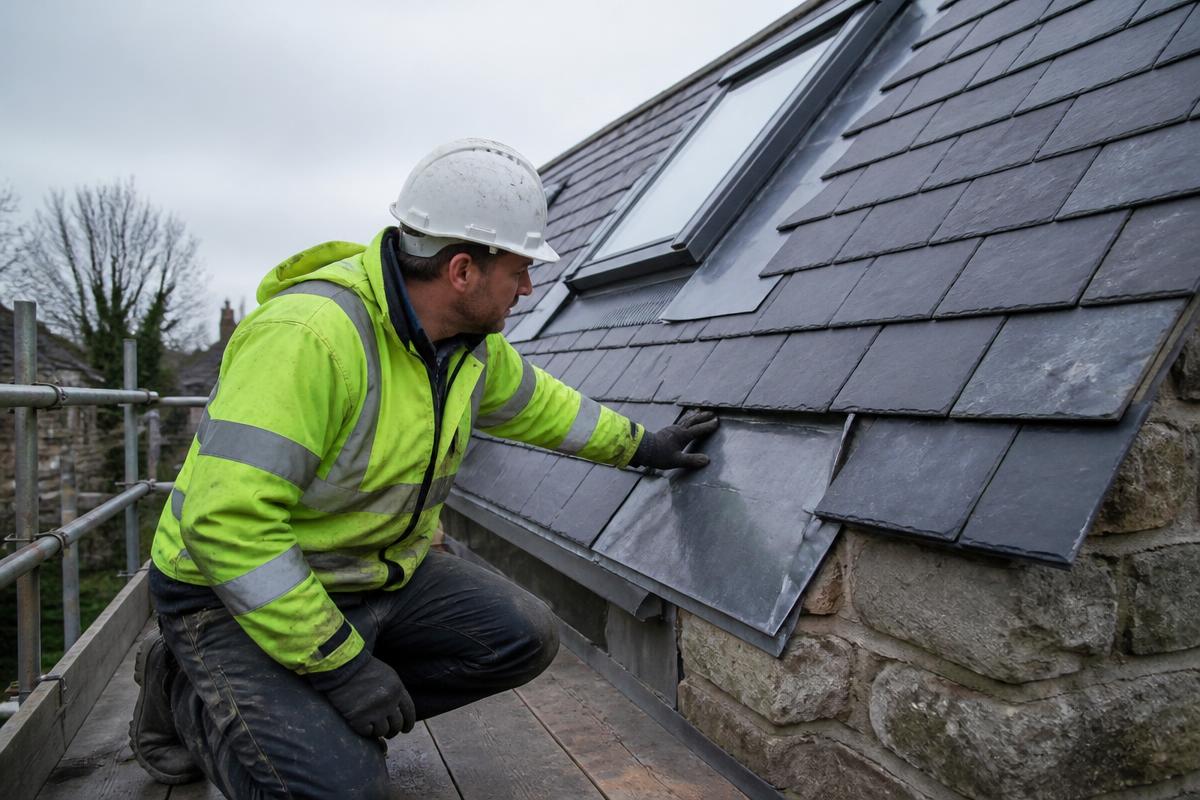
A recommendation to replace an entire roof is a significant one, and it should be backed by specific evidence rather than a general impression of age. Ask what was found — widespread nail fatigue, decayed battens across several slopes, a perished underlay, recurring failures in the same area — and why that evidence points to replacement rather than continued repair. A contractor confident in their diagnosis will be able to walk you through it, ideally with photographs or a written inspection record you can keep.
It is reasonable to ask specifically what proportion of the roof was actually inspected, and how. A recommendation based on a full walk-over inspection of every slope carries more weight than one based on a view from the ground or from a single access point. If access was restricted, ask what could not be checked and whether that limits confidence in the overall conclusion.
Age alone is not a defect. A roof covering can be old and still perform well, or comparatively young and already failing, depending on how it was installed, the materials used, and local exposure. Ask the contractor to separate 'this roof is old' from 'this roof is failing', because only the second justifies replacement on its own.
When a second opinion is worth getting
If the reasoning is unclear, if only part of the roof has been inspected, or if the sums involved are substantial, a second professional opinion is a reasonable and proportionate step. It is less necessary where the condition is visibly severe and the urgency is not in doubt — for example, active structural movement or extensive water ingress — but even then it is reasonable to ask for the evidence in writing before committing.
When seeking a second opinion, share what the first contractor found rather than starting from nothing, and ask the second contractor whether they agree with the diagnosis, not only whether they can also quote for a new roof. A second opinion that simply repeats a quote for full replacement without engaging with the original findings is less useful than one that specifically addresses whether repair remains viable.
Weighing repair against replacement financially
Where repair is genuinely still viable, it is worth asking the contractor to set out, in writing, what ongoing repair costs might look like over the coming years compared with the cost of replacement now, including how each option affects the remaining lifespan of the roof. This does not need to be precise, but a considered comparison is more useful than an unqualified recommendation either way, and it puts the decision back in your hands rather than the contractor's.
What we would check
During an inspection, areas we would normally look at for this include:
- Whether findings were recorded across the whole roof, not one area.
- Whether the pattern of defects genuinely makes repair uneconomical.
- Fixings, battens and underlay condition where visible.
- Whether a repair-only option has been costed and explained.
- Whether urgency has been correctly distinguished from long-term wear.
Roof photography
Related questions
Relevant services
Book a roof inspection or drone survey
Documented findings before any repair is quoted. Suitable for pre-purchase checks, storm-event assessment and inaccessible roofs.