

Reviewed by the S Reid Roofing Ltd team — last reviewed 2026-09-15
Quick answer
Recurring leaks can come from ageing coverings, failed seams, trims, penetrations, poor drainage, cracks or damaged decking. When different areas of the same roof repeatedly require patch repairs, the condition of the complete roof system should be assessed rather than continuing to treat each new leak as an isolated event.
At a glance
- A leak appearing in a new location often means the whole covering is ageing.
- Standing water accelerates deterioration at seams and laps.
- Deck movement can reopen a repair that initially seemed successful.
- Patching the same small area repeatedly is a sign to look wider.
Why patch repairs sometimes stop working
A single, well-executed repair on an otherwise sound covering usually holds. When leaks keep returning, either in the same spot or in new locations, the more likely explanation is that the covering as a whole has reached a point where its remaining life is limited, and each repair only buys a short interval before the next failure appears elsewhere.
Deck movement can also be behind repeated failures. If the timber beneath is flexing with moisture and temperature, a patch bonded to the surface can crack again at the same point once conditions change, which looks like a failed repair but is really a symptom of what lies underneath. Chasing that kind of leak with more patches, without addressing the movement, tends to produce the same outcome each time.
Tracing a leak back to its actual source
Water on a flat roof does not always enter directly above where it appears inside the building. It can travel along the underside of the deck, follow a joist, or track down a pipe before showing as a stain on a ceiling some distance from the true point of entry. This is one reason repeated attempts to fix a leak by patching the covering directly above a stain sometimes fail, because the patch is not covering the actual defect.
A methodical check from the roof surface downward, working through the covering, deck, and any insulation layer in turn, is generally more reliable than working backward from an internal stain, particularly on roofs with more complex build-ups such as warm roof constructions where insulation sits above the deck and beneath the waterproofing.
What tends to explain a genuinely recurring leak
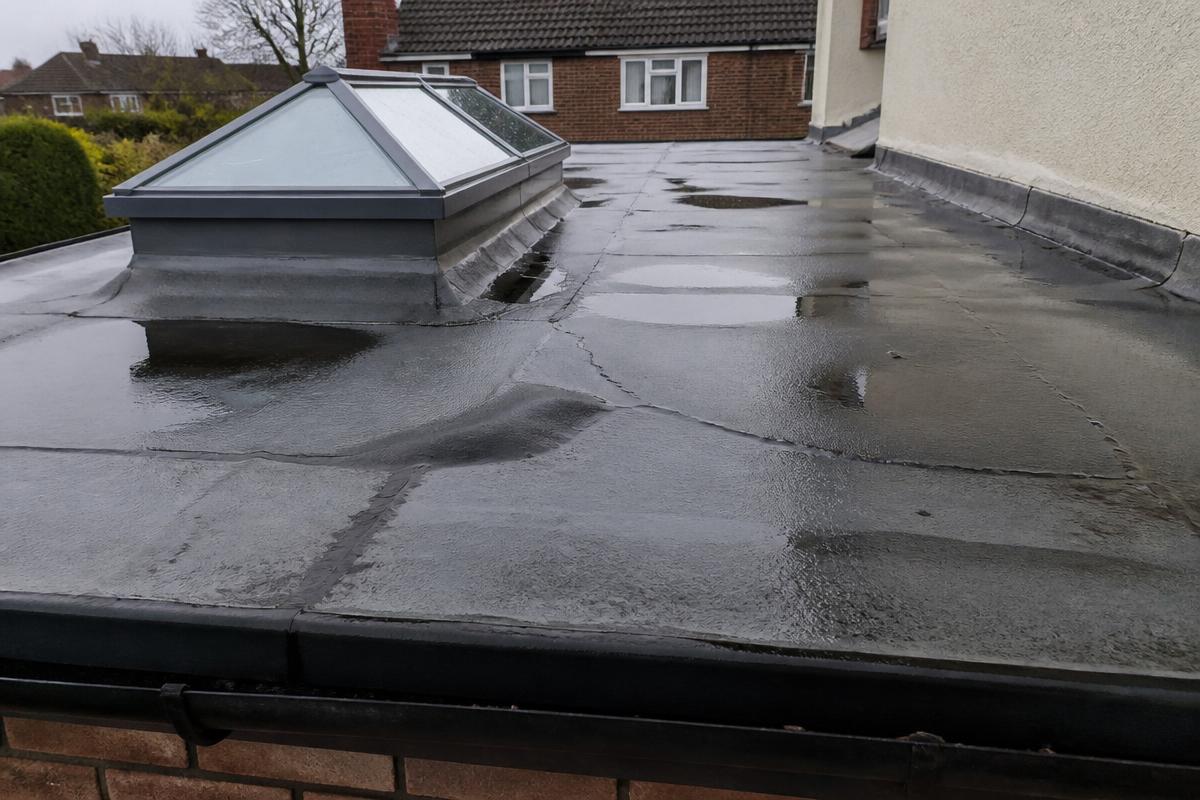
Trims, upstands and penetrations such as vent pipes and rooflights are common recurring failure points because they involve joints rather than a continuous surface. Poor falls that leave water sitting on the roof for long periods also accelerate ageing at exactly these vulnerable details, which is why standing water and recurring leaks are often found together.
Age itself is a factor that is easy to underestimate. A felt or GRP covering nearing the end of its typical service life can develop several unrelated small defects within a short period simply because the material generally has degraded, rather than because of one identifiable cause. In that situation, treating each leak as a separate, unrelated repair misses the underlying pattern.
Condensation is worth ruling out before assuming every damp patch is a leak. A cold roof void with poor ventilation can produce moisture on the underside of the deck that mimics a leak in appearance, particularly in winter, and no amount of work on the external covering will resolve a problem that originates from moisture generated inside the building.
What we would check
During an inspection, areas we would normally look at for this include:
- Whether previous repairs are holding or have reopened.
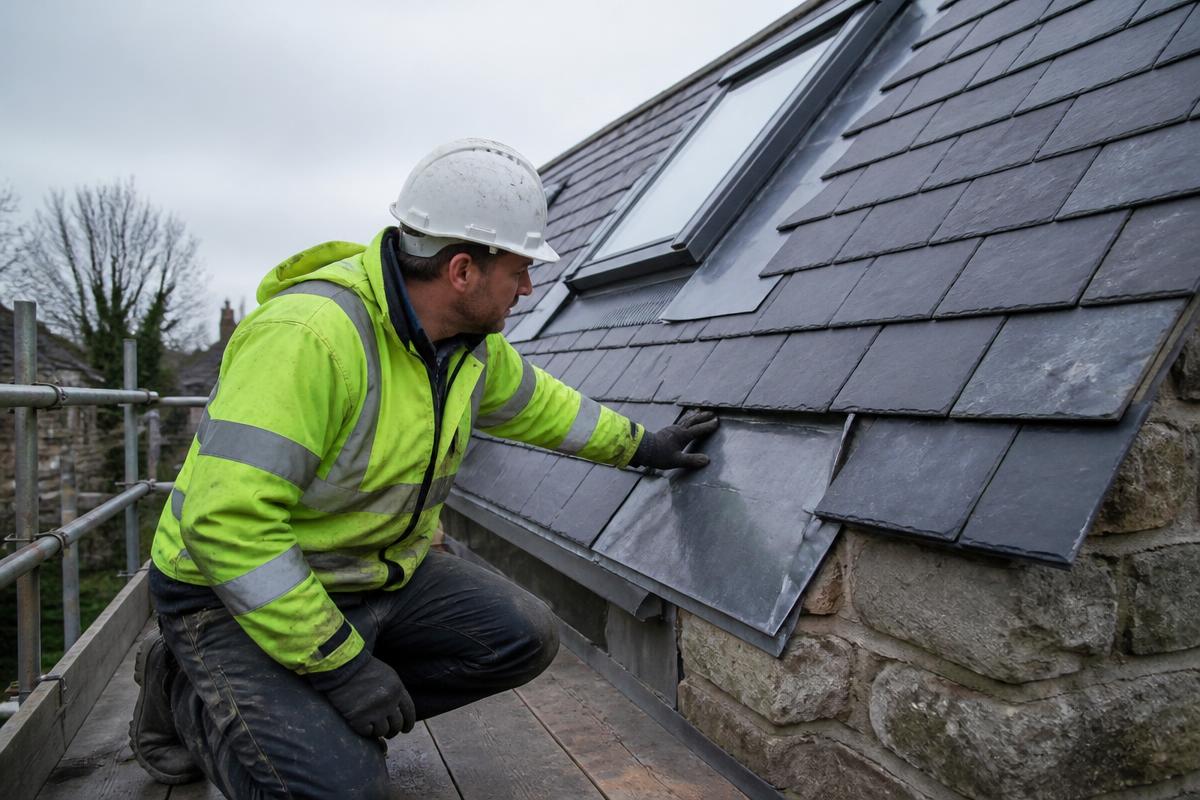
- Condition of seams, laps, trims and upstand details.
- Falls across the roof and whether water is ponding.
- Deck condition where it can be assessed without removing the covering.
- Penetrations and any plant or fixings that pierce the covering.
Repair, replace or monitor?
Repair
An isolated, identifiable defect in an otherwise sound covering is usually a repair.
Replace
Repeated failures at different points, or a covering approaching the end of its typical service life, usually point to replacement being the more durable option.
Roof photography
Related questions
Relevant services
Book a roof inspection or drone survey
Documented findings before any repair is quoted. Suitable for pre-purchase checks, storm-event assessment and inaccessible roofs.