

Reviewed by the S Reid Roofing Ltd team — last reviewed 2026-09-15
Quick answer
Flat-roof lifespan depends heavily on the chosen system, installation, drainage, roof movement and maintenance. Felt, EPDM and GRP can all perform effectively when correctly designed and installed, so condition matters more than relying on one universal lifespan figure attached to a particular material.
At a glance
- Installation quality has a major effect on how long a flat roof performs.
- Poor falls and standing water shorten life regardless of the membrane used.
- Felt, EPDM and GRP each have different detailing requirements.
- Movement, thermal cycling and upstand detailing are common weak points.
Why material alone does not decide flat-roof life
It is tempting to rank felt, EPDM and GRP against each other on lifespan, but a well-installed system in any of these materials, with correct falls, drainage and upstand detailing, will generally outperform a poorly installed system in a supposedly longer-lived material. Design and workmanship at installation set the baseline that maintenance then either preserves or erodes.
Standing water is one of the most common causes of premature flat-roof failure. Where falls have not been built in correctly, or drainage outlets become blocked, water sits on the membrane rather than clearing, and this accelerates deterioration at joints, upstands and any existing weak points. A small amount of ponding after heavy rain that clears within a day or so is common and not usually significant, but water that remains for extended periods is a sign the falls or drainage need looking at.
Where flat roofs typically show problems first
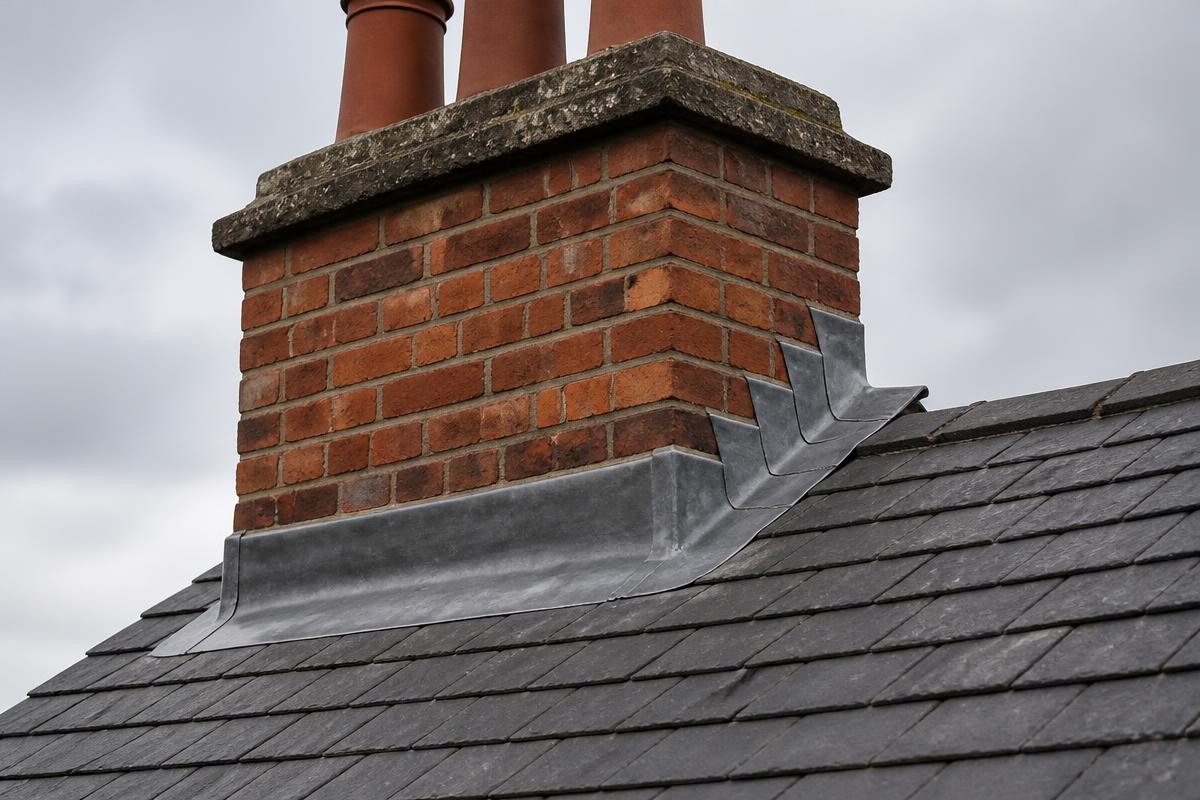
Upstands, abutments, rooflights and outlets are where most flat-roof defects begin, because these are the points where the membrane is dressed around a change in direction or a penetration. The main flat area of membrane often remains sound for longer than these detail points, which is why an inspection should focus on the junctions as much as the field of the roof.
Thermal movement also plays a part. Flat roofs expand and contract with temperature more noticeably than pitched coverings, and repeated cycling can gradually stress joints, laps and the interface between membrane and upstand. Over years this can open small gaps that let water track beneath the membrane, sometimes travelling some distance before showing as a stain internally, which can make tracing the original point of ingress difficult without a careful inspection.
How maintenance affects the practical lifespan
Because flat roofs rely so heavily on drainage working as intended, keeping outlets, gullies and gutters clear of leaves, moss and debris has a disproportionate effect on how long the system lasts in practice. A blocked outlet on an otherwise sound roof can create standing water that accelerates wear at a rate that has nothing to do with the underlying membrane's quality.
Periodic checks of upstands and rooflight kerbs, and prompt attention to any blistering, splitting or lifted detail, allow small issues to be addressed while they remain a localised repair. Left unchecked, the same defect can allow water beneath the membrane over a wider area, at which point patch repairs become less effective and full or partial renewal is more likely to be the sensible option.
What we would check
During an inspection, areas we would normally look at for this include:
- Falls and any areas of standing water after rain.
- Condition of upstands, abutments and rooflight kerbs.
- Outlets and drainage paths for blockage or restriction.
- Membrane condition, including blistering, splitting or UV degradation.
- Evidence of movement or thermal stress at joints.
Repair, replace or monitor?
Repair
Localised membrane damage or a failed detail at an upstand can often be repaired without disturbing the rest of the roof.
Replace
Widespread membrane failure, poor falls throughout, or repeated localised repairs point towards renewal of the system.
Monitor
A sound membrane with adequate falls and clear drainage can be checked periodically rather than worked on.
Roof photography
Related questions
Relevant services
Book a roof inspection or drone survey
Documented findings before any repair is quoted. Suitable for pre-purchase checks, storm-event assessment and inaccessible roofs.