

Reviewed by the S Reid Roofing Ltd team — last reviewed 2026-09-15
Quick answer
The replacement slate or tile itself may be inexpensive, but roof height, pitch, safe access, surrounding damage and the condition of fixings or battens can influence the overall cost. A quotation should therefore describe more than simply the price of the replacement material.
At a glance
- The unit cost of a slate or tile is a small part of most quotations.
- Getting safely to the defect is often the larger part of the job.
- Matching an existing material can take longer than fitting a standard one.
- What is found underneath the broken piece can change the scope.
Why access matters more than the material
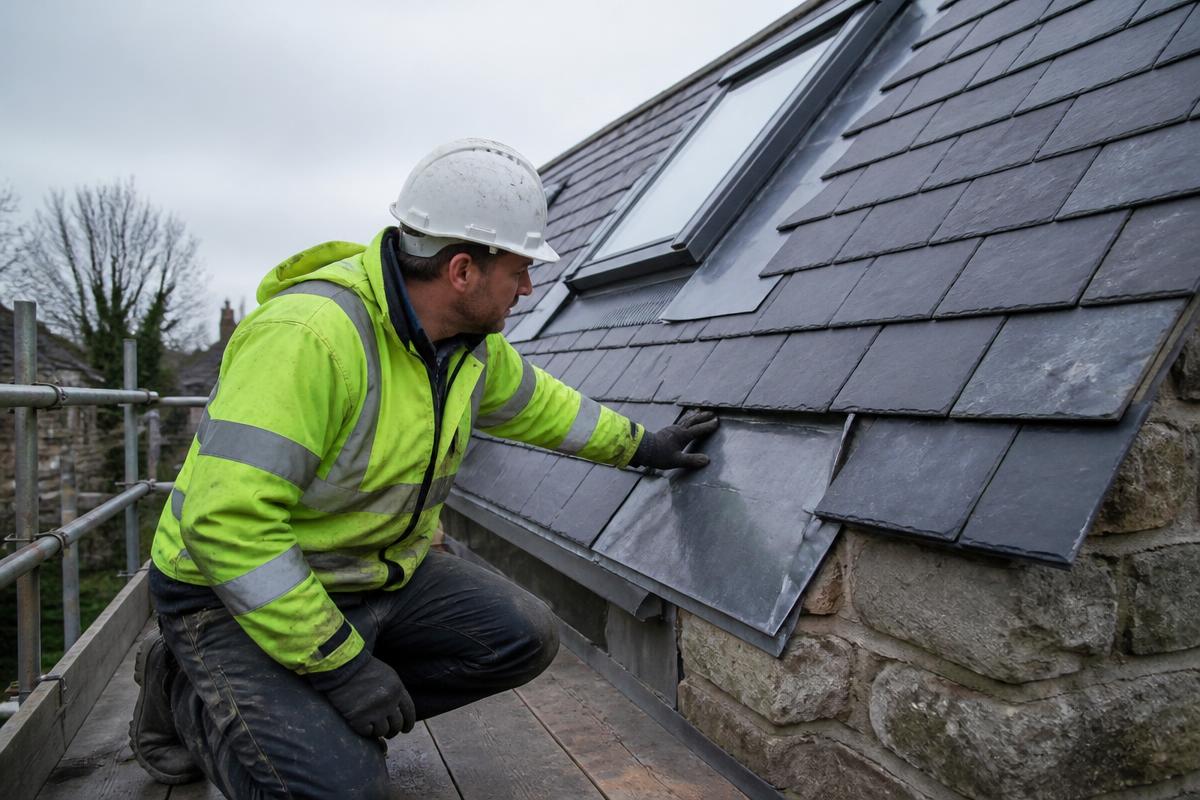
A single broken slate or tile is, in material terms, a small item. What makes the job larger or smaller is almost always how it is reached. A defect on a low, easily accessible slope is a different proposition from the same defect three storeys up on a steep pitch, where safe access has to be arranged before any work on the roof itself can begin.
This is particularly relevant on the mix of older stone farmhouses, terraced properties and more recent builds found across Longtown and the surrounding area, where roof pitches and heights vary a good deal even within the same street. A repair that takes minutes once someone is safely on the roof can still take a substantial part of a working day once the time spent arranging and setting up access is included.
What else can change the price
Once a roofer is safely on the roof, several other factors come into play that a homeowner would not necessarily anticipate from a single broken piece.
- Matching an older or discontinued slate or tile pattern can take longer than sourcing a standard replacement.
- Neighbouring pieces disturbed while lifting the broken one may also need attention.
- The condition of the batten and fixing beneath the broken piece affects whether the repair will hold.
- Underlay exposed by the gap may show weathering that needs addressing at the same time.
- Whether the break is a single occurrence or an early sign of wider nail or batten fatigue across the slope.
When a broken piece points to something wider
A single crack from an impact, such as a fallen branch, is usually an isolated repair. A slate or tile that has broken because its fixing has corroded, or because the slate itself has become brittle with age, is more of a warning sign. On a roof of a certain age it can be worth checking a handful of other slates on the same slope while access is already arranged, since fixings tend to fail at a similar rate across a roof laid at the same time. Doing so does not commit you to further work, but it means the true state of the slope is known rather than assumed.
Exposure also plays a part. Slopes facing the prevailing weather, or roofs on more exposed sites across the fells and coast, tend to show fixing and material fatigue earlier than sheltered slopes on the same building. This does not change the price of replacing one broken piece, but it is a reasonable factor to bear in mind when deciding whether a wider check while access is arranged is worthwhile.
What we would check
During an inspection, areas we would normally look at for this include:
- Safe access to the defect given the roof height and pitch.
- Whether the replacement material needs to be matched to the existing covering.
- Fixing and batten condition directly beneath the broken piece.
- Neighbouring pieces for movement or additional damage.
- Underlay condition visible through the gap.
Repair, replace or monitor?
Repair
A single broken piece with sound surrounding fixings and battens is a straightforward repair.
Monitor
Nothing here should be left unaddressed once access has been arranged — an open gap should be closed.
Roof photography
Related questions
Relevant services
Request a roofing quotation
Share what you've noticed and we'll arrange an inspection before recommending works.