

Reviewed by the S Reid Roofing Ltd team — last reviewed 2026-09-15
Quick answer
Many policies can cover sudden insured storm damage, but the exact position depends on the policy and cause. Insurers commonly distinguish sudden storm damage from deterioration, lack of maintenance or ordinary wear and tear. A clear, dated record of what was found can help support that assessment, though the final decision always rests with the insurer.
At a glance
- Policy wording, not general expectation, decides what is covered.
- Insurers look at cause: a sudden event differs from gradual failure.
- Dated, clearly referenced evidence supports whatever position is taken.
- We report what we find; we do not decide or promise claim outcomes.
Why the same-looking damage can be treated differently
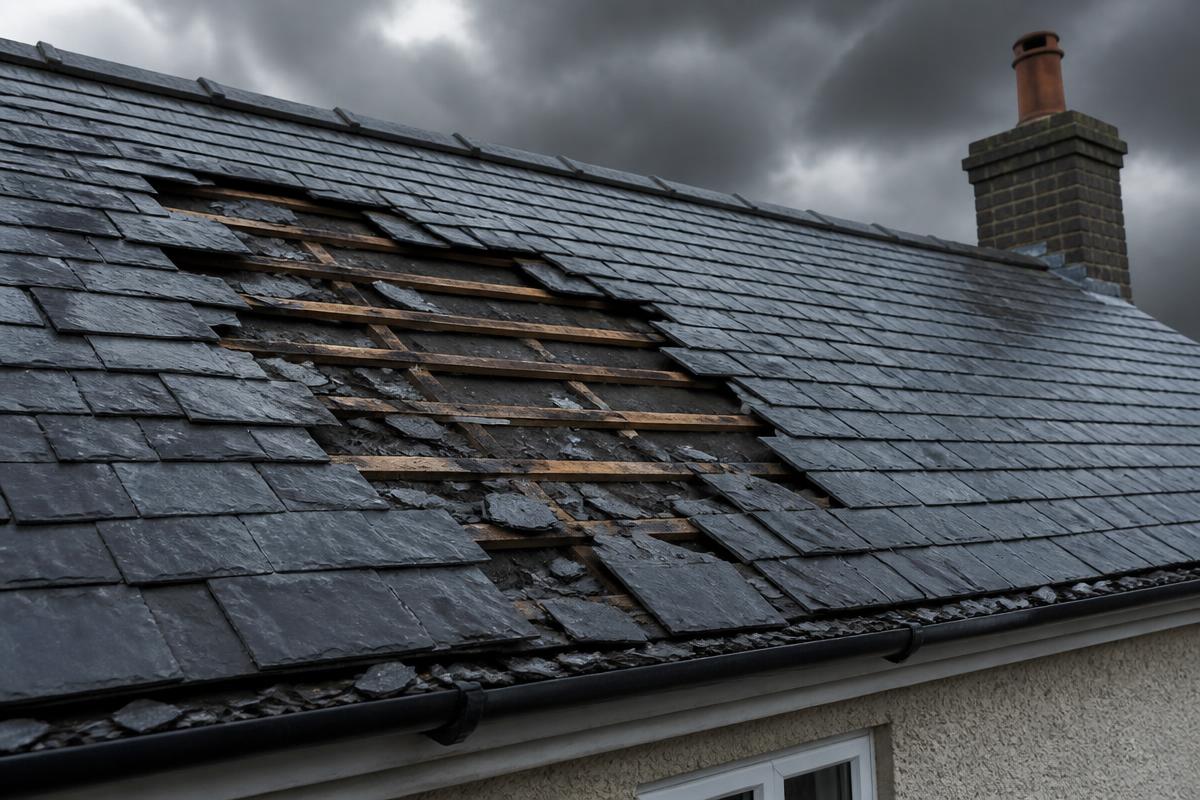
Two roofs can end up with an identical missing slate after a storm, yet be assessed differently by an insurer. One may show a fixing that failed suddenly during genuinely severe wind, consistent with an insured event. The other may show fixings that had already corroded over years, with the storm simply being the final straw on an already-failing detail.
This distinction between a sudden insured event and gradual deterioration is a standard one insurers apply, and it is why the same visible symptom does not guarantee the same outcome. It is worth understanding before assuming that any damage appearing after a storm will automatically be treated as storm damage in the insurance sense.
How storms actually damage roofs
Wind does most of its damage through uplift rather than direct force — air moving quickly over a roof surface can create suction strong enough to lift the trailing edge of a tile or slate, working a fixing loose before the piece drops, shifts, or is torn away entirely. Driving rain then exploits any gap that uplift has opened, sometimes days or weeks after the wind itself has passed.
This is why storm damage does not always announce itself immediately, and why a roof can look untouched from the street while individual fixings, laps or flashing details have in fact been disturbed by the same weather event that is later cited in a claim.
What tends to help when a claim is being considered
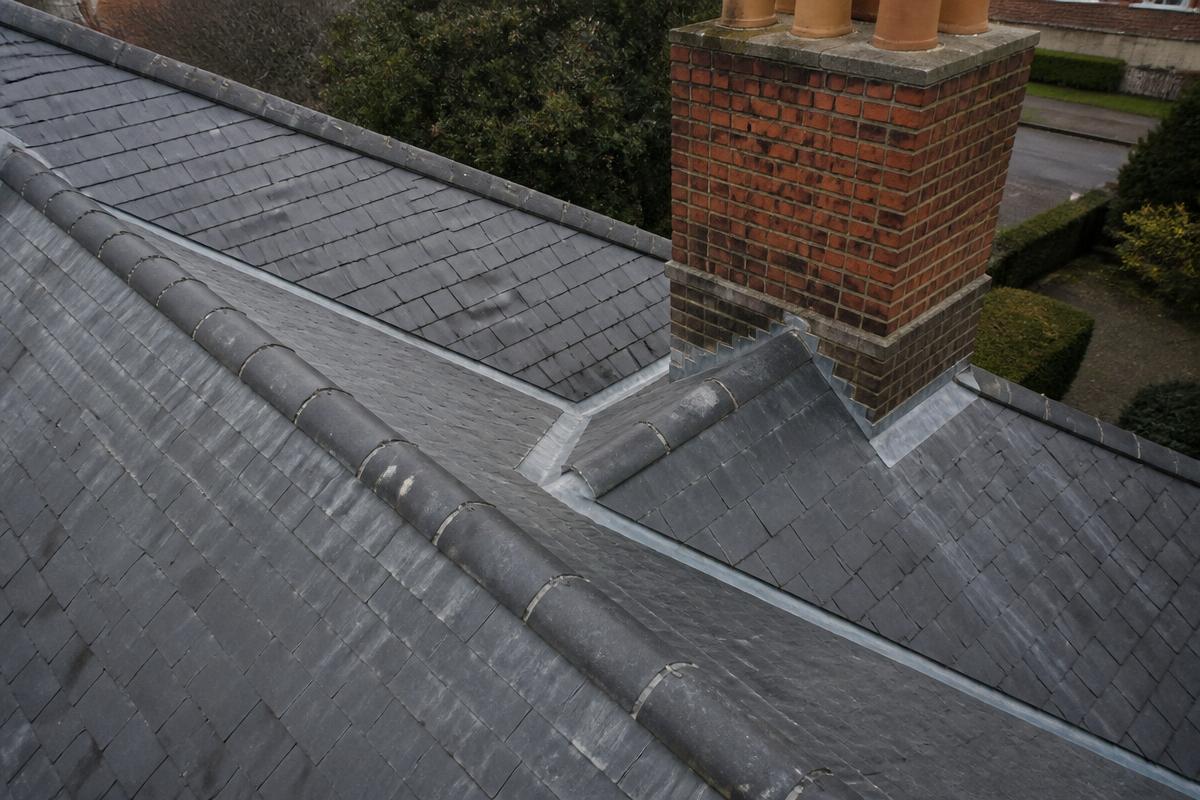
A dated record showing the condition of the affected area, ideally alongside a description of the wider roof's general condition, gives an insurer context rather than an isolated snapshot. Where the surrounding coverings and fixings are in reasonable order and the damage is confined to a specific point of failure, that pattern is more readily explained by a discrete event than by general ageing.
It also helps to note the date of the storm itself, since many insurers will ask when the damage is believed to have occurred and whether it was reported promptly. Delay between an event and reporting it is sometimes, in itself, a factor an insurer considers.
What documentation can and cannot do
A clear, dated record of what was found — where, in what condition, and how it relates to the surrounding roof — gives an insurer something concrete to assess rather than a general description after the event. It does not determine the outcome of a claim, and we would never suggest otherwise.
We are not able to interpret specific policy wording or advise on what a particular policy covers; that sits with the insurer and, where needed, an independent loss assessor or broker. Reading the policy's own definitions of storm damage, and any exclusions relating to maintenance or wear, is always worth doing before a claim is submitted.
What we would check
During an inspection, areas we would normally look at for this include:
- The condition of the failed detail and its immediate surroundings.
- Whether the surrounding fixings, battens or coverings show comparable ageing.
- Evidence consistent with a sudden event versus long-term deterioration.
- Any pre-existing repairs or patching near the affected area.
Roof photography
Related questions
Relevant services
Book a roof inspection or drone survey
Documented findings before any repair is quoted. Suitable for pre-purchase checks, storm-event assessment and inaccessible roofs.