

Reviewed by the S Reid Roofing Ltd team — last reviewed 2026-09-15
Quick answer
Photographs can provide useful evidence of visible roof condition and damage, particularly where areas cannot be seen from ground level. They do not guarantee an insurer will accept a claim, but dated and clearly referenced imagery can make the circumstances easier to document.
At a glance
- Roof-level photographs show detail that ground-level views cannot.
- Dated, referenced images are more useful than undated general shots.
- Photographs describe condition; they do not decide a claim.
- A drone or an inspection may reach areas a phone from the garden cannot.
A drone survey documents what is visible: covering condition, flashings, chimneys, gutters and rainwater goods. It cannot see concealed timber decay, hidden membrane or fixing failure, every source of water ingress, or confirm structural adequacy — where those are suspected, a hands-on inspection is recommended alongside the imagery.
What good photographic evidence looks like
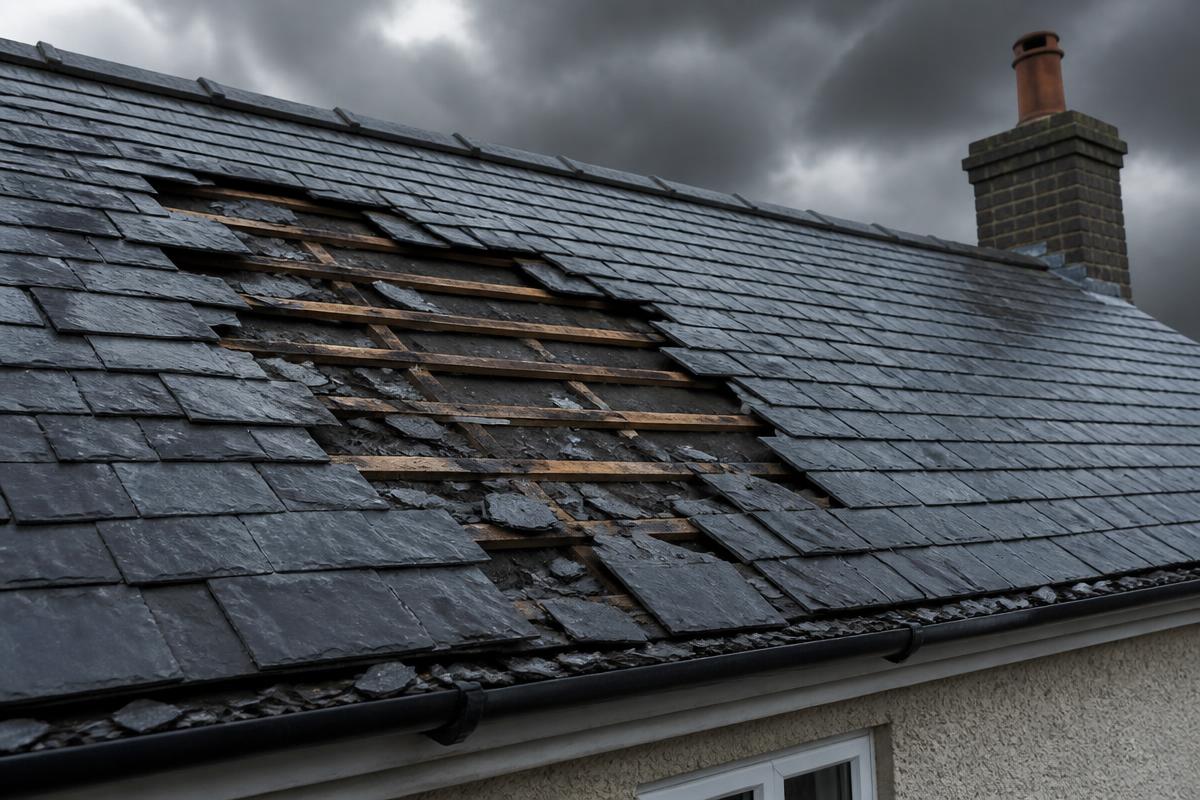
Useful images show the damaged area clearly, in context with the surrounding roof, and are taken close enough to show relevant detail such as a cracked fixing or a displaced lap. Wide shots that establish location and closer shots that show the defect together tell a more complete story than either alone.
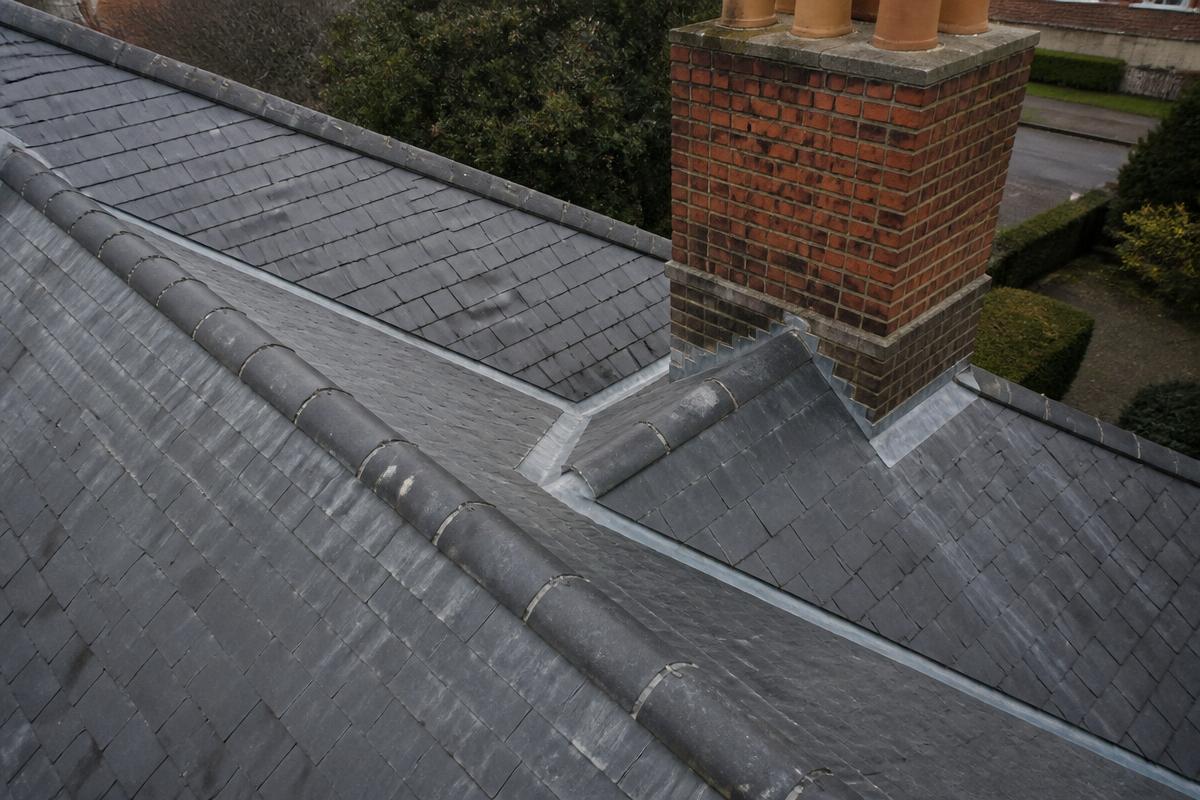
Where access allows, close-range photography of ridges, valleys and chimney details fills in the parts of a roof that are genuinely difficult to assess from the ground, and this can be gathered by inspection or, where appropriate, by drone.
Why timing and context matter as much as the image itself
A photograph taken the day after a reported storm is more useful than one taken weeks later, simply because it links the visible condition to the event being claimed for. Where possible, note the date each image was taken and keep the original files rather than only a compressed copy, since some insurers or loss adjusters may ask to see metadata.
Photographs of the surrounding, undamaged roof are worth including too. They give an insurer a baseline to compare against, which can support an account of localised, sudden damage rather than a general pattern of wear across the whole roof.
Ground level, roof level and internal evidence together
Ground-level photographs are a reasonable starting point and can be taken safely by a homeowner, but they rarely show enough detail on their own to describe how a fixing has failed or how a lap has opened. Roof-level images, gathered safely by an inspection or a drone survey, close that gap without anyone needing to climb onto a wet or damaged surface.
Internal photographs matter too — staining on a ceiling, damp around a chimney breast, or water marks in a loft help connect the external damage to the consequences being claimed for, and insurers often want to see both sides of that picture.
Keeping a simple, organised record
It is easy for photographs taken in the aftermath of a storm to end up scattered across several phones, with no clear record of who took what and when. Gathering them into one place, labelled with a date and a brief description, saves time later and reduces the risk of an insurer asking for evidence that has since been lost or overwritten.
Where a professional inspection is carried out, the resulting report and photographs form part of that same record, and are worth keeping alongside anything taken independently before the roofer attended.
Being realistic about what photographs achieve
Photographs are one piece of evidence among several an insurer may consider, alongside the cause of damage, the policy wording and, sometimes, their own surveyor's assessment. We would never present photographic evidence as something that settles a claim, because it does not.
Our role is to record what is genuinely visible, accurately and without exaggeration, so that whatever conversation follows with the insurer is based on an honest account of the roof's condition.
What we would check
During an inspection, areas we would normally look at for this include:
- The damaged area itself, photographed in context and in close detail.
- Surrounding coverings, fixings and flashings for comparison.
- Evidence of water ingress inside the property linked to the external damage.
- Areas that cannot be safely reached from the ground, using appropriate access.
Roof photography
Related questions
Relevant services
Book a roof inspection or drone survey
Documented findings before any repair is quoted. Suitable for pre-purchase checks, storm-event assessment and inaccessible roofs.