

Reviewed by the S Reid Roofing Ltd team — last reviewed 2026-09-15
Quick answer
Traditional slate work may require careful sorting and reuse of sound slate, compatible replacements, appropriate fixing patterns, sympathetic leadwork and attention to historic roof details. Listed or conservation properties can also require additional consent and documentation before work can proceed, so checking the property status early avoids delays once the roof is stripped.
At a glance
- Sorting slate for reuse takes longer than stripping and skipping the old covering.
- Fixing patterns on traditional roofs often diminish in size course by course.
- Leadwork at valleys and abutments needs to match traditional detailing, not standard practice.
- Listed status can require consent before any work starts, not just for major alterations.
In North Cumbria & Cumbria / South West Scotland
Many traditional properties across North Cumbria and South West Scotland retain locally sourced slate whose colour and texture are worth preserving where the material allows.
Handling the material with more care
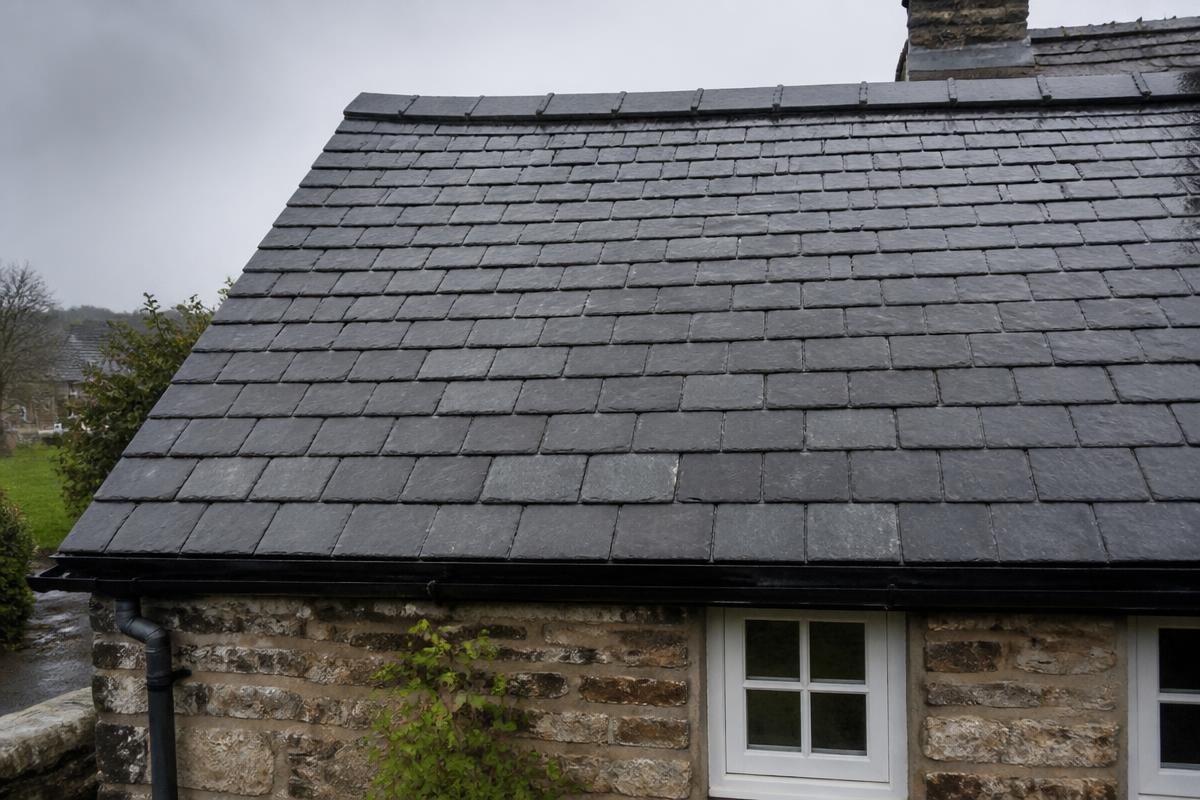
Traditional slate roofs are frequently laid in diminishing courses, with larger slates at the eaves reducing in size toward the ridge. Reusing sound slate and matching replacement stock has to respect this pattern, along with the original thickness, colour and texture, or the roof will read as inconsistent even where the workmanship is sound. Fixing methods appropriate to the slate's age and thickness also need consideration rather than defaulting to modern standard practice.
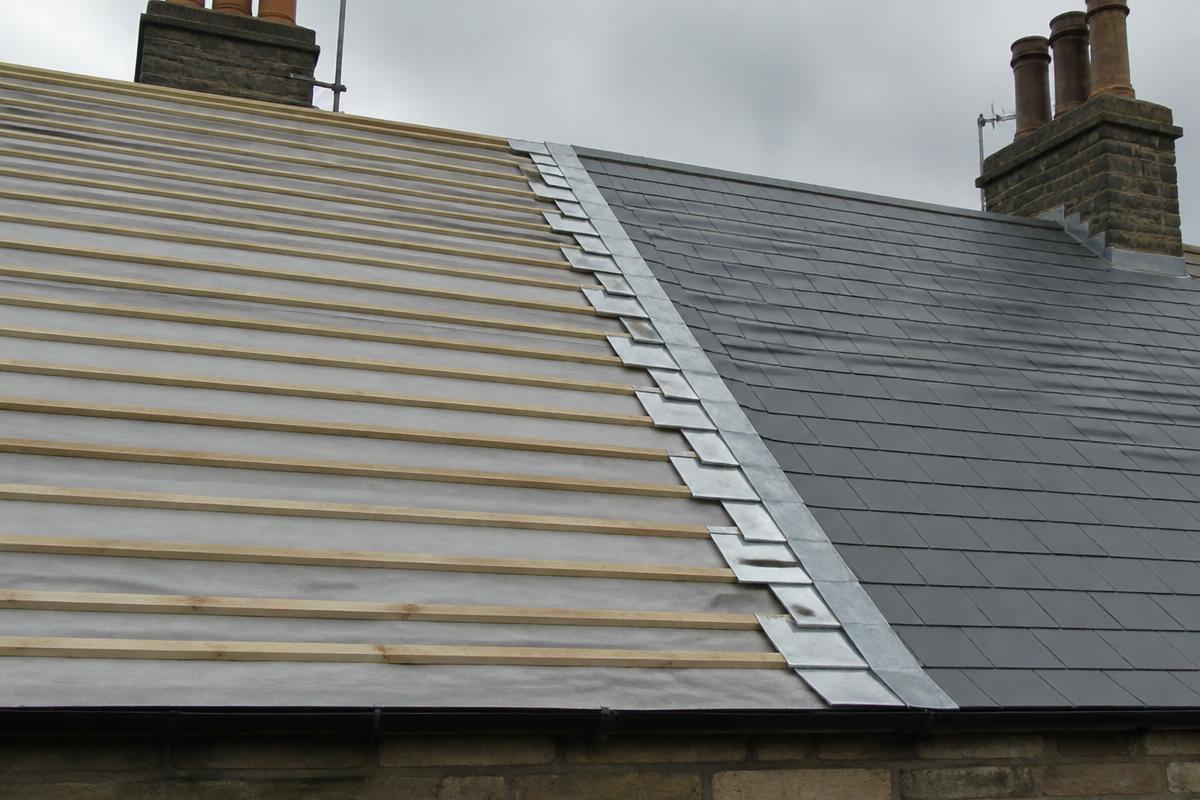
The gauge and lap used on the original roof also matter. Traditional roofs were sometimes laid to a gauge that differs slightly from current standard practice, and battens replaced without checking this can leave reused slate sitting incorrectly, with reduced weather protection at the head or tail.
Detailing and consent
Valleys, abutments and chimney flashings on traditional roofs were often formed in lead using methods particular to the period and region, and sympathetic leadwork is needed to keep the roof looking and performing as it should. Where a property is listed or sits within a conservation area, consent may be required before re-roofing begins, and supporting documentation — often photographic evidence of existing condition and proposed materials — is normally expected as part of that process.
Checking a property's listed or conservation status early, before scaffolding goes up, avoids the situation where work has to pause part-way through because consent has not been confirmed. Local planning departments can advise on what applies to a specific property, and this is worth doing well ahead of any strip-off.
Sequencing the work around what is found
Because sorting slate and assessing traditional detailing both take longer than a standard re-cover, the programme for a heritage roof is usually planned with more contingency built in. Timber condition beneath a long-serving traditional covering can also vary more than on a modern roof, since historic ventilation arrangements were often different from what is now considered good practice, and this sometimes needs addressing as part of the works.
Choosing a contractor for this kind of work
Traditional slate re-roofing rewards patience and attention to detail more than speed, since the value of the finished roof depends on decisions made slate by slate and detail by detail rather than on how quickly the covering goes on. A contractor working on a heritage-sensitive roof should be comfortable explaining sorting decisions, leadwork detailing and consent requirements as the job progresses, not only at the outset.
What we would check
During an inspection, areas we would normally look at for this include:
- The proportion of existing slate suitable for reuse.
- Course sizing and diminishing pattern across each slope.
- Existing leadwork detailing at valleys, abutments and chimneys.
- Listed building or conservation area status and any consent requirements.
- Batten and underlay specification appropriate to a traditional roof.
Repair, replace or monitor?
Repair
Where losses are isolated, sorted reused slate with matched replacements can complete a repair.
Replace
Where the roof needs full recovering, sorting and matching still governs the specification.
Roof photography
Related questions
Relevant services
Discuss a Heritage Roofing Project
Traditional slate, leadwork and period detailing, approached with the materials and methods the building was built with.